
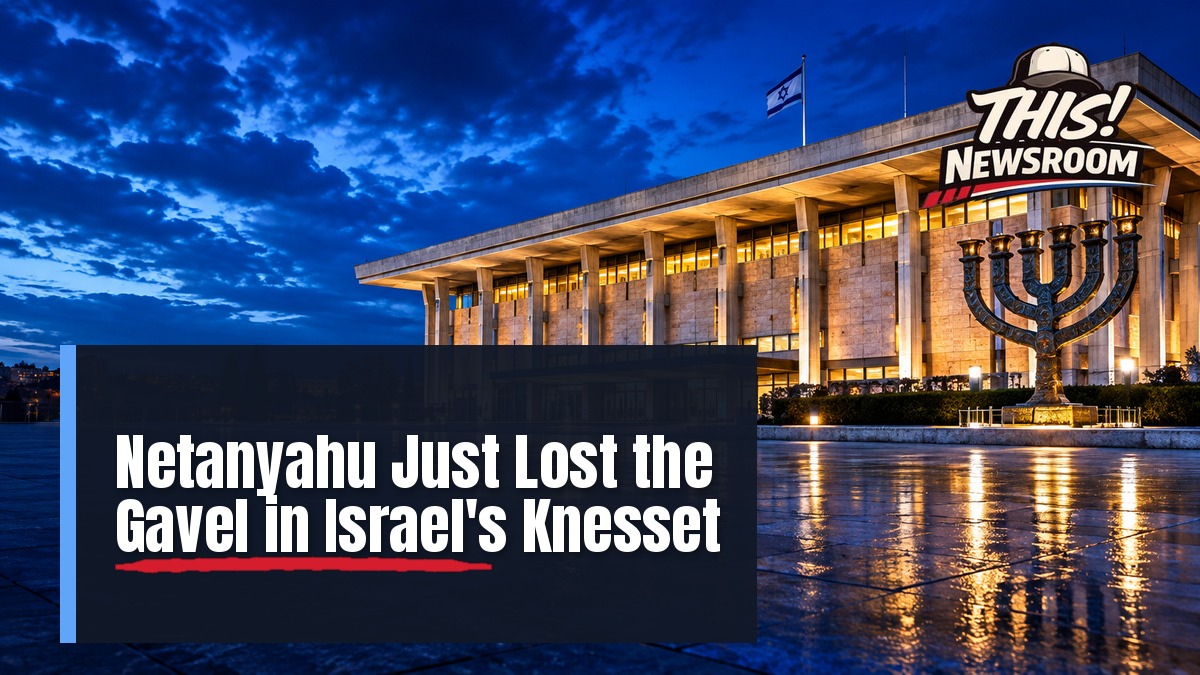
Israel’s parliament voted 66 to 52 on Tuesday to elect Matan Kahana as Knesset speaker, stripping Netanyahu of control of the legislative calendar. Kahana is an ally of Yashar leader Gadi Eisenkot, CNN reported, citing the Knesset spokesperson.
Kahana replaces Amir Ohana of Netanyahu’s Likud party. He becomes the 26th person to hold the job.

Why the Israeli Parliament Speaker’s Chair Matters So Much
It sounds like a ceremonial job. It is not.
The speaker’s office sets the timetable for parliamentary business. It can speed up or delay debates and votes on proposed laws, as the Associated Press explained. Whoever holds the gavel decides what hits the floor and when. For the last four years, that was Ohana. Now it is a man Netanyahu’s opponents picked.
Netanyahu is still the outgoing prime minister. But as of Tuesday night, he no longer controls the calendar. The vote handed that power to his rivals.
How the Knesset Speaker Election Played Out
Netanyahu’s bloc did not go quietly. Its lawmakers filibustered for more than six hours, according to the Times of Israel. The result still landed late Tuesday night.
Likud ran its own candidate, coalition whip Ofir Katz, who got 52 votes. Lawmakers did not vote head to head. They voted on each candidate separately, so the 66 and the 52 are two separate tallies.
Kahana’s winning coalition was no secret. The Times of Israel expected the four parties in Eisenkot’s bloc to team up with the Arab-majority parties Ra’am and the Joint List. Eisenkot’s bloc won 48 seats in last month’s election. Ra’am and the Joint List hold 19 seats between them. The Joint List announced its support ahead of time, the Jerusalem Post reported.
That is the part Katz objected to. He said he would not be elected with “the votes of terror supporters,” according to a Jerusalem Post snippet of his remarks.
What This Means for You
If you follow US-Israel ties, this vote matters beyond Jerusalem. A new speaker can reshape which bills move, and that shapes how stable Israel’s next government looks to Washington. Aid is already part of the conversation. We asked whether Trump’s Israel aid cut is a done deal or a soundbite. The regional backdrop is just as tense, as our look at Iran’s uranium standoff shows. A divided Knesset makes quick, decisive policy harder, and that is what allies and rivals alike will be watching.
Here’s the Thing: This Is About the Court Fight
Eisenkot’s bloc has already filed numerous bills. It also wants to repeal laws passed by Netanyahu’s outgoing coalition, per the Jerusalem Post. CNN says one top priority is undoing the judicial overhaul that set off unprecedented nationwide protests in 2023.
Kahana signaled where he stands. “The Knesset of Israel is the home of all the citizens of the state of Israel, and I intend to be the speaker of everyone,” he said, in the AP’s translation. He also made a pledge on the courts. For as long as he is speaker, the Knesset will comply unconditionally with court rulings, according to Ynet.
Before the vote, Eisenkot called Kahana’s appointment a worthy democratic move. In the AP’s translation, he said it reflects an absolute majority in favor of change.
What Happens After the Knesset Speaker Vote
Bills to repeal key parts of the judicial overhaul could start moving as early as Wednesday, according to the Times of Israel. Eisenkot’s bloc plans to use its majority, along with the Arab-led parties, to push its agenda while coalition talks continue.
Here is the catch: winning the speaker’s chair is not the same as winning the government. Eisenkot has not assembled one yet. CNN reports that former Prime Minister Naftali Bennett reportedly favors unity-government talks with Likud. He prefers that to an alliance with Arab or ultra-Orthodox parties. Netanyahu conditions any talks on staying prime minister, which Eisenkot rejects.
Plenty remains open. The ultra-Orthodox United Torah Judaism party’s vote remains unclear. Nor is it clear how Likud will respond, or whether anyone will challenge the process in court.
One thing is clear. The man who has dominated Israeli politics for years just watched his rivals take the gavel. A six-hour filibuster was the only thing he could throw at them.
The real question now: can Eisenkot turn a speaker’s victory into a government?