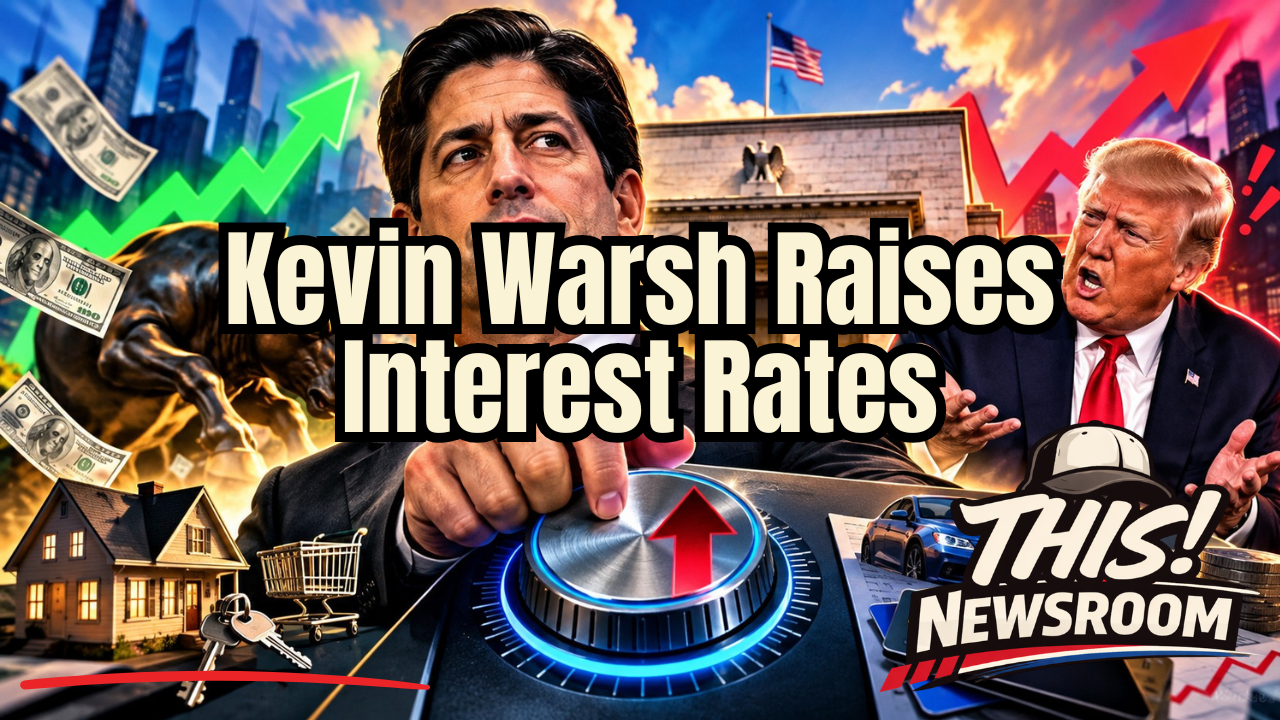
Federal Reserve Chair Kevin Warsh just made one of the most consequential decisions of his young tenure at the central bank — and it puts him directly at odds with the president who nominated him.
On Wednesday, September 16, the Federal Reserve unanimously voted to raise its benchmark interest rate by 0.25 percentage points, moving the federal funds target range to 3.75%–4.00%. It was the Fed’s first rate increase since 2023.
The reason is straightforward: inflation remains too high for the Fed’s comfort.
But the consequences are anything but simple.
Higher rates could help bring inflation under control. They could also make mortgages, credit cards, auto financing and business loans more expensive while potentially slowing economic growth.
And President Donald Trump has made it clear that this is not the direction he wanted monetary policy to go.
Why Did Warsh and the Fed Raise Rates?
The Federal Reserve has two primary objectives: maintaining price stability and supporting maximum employment.
Right now, policymakers appear more concerned about inflation.
In its official statement, the Federal Open Market Committee said economic activity continues to expand at a “solid pace.” Domestic spending has remained resilient, productivity growth is strong, capital investment is robust and unemployment has changed relatively little. At the same time, however, the Fed said inflation remains elevated.
Warsh made the concern even clearer following the meeting.
“The plain fact is that inflation is too high and has been for too long.”
The Fed wants inflation moving sustainably toward its 2% target, and policymakers apparently concluded that keeping rates where they were wasn’t restrictive enough to accomplish that quickly enough.
There are several pressures complicating the inflation picture. Energy costs have risen amid geopolitical conflict, while tariffs and strong domestic demand can also contribute to price pressures. Meanwhile, investment — including enormous spending associated with artificial intelligence infrastructure — has remained strong.
In other words, the economy hasn’t weakened enough to convince policymakers that inflation will simply disappear on its own.
What Does a 0.25% Rate Hike Actually Mean?
The Fed doesn’t directly determine the interest rate on your mortgage, car loan or credit card.
Instead, it controls the federal funds rate — the overnight rate banks charge one another. Changes to that rate ripple throughout financial markets and eventually influence borrowing costs across the economy.
Following Wednesday’s decision, the target range stands at 3.75% to 4.00%.
That potentially means consumers could face higher borrowing costs for:
- Mortgages and home-equity borrowing
- Auto loans
- Credit cards
- Personal loans
- Business financing
The effect isn’t necessarily immediate or identical across every product. Mortgage rates, for example, are heavily influenced by longer-term Treasury yields and expectations about future inflation and Fed policy rather than simply moving point-for-point with the federal funds rate.
Why Would the Fed Intentionally Make Borrowing More Expensive?
Because that’s essentially how monetary policy fights inflation.
Higher interest rates discourage borrowing and encourage saving. Consumers may postpone buying cars or houses. Businesses may reconsider expansion projects. Investors become more selective.
That reduces demand throughout the economy.
Less demand can eventually reduce businesses’ ability to continually raise prices, helping inflation decline.
The tradeoff is that the same mechanism that cools inflation can also cool the economy.
Is the Rate Hike Good or Bad?
Economically, there isn’t a universal answer. It depends on what happens next.
The argument for the hike is that allowing inflation to remain elevated can create a much larger problem. If consumers and businesses begin expecting persistent inflation, those expectations can influence wages, contracts and pricing decisions. Bringing inflation down later could require substantially more restrictive monetary policy.
The Fed appears to believe the economy is currently strong enough to withstand somewhat higher rates. Its statement pointed specifically to resilient spending, strong productivity, robust capital investment and stable unemployment.
The argument against the hike is that monetary policy operates with a lag. Rate increases today can weaken housing, business investment and consumer spending months later. Borrowers already facing high financing costs could feel additional pressure.
There is another complication: some current inflationary pressures come from supply-side or geopolitical factors. Higher interest rates cannot produce more oil, eliminate tariffs or end overseas conflicts.
So the central question isn’t simply whether higher rates are “good” or “bad.”
It’s whether the inflation reduction they may produce outweighs the economic slowdown and additional borrowing costs they may create.
Why Trump Isn’t Happy
Trump has repeatedly argued that U.S. interest rates should be substantially lower.
After Wednesday’s decision, he wrote that American interest rates should be “1%, or less,” citing the country’s creditworthiness.
He later criticized the Fed’s board, calling its members political and arguing that the rate increase would damage his administration economically. The White House’s preferred direction had been essentially the opposite: significantly lower rates.
There are obvious economic reasons a president might prefer lower interest rates.
Lower rates can make mortgages cheaper, reduce corporate borrowing costs, encourage investment and potentially stimulate housing and consumer spending. They can also lower some financing costs associated with government debt over time.
But presidents do not directly set interest rates.
That authority belongs to the independent Federal Reserve.
The Warsh Twist
This is where the story becomes particularly interesting.
Trump selected Warsh to lead the Federal Reserve after repeatedly criticizing former Chair Jerome Powell over monetary policy.
Before taking the job, Warsh had suggested that interest rates had room to decline. During his confirmation process, however, he also said he had not promised Trump that he would cut rates and pledged to operate independently.
Now Warsh has participated in a unanimous decision to do precisely what Trump did not want: raise rates.
Trump subsequently said he had told Warsh he might as well vote with the board because the other policymakers supported the increase. Trump also said he wanted the Fed to remain independent. Warsh declined to discuss his conversations with the president.
That distinction matters.
Wednesday wasn’t technically “Warsh raising rates” by himself. The 12-member voting Federal Open Market Committee voted unanimously for the quarter-point increase.
And Another Rate Hike Could Be Coming
Perhaps the biggest story isn’t Wednesday’s quarter-point increase.
It’s what could happen next.
The Fed’s latest economic projections suggest policymakers believe additional tightening may be necessary. According to reporting on the projections, 16 of 18 policymakers projected at least one additional increase this year.
The Fed’s September projections also point to an economy that remains relatively resilient while inflation stays above target.
That creates an uncomfortable possibility for borrowers: today’s increase may not be the end of the cycle.
Warsh, however, has avoided committing the Fed to a predetermined path, emphasizing that future decisions will depend on incoming economic data.
What This Means for Housing
Housing may be one of the most closely watched areas.
Higher rates can pressure affordability because buyers are already dealing with elevated home prices. If Treasury yields and mortgage rates rise alongside expectations for tighter Fed policy, monthly payments become more expensive and some potential buyers may leave the market.
That could reduce demand and eventually put downward pressure on home-price growth.
But mortgage rates don’t automatically rise 0.25 percentage points simply because the Fed raised its benchmark by that amount. Markets often price expected Fed decisions into longer-term rates before the announcement.
What It Means for Credit Cards and Auto Loans
Consumers carrying variable-rate debt could feel the impact more directly.
Credit-card rates generally respond relatively quickly to changes in benchmark rates. Auto financing and personal loans could also become somewhat more expensive.
For households already carrying significant debt, even modest increases can accumulate.
Savers, on the other hand, could benefit. Banks and money-market funds may continue offering comparatively attractive yields if short-term rates remain elevated.
What It Means for Stocks
The effect on stocks is more complicated.
Higher interest rates generally create a tougher environment for equities because investors can earn more from relatively safer assets such as Treasury securities.
Higher borrowing costs can also reduce corporate profits and make future earnings less valuable when investors discount them back to today’s dollars.
But the Fed is raising rates partly because economic activity remains strong.
That means markets are balancing two competing signals:
Rates are going higher, but the economy has remained resilient enough for the Fed to believe it can handle them.
The Bigger Economic Gamble
Warsh’s first rate increase represents one of the oldest balancing acts in central banking.
Raise rates too little and inflation could remain entrenched.
Raise them too aggressively and the Fed could unnecessarily weaken an otherwise healthy economy.
The ideal outcome would be inflation moving steadily toward 2% while employment and economic growth remain relatively strong — the often-discussed “soft landing.”
Whether that happens won’t be known for months.
For now, however, Warsh has sent a clear signal: despite political pressure for dramatically lower interest rates, the Federal Reserve currently considers inflation the greater monetary-policy risk.
And if inflation doesn’t improve, Wednesday’s rate increase may not be the last one Americans see in 2026.
Sources: Federal Reserve — September 16 FOMC Statement · Federal Reserve — September Economic Projections · Reuters — Trump reacts to Fed rate hike · Associated Press — Fed raises rates for first time since 2023