
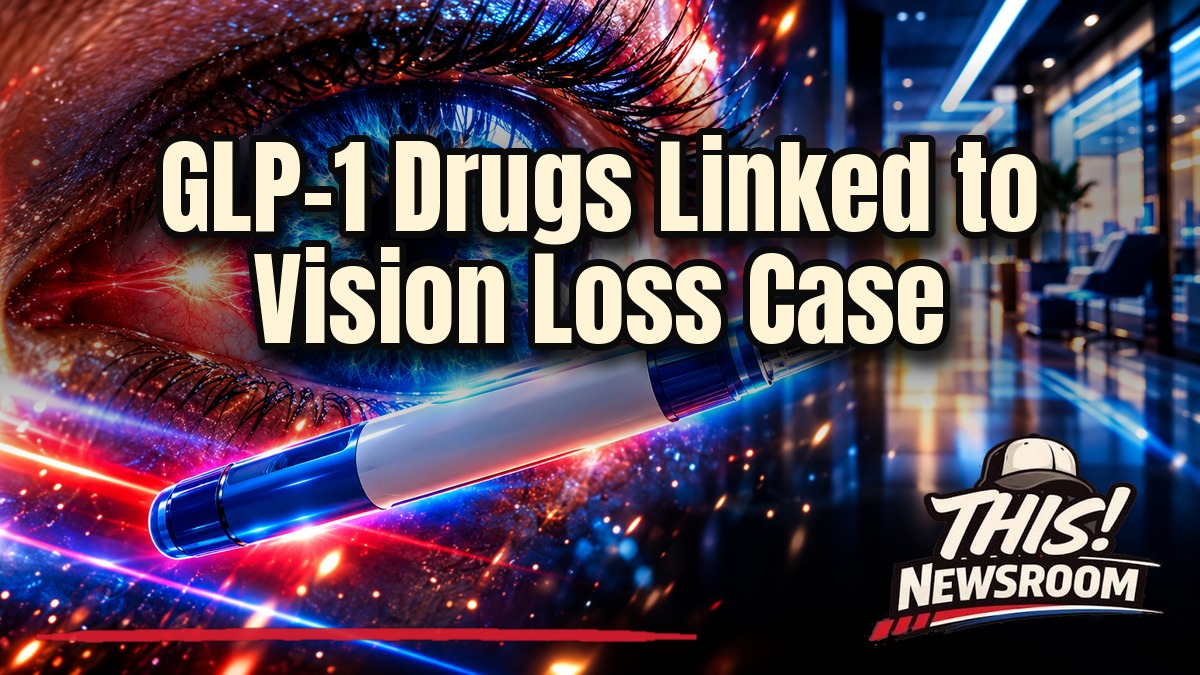
A single report, filed in December 2024, has just become public in South Korea: the country’s first suspected case of GLP-1 vision loss. The country’s drug regulator told lawmakers on Tuesday that one report of suspected optic nerve damage after obesity-drug use is on file, according to SBS News.
Oh Yu-kyung, minister of Food and Drug Safety, gave the update during a National Assembly Health and Welfare Committee audit. “One case (in December 2024) has been reported,” she said, and SBS translated her remarks. Lawmaker Baek Sun-hee of the Rebuilding Korea Party had asked her about it.
What the suspected GLP-1 vision loss case actually is
Doctors call the condition NAION, short for non-arteritic anterior ischemic optic neuropathy. It happens when blood flow to the optic nerve drops, and it can cause sudden vision loss in one eye. Korean outlets, including Etoday, say the reported case followed use of Wegovy, which contains semaglutide. The English-language reports only say “GLP-1 obesity treatments.”
Here is the part to hold onto: this is a suspected case. Nothing in the reporting establishes that the drug caused the damage, and officials have not made the full details of the patient public. So the semaglutide NAION link stays unproven in this case.
The follow-up question
The timing is the hard part to explain. The report is from December 2024, yet it only came up publicly in October 2026. Baek noted that Europe’s medicines agency began its own review in January 2025. She criticized Korea for weak follow-up and tracing on a suspected case it received earlier than that.
Oh also said the regulator approved NAION as a labeled side effect on Oct. 7, classifying it as rare. So the warning is now on the books in Korea. The question lawmakers keep circling is why it took this long, and whether other cases of GLP-1 eye damage went unreported in the meantime.
A market that grew about 20 times over
Why does this matter now? Because Korea’s GLP-1 market has expanded enormously. According to the audit figures, distribution of these obesity drugs climbed from 160,000 units in October 2024 to roughly 3.12 million in July 2026. That is about a 20-fold jump.
The lawmaker also cited 18 million pens of Mounjaro and 3.1 million pens of Wegovy distributed. Supply to Korean medicine clinics in the first seven months of 2026 was more than 10 times the full-year 2025 volume. Supplies also turned up at dental clinics, and officials identified Mounjaro prescriptions to teenagers, even though the drug is not permitted for anyone under 18. With volumes like that, any obesity drug vision risk gets magnified fast.
The regulator’s own inspections this year found violations at six sites. Oh said she would check whether anything illegal happened in distribution.
Korea also plans to designate Wegovy, Saxenda and Mounjaro as drugs subject to misuse and abuse, though officials have not set an implementation date. Safety questions around new health products keep piling up elsewhere too, as in the recall of a baby sleep gripe water over undeclared alcohol.
What patients should know about Wegovy vision problems
Is this a reason to panic? No. The European Medicines Agency’s safety committee concluded that NAION could be a very rare side effect of semaglutide products such as Ozempic, Wegovy and Rybelsus. In EU terms, very rare means up to 1 in 10,000 people.
Still, this isn’t only a Korean story. As of late September, U.S. labels for Ozempic, Wegovy, Rybelsus and Mounjaro did not mention NAION, Medical Daily reported. Regulators in Europe, the U.K. and Australia have issued warnings. The FDA listed GLP-1 drugs and NAION as a potential safety signal in late 2024, which is not a finding of cause. The agency has not finished its review.
Novo Nordisk makes Wegovy and Eli Lilly makes Mounjaro. Both face a growing pile of U.S. lawsuits alleging vision loss and failure to warn.
Here’s the thing: if you or someone you love takes one of these drugs, the practical advice is simple. Sudden vision changes in one eye call for immediate medical attention. Don’t stop a prescribed medication on your own because of a headline. Ask your doctor whether your eye health or risk factors are worth a conversation.
Other health risks deserve the same close look, like the masked high blood pressure tied to falls in older adults.
What happens next for GLP-1 vision loss reports
The audit is still running, so more remarks on the case and on distribution checks are possible. The bigger open question sits in Washington: whether the FDA eventually adds a NAION warning to U.S. labels. If it does, Korea’s one reported case of GLP-1 vision loss will look like an early marker rather than a footnote.