
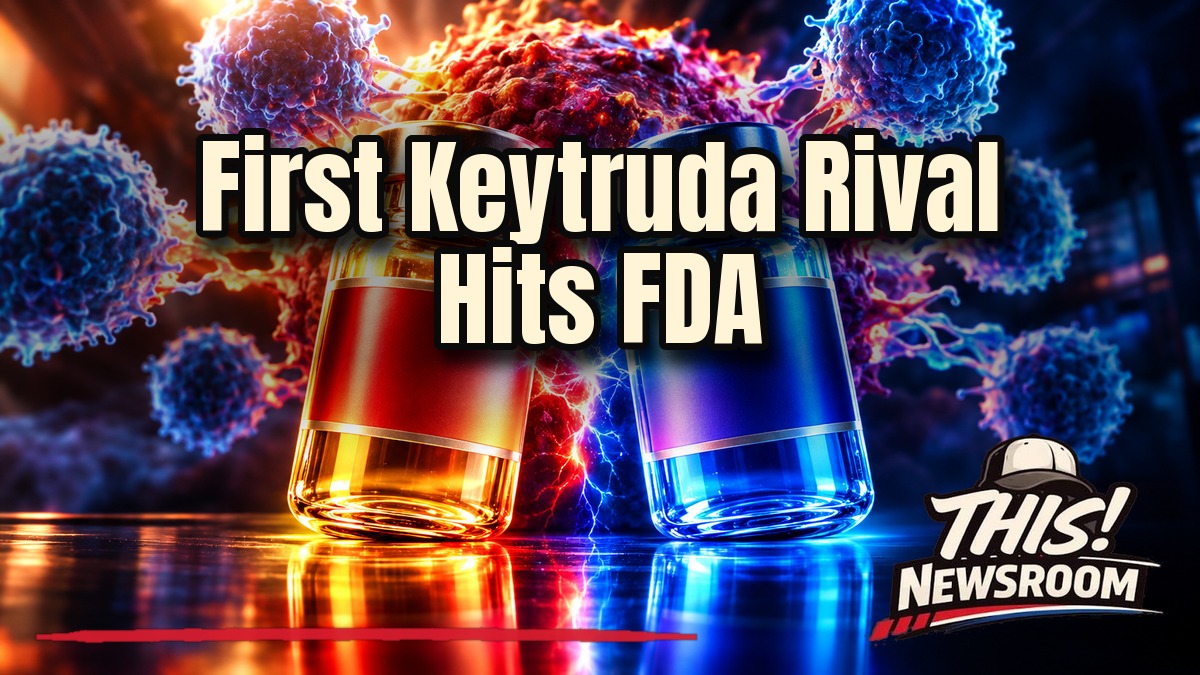
Somebody finally crossed the starting line in the race to copy the world’s best-selling drug. Regulators have accepted a Keytruda biosimilar from Zydus Lifesciences and Formycon for FDA review, according to a joint release on PR Newswire. The companies say it is the first publicly announced filing of its kind.
That “first” comes with fine print. The companies hedge it themselves (“to the best of our knowledge”), and it covers only filings that have been announced.
Rivals may be sitting on applications they haven’t talked about yet. Poker faces are cheap.
What Keytruda biosimilar FYB206 actually is
The product is called FYB206. It is a proposed biosimilar to Merck’s Keytruda, the cancer immunotherapy known generically as pembrolizumab. Keytruda blocks a protein called PD-1 so the immune system can go after tumors, and doctors use it across a long list of cancers.
A biosimilar is not a generic in the pill-bottle sense. Think of it as a close cousin built from scratch. It has to show regulators there are no clinically meaningful differences from the original in safety or effectiveness.
Here is the part worth noticing. Formycon says it reached a deal with the FDA in February 2025 that FYB206 does not need a comparative Phase III efficacy trial.
Skipping that step saves years and a mountain of cash. That is exactly why this race looks so different from past ones.
The money behind the Keytruda biosimilar race
Why does everyone want in? Keytruda and its newer under-the-skin version, Keytruda Qlex, brought in $31.7 billion worldwide in 2025, per figures the companies pulled from Merck’s reports. In the first half of 2026 alone, the pair booked $16.4 billion.
That is not a typo.
No other biologic medicine on the planet sells better. In fact, a course of Keytruda has been listed at roughly $12,000 every three weeks.
So who’s actually paying for that? Insurers, Medicare and patients, mostly. A Keytruda competitor in the market is the best shot at pulling that bill down. Cancer science is moving fast elsewhere too, as our look at the mRNA skin cancer breakthrough shows.
Here’s the thing: don’t expect cheaper cancer care tomorrow
This is a filing acceptance, not an approval. The FDA has simply agreed to start reading the paperwork.
The application went in during the third quarter of 2026. Under the federal biosimilar user-fee rules, the agency aims to finish within 12 months. The companies pencil in a decision around the third quarter of 2027.
Even an approval would not mean a pharmacy-shelf launch. The release itself says Zydus will sell the drug in the US and Canada “subject to regulatory approval and resolution of any intellectual property issues.” That is lawyer-speak for patents, and Keytruda’s patent protection is a moving target.
Public sources put US expiry anywhere from 2028 to 2029, so treat any single date with caution.
Then there is Merck. It has been pushing patients toward Keytruda Qlex, the subcutaneous version approved in September 2025, and priced it at parity with the original. Moving people to the newer formulation is a classic way to blunt a biosimilar wave. We found no Merck comment on today’s news.
Who’s chasing Keytruda
Zydus and Formycon are not alone. Coverage of the field names Samsung Bioepis, Amgen, Sandoz, Celltrion and Bio-Thera among the companies developing a pembrolizumab biosimilar of their own. Samsung Bioepis has reportedly filed in Korea and was the first to publish Phase III data.
For the two partners, it is also a milestone in dollars. FDA acceptance triggers a payment from Zydus to Formycon, though the amount was not disclosed. The pair signed their US and Canada licensing deal in December 2025, and the dossier has also gone to Health Canada.
Remember, FYB206 is still an investigational product. Regulators have not established biosimilarity, and the companies say so plainly.
So watch the calendar. Will Samsung Bioepis, Amgen and the rest announce filings of their own? And will Merck answer with lawsuits? Drug-safety questions keep surfacing across the industry, as in this report on a suspected vision-loss case tied to Wegovy-type drugs.
The first biosimilar filing is in. Now we find out who’s close behind.