

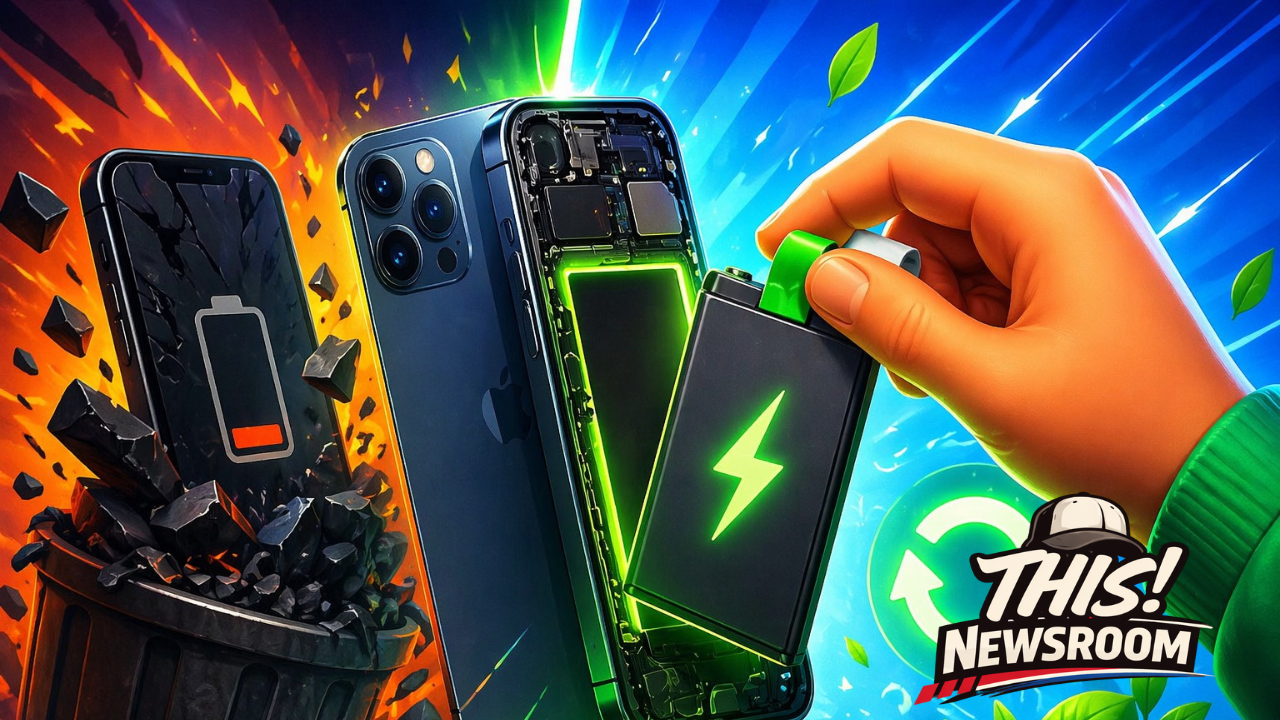
For years, replacing a smartphone battery—especially on devices like the iPhone—meant one thing: booking an appointment, paying a fee, and staying inside a tightly controlled repair ecosystem. Companies like Apple built their products in a way that kept repairs largely in-house, locking users into official service channels.
That era is about to change.
Starting in 2027, the European Union will require all smartphones sold within its markets to include user-replaceable batteries. And this isn’t a minor tweak—it’s a fundamental shift in how devices are designed, sold, and maintained.
A Major Shift in Smartphone Design
This new regulation applies broadly across the industry—impacting giants like Samsung, Google, and others. The rule mandates that users must be able to replace their phone batteries without specialized tools or proprietary restrictions.
But the changes go deeper.
Manufacturers must also ensure that batteries retain at least 80% of their capacity after 800 charge cycles. In real-world terms, that translates to roughly 2 to 3 years of consistent use before noticeable degradation kicks in.
This means companies won’t just swap out battery designs—they’ll need to rethink how the entire device is engineered, from internal layouts to materials and durability standards.
Built to Last, Not to Replace
The regulation also raises the bar for durability. Smartphones will need to better withstand:
- Drops
- Dust exposure
- Moisture
- Everyday wear and tear
In short, the EU is pushing manufacturers to stop treating electronics as disposable products.
And there’s a clear reason why.
Europe generates millions of tonnes of electronic waste every year, making e-waste one of the fastest-growing environmental challenges globally. By forcing devices to last longer—and be repairable—the EU aims to slow that trend significantly.
The Business Impact: Apple’s Services at Risk?
This shift could have real financial implications, especially for companies like Apple, whose services division generates billions annually, much of it tied to repairs, replacements, and device lifecycle management.
If users can easily swap their own batteries, that revenue stream could shrink.
That doesn’t mean Apple—or others—won’t adapt. They will. But historically, companies have resisted moves that reduce control over hardware ecosystems. Expect friction, lobbying, and creative design workarounds before full compliance becomes the norm.
Why This Won’t Stay in Europe
Here’s the bigger story: this regulation likely won’t stop at Europe.
Tech companies rarely build completely separate versions of the same product for different regions—it’s inefficient and costly. So when the EU enforces a major change, it often becomes the global standard.
We’ve seen this before with:
- USB-C charging standards
- Privacy regulations like GDPR
There’s a strong chance that future iPhones and Android devices worldwide will adopt user-replaceable batteries—even in markets where it’s not legally required.
What This Means for You
If you’re a consumer, this is a win.
- Your phone could last longer
- Repairs could be cheaper and easier
- You may not need to upgrade as often
But there’s a trade-off. Devices could become slightly thicker, or lose some of the ultra-sealed, minimalist designs we’ve grown used to.
Still, the direction is clear.
The smartphone industry is moving—whether it likes it or not—toward repairability, longevity, and sustainability.
And by 2027, the phone in your pocket might look—and function—very differently than it does today.