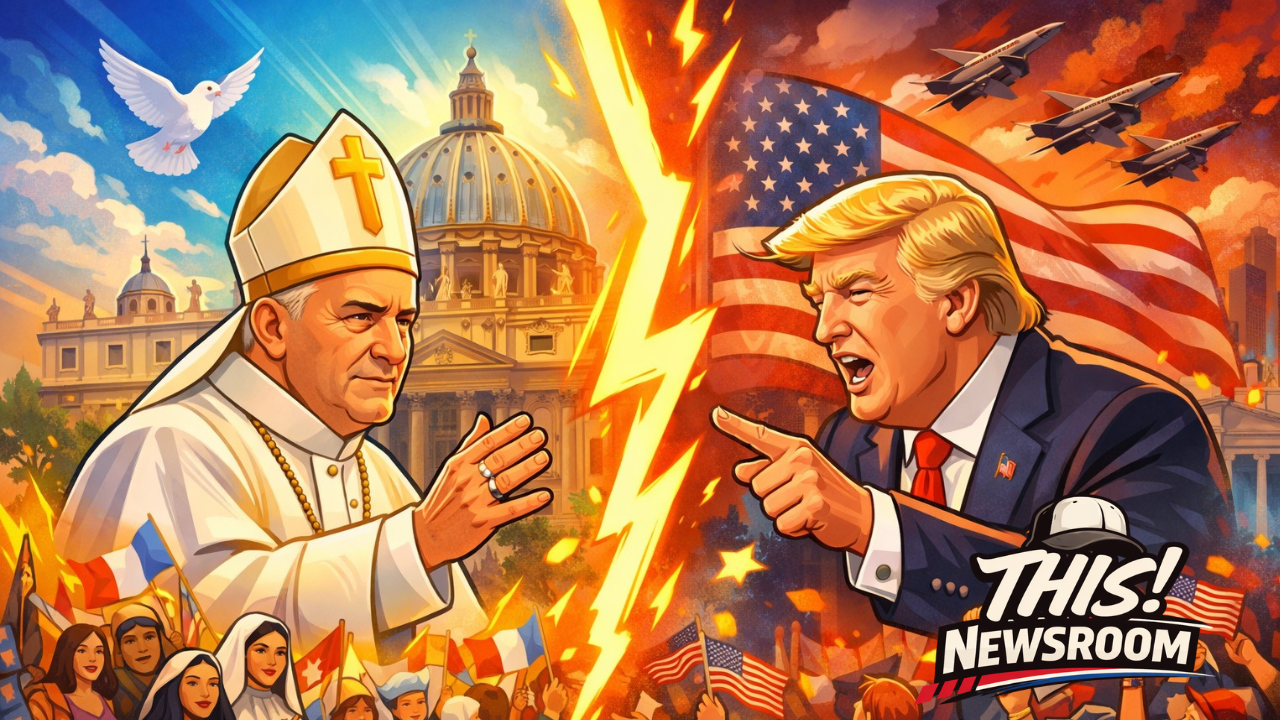


Tensions between Pope Leo and Donald Trump have sparked global conversation, particularly among Catholics and Christians trying to reconcile faith with politics.
At the center of the disagreement are fundamentally different views on immigration, nationalism, global responsibility, and moral leadership. While both figures command massive influence, they speak to different audiences—and often from very different perspectives.
What the Pope Is Saying
Catholic Church leadership under Pope Leo has emphasized themes consistent with recent papal doctrine: compassion, unity, and care for the vulnerable.
The Pope has publicly reinforced several key principles:
- Welcoming the stranger: He has reiterated that migrants and refugees should be treated with dignity, referencing long-standing Church teachings rooted in biblical scripture.
- Global cooperation over nationalism: Pope Leo has warned that extreme nationalism can divide humanity and weaken collective responsibility.
- Moral tone in leadership: Without always naming individuals, he has called for political leaders to model humility, empathy, and truthfulness.
In several addresses, he has framed these issues not as political stances, but as moral obligations tied to Christian teaching.
Why Trump Disagrees
Republican Party leader Donald Trump has taken a markedly different approach, rooted in national sovereignty and security priorities.
His position typically centers on:
- Border security first: Trump argues that strict immigration enforcement is necessary to protect American jobs, safety, and infrastructure.
- America-first policy: He has consistently emphasized prioritizing U.S. citizens over global obligations.
- Skepticism of global institutions: Trump has often criticized international bodies and leaders when he believes they interfere with national decision-making.
In past remarks, Trump has pushed back on religious leaders entering political debates, suggesting that faith leaders should focus on spiritual matters rather than policy influence.
Where the Disagreement Is Most Visible
The divide becomes most apparent on a few core issues:
Immigration
The Pope frames immigration as a humanitarian and moral duty. Trump frames it as a legal and national security issue.
National Identity
The Vatican promotes global unity. Trump emphasizes national identity and borders.
Leadership Tone
The Pope calls for compassion-driven rhetoric. Trump’s style is more direct, confrontational, and policy-focused.
How Catholics and Christians Are Responding
Among Catholics and broader Christian communities, reactions are mixed and often deeply personal.
Some Align More Closely with the Pope
Many Catholics point to Church teachings as their guide. For them, the Pope’s emphasis on compassion, especially toward migrants and the poor, reflects core Christian values.
Others Support Trump’s Approach
Some Christians, including Catholics, prioritize law, order, and national stability. They argue that protecting a nation’s borders is also a moral responsibility.
A Growing Middle Ground
A significant number of believers feel caught in between. They:
- Agree with the Pope’s moral framework
- Understand Trump’s policy concerns
- Struggle to reconcile both in today’s political climate
This tension reflects a broader question: How should faith influence politics—and where should the line be drawn?
The Broader Context
This is not the first time a U.S. political leader and a Pope have disagreed. Historically, the Vatican has often taken positions that transcend national politics, while American leaders operate within domestic pressures and voter expectations.
What makes this moment different is the visibility and immediacy of the debate. Social media, global news cycles, and political polarization have amplified every statement, making disagreements more public and more impactful.
Why This Matters Now
The conversation between Pope Leo and Donald Trump is about more than two individuals. It highlights a deeper global discussion about:
- The role of religion in public policy
- The balance between compassion and security
- The expectations placed on leaders in times of division
For millions of Catholics and Christians, this isn’t just political—it’s personal.
Final Takeaway
At its core, this disagreement reflects two distinct lenses:
- One rooted in global moral responsibility and compassion
- The other grounded in national sovereignty and pragmatic governance
Both perspectives resonate with different groups of people, and neither side shows signs of backing down.
As the conversation continues, many believers will keep navigating the space between faith and policy—seeking clarity in a moment where conviction and complexity collide.