
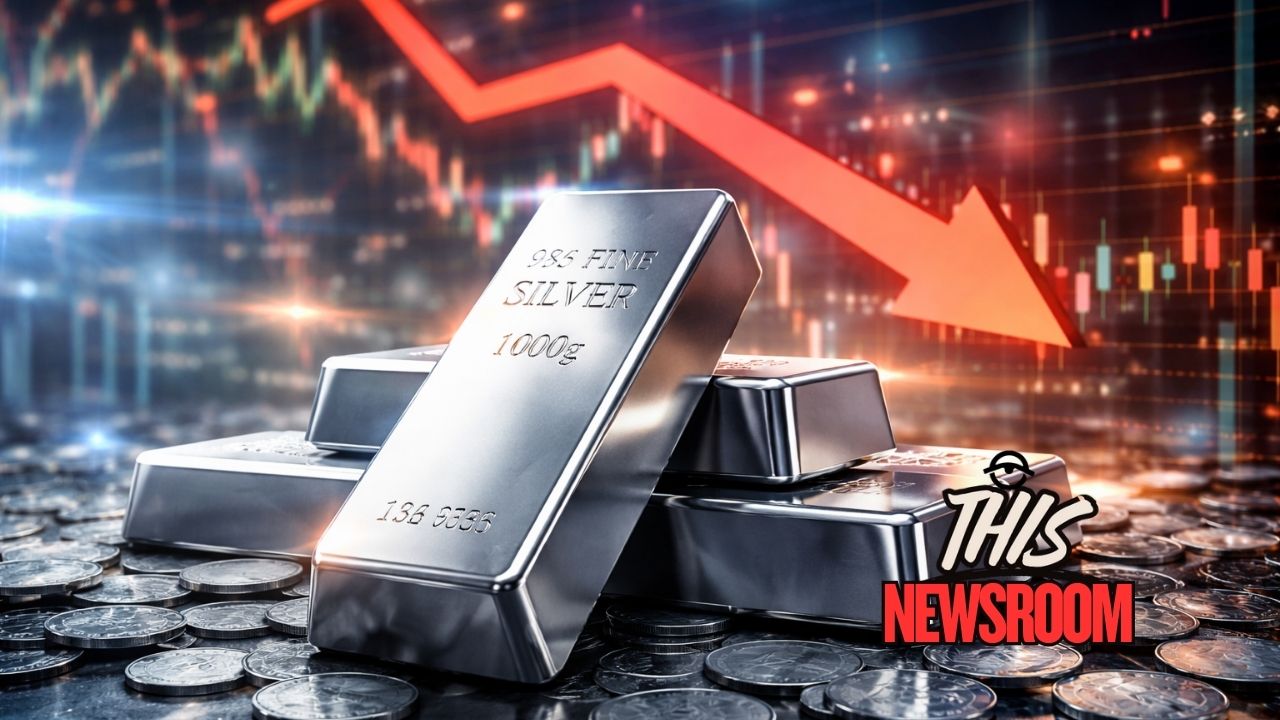
Silver prices moved lower this week after Donald Trump signaled that his administration would pause plans to impose tariffs tied to critical minerals, removing a policy-driven tailwind that markets had already priced in. While the decision may sound procedural, its impact on commodities—especially silver—was immediate and measurable.
In short, traders were positioned for disruption. Instead, they got delay. And silver blinked.
Why a Tariff Pause Matters to Silver
Silver occupies a unique space in the commodities world. Unlike gold, which is primarily a store of value, silver straddles two identities:
- A precious metal used as an inflation hedge
- A critical industrial input used in electronics, solar panels, medical equipment, and advanced manufacturing
Because of this dual role, silver prices are highly sensitive to trade policy and supply-chain risk. Proposed tariffs on critical minerals had raised expectations of higher production costs and tighter global supply. That expectation alone helped lift silver prices in recent weeks.
When the tariff threat was postponed, that scarcity premium evaporated.
Market Reaction: Expectations vs. Reality
Markets rarely wait for policy to be finalized. They trade on anticipation.
Once it became clear that tariffs were not imminent, speculative positions unwound. Silver prices declined as investors rotated out of short-term inflation and disruption hedges, favoring assets with clearer near-term catalysts.
According to market data from global exchanges, silver’s pullback coincided with:
- Reduced volatility across metals futures
- A modest strengthening of the U.S. dollar
- Stabilization in broader commodity indices
The reaction wasn’t panic selling. It was recalibration.
Critical Minerals and the Bigger Economic Picture
The phrase “critical minerals” has become central to U.S. economic and national security discussions. These materials underpin everything from renewable energy to defense manufacturing. While silver is not always categorized alongside lithium or rare earth elements, it plays a supporting role in many of the same industries.
The United States remains heavily reliant on imported minerals, according to data from the U.S. Geological Survey, making trade policy a powerful lever for markets. Any signal that tariffs may return later keeps long-term uncertainty alive, even if near-term pressure has eased.
Why Gold Stayed Relatively Calm
Gold prices remained comparatively stable during the same period. That divergence highlights a key difference between the two metals.
Gold reacts primarily to:
- Inflation expectations
- Interest rates
- Currency movements
Silver reacts to all of the above, plus industrial demand and manufacturing outlooks. When trade fears cool, silver often underperforms gold. This pattern has played out repeatedly during periods of policy clarity or economic stabilization.
What Investors Are Watching Next
Silver’s short-term movement does not signal a broken thesis. Instead, it reflects a pause in momentum. Traders are now focused on several forward-looking indicators:
- Any renewed rhetoric around tariffs or trade restrictions
- Inflation data and Federal Reserve guidance
- Industrial demand tied to solar and electronics growth
- The strength of the U.S. dollar
If tariff discussions resurface or inflation accelerates, silver could quickly regain lost ground.
Why This Matters Beyond Markets
Policy decisions around critical minerals ripple far beyond trading desks. They affect:
- Manufacturing costs
- Energy transition timelines
- Technology pricing
- Mining investment and job creation
Silver’s movement serves as a reminder that commodities often act as early indicators of broader economic shifts.
Further Reading and Resources
External sources
- Reuters: Global commodities and trade policy coverage
- U.S. Geological Survey: Critical minerals data and reports
- CME Group: Silver futures and market insights
Related articles on This Newsroom
- Why Critical Minerals Are Reshaping Global Trade
- Gold vs. Silver: Understanding the Key Differences
- How Trade Policy Moves Commodity Markets
Bottom Line
Silver did not collapse. It adjusted.
By holding off on critical mineral tariffs, Trump removed a near-term source of uncertainty that had been supporting prices. The long-term fundamentals—industrial demand, inflation hedging, and supply-chain vulnerability—remain intact.
For now, silver is waiting. Markets always do.