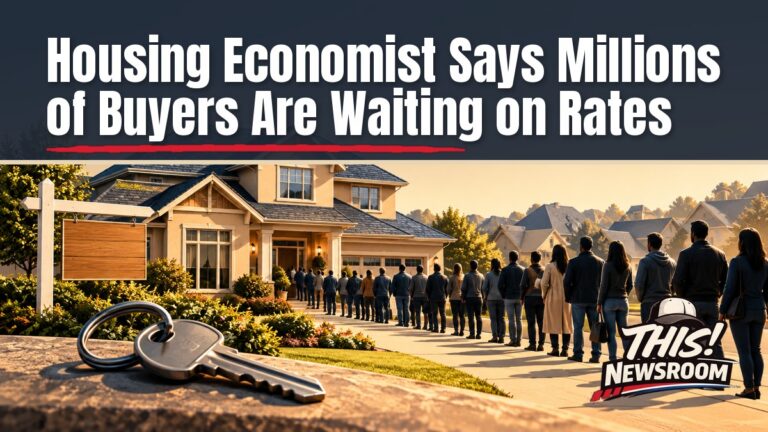


Congress slammed the door on Wall Street landlords, and someone else walked right through it. The small investors housing market story just got a big twist: a new federal law bars Wall Street-sized landlords from buying more single-family homes, and the mom-and-pop buyers next door are already filling the gap.
The numbers are lopsided. Small investors made up about 63% of investor home purchases in 2025, according to a Stacker report citing Realtor.com’s annual investor data. That is up from 53% at the pandemic-boom peak, and it is the highest share in more than 15 years.

Wall Street Investors Are Selling While Small Property Investors Buy
Meanwhile, the biggest investors are heading the other way. Mega-investors accounted for just 7.5% of investor purchases in 2025, their smallest slice since 2011. Over the past three years, they have sold roughly 135,000 more homes than they bought.
Small investors, by contrast, bought about 53,000 more homes than they sold last year. Every larger category was a net seller. That is a quiet but dramatic handoff, and it happened before the new restrictions even take effect.
Overall investor buying barely moved. Investors bought about 534,000 homes in 2025, up 0.7% from the year before. Purchases by everyone else fell 2.1%. Buyers who already face mortgage rates at their highest level since November 2023 will notice who they are bidding against.
What the Law Actually Does to Housing Investors
The restriction comes from the 21st Century ROAD to Housing Act, which became Public Law 119-101 on July 11, 2026. The Senate passed the housing bill 89 to 10 in March, and the House accepted the final version 358 to 32 in June, as Mayer Brown’s analysis of the Senate vote and a SkyBriz breakdown of the final bill lay out.
Here is the key detail. A “large institutional investor” is any entity with investment control of 350 or more single-family homes, according to Latham & Watkins. The law excludes manufactured homes. Those investors cannot buy more unless a statutory exception applies, such as build-to-rent construction. Housing investors below that line face no such limit.
The ban takes effect January 7, 2027, and runs through 2042. Violations can bring civil penalties of up to $1 million per violation or three times the purchase price, per the SkyBriz summary.
The politics got messy. Trump cancelled a planned signing ceremony in late June. Sen. Elizabeth Warren (D-MA) put it bluntly, according to the Greenfield Recorder: “Trump refused to sign it, but he couldn’t stop it.”
Here’s the Thing: Does the Small Investors Housing Market Help Buyers?
That is the question for anyone trying to buy a first home. Small investors paid a median of about $330,000 in 2025, roughly 25% below the overall market median of $440,000. They are shopping in the same starter-home aisle as first-time buyers.
So the crackdown may not have cleared the aisle. It may just have changed who is standing in it. With pending home sales at a record low, any extra competitor matters.
Analysts were skeptical from the start. CNN and CNBC analyses argued the ban may do little for homebuyers because big-institution buying was already light. Another view is that small-time landlords, who own far more homes than the giants, may benefit most from the new rules.
The Rules Still Need Writing
Not everything is settled. Regulators have yet to issue final regulations (the law is on the books, but the fine print is still in the drafting pile), and law firm Morgan Lewis says those rules will decide whether institutional investment in scattered-site rentals is merely limited or severely curtailed.
Some big money is also testing the edges. Cotality reported that mega-investors still bought 2.2% of single-family homes in August. Investors owning 100 to 999 homes bought 21% fewer homes than a year earlier, and medium-sized investors bought 17% fewer. Mom-and-pop investors, meanwhile, kept buying.
The data covers 2025 and August 2026, so this is a trend, not a verdict. What happens after January 7 is the real test.
Will first-time buyers get relief, or just a different landlord bidding against them?