
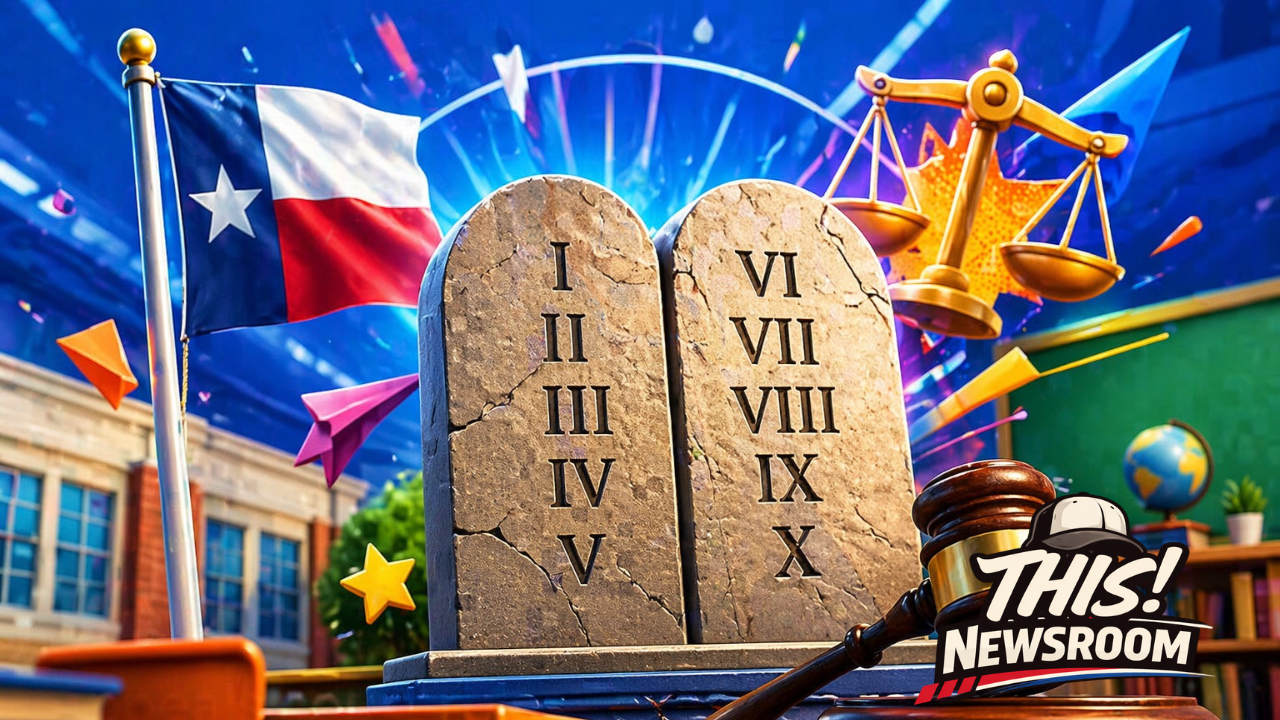
A major legal decision is reigniting a long-standing national debate over religion, education, and the Constitution. A federal appeals court has ruled that Texas can require public schools to display the Ten Commandments in classrooms, clearing a key hurdle for a policy that supporters say reinforces moral foundations—and critics argue crosses a constitutional line.
What the Court Decided
The ruling comes from a U.S. appeals court that determined Texas lawmakers acted within their authority in mandating the display of the Ten Commandments in public school classrooms. The decision allows the state to move forward with implementation, at least for now, while legal challenges are expected to continue.
At the heart of the case is a familiar constitutional question:
Does displaying a religious text in a public school violate the First Amendment’s Establishment Clause?
The court’s answer—at least in this instance—is no, signaling a shift in how courts may interpret the role of religion in public life.
Why Texas Is Pushing This
Texas lawmakers backing the policy argue that the Ten Commandments are not just religious doctrine but also historically significant, influencing the development of Western legal systems.
Supporters say:
- The display promotes moral clarity and accountability
- It reflects historical roots of law and order
- It provides cultural and educational context
In their view, this isn’t about forcing religion—it’s about recognizing history.
The Opposition: Constitutional Concerns
Critics strongly disagree.
Civil liberties groups and opponents argue the mandate:
- Blurs the line between church and state
- Places religious pressure on students of different faiths (or none at all)
- Sets a precedent for government-endorsed religion in schools
They point to past Supreme Court rulings that struck down similar efforts, arguing this decision conflicts with decades of legal precedent.
A Changing Legal Landscape
This ruling reflects a broader trend. In recent years, courts—including the Supreme Court—have shown more openness to religious expression in public spaces, particularly when framed as historical or cultural rather than purely devotional.
That shift is critical.
It suggests future cases involving religion in schools—from prayer to curriculum—could be viewed through a different legal lens than in previous decades.
What Happens Next
This isn’t the final word.
Legal experts expect:
- Appeals to the Supreme Court
- Ongoing state-by-state battles
- Potential policy expansion in other conservative-led states
If the Supreme Court ultimately weighs in, the outcome could reshape how religion is treated in public education nationwide.
The Bigger Picture
This debate goes far beyond Texas.
It touches on fundamental questions:
- What role should religion play in public life?
- Where is the line between heritage and endorsement?
- And who decides what belongs in a classroom?
For some, this ruling is a return to foundational values.
For others, it’s a step toward eroding the separation of church and state.
Either way, one thing is clear:
This conversation is just getting started.