

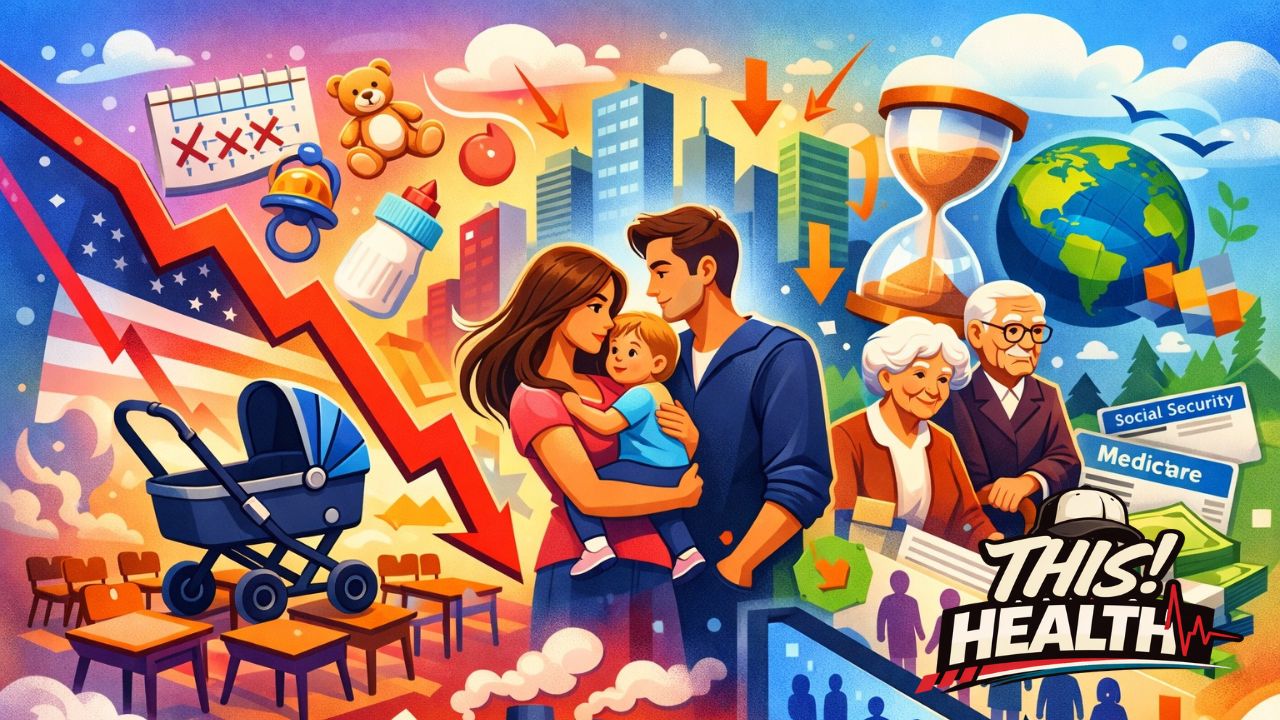
The United States just hit a milestone that economists, policymakers, and families alike have been watching for years—and not in a good way.
According to the latest data released by the Centers for Disease Control and Prevention (CDC), the nation’s fertility rate has dropped to its lowest level on record, continuing a long-term downward trend that shows no signs of reversing.
The Numbers Behind the Decline
The CDC reports that the U.S. fertility rate has fallen to approximately 1.6 births per woman, well below the replacement level of 2.1 needed to maintain a stable population without immigration.
Even more striking:
- Total births declined again year-over-year
- Birth rates among women in their 20s continue to fall sharply
- Slight increases among women in their 30s and 40s are not enough to offset the broader decline
This marks another step down in a trend that began after the 2008 financial crisis—and accelerated during and after the pandemic.
Why Are Fewer People Having Kids?
Experts point to a mix of economic, cultural, and lifestyle factors driving the shift.
1. Cost of Living Is Crushing
Housing, childcare, healthcare, and education costs have surged. For many, starting a family feels financially out of reach.
2. Delayed Life Milestones
Marriage and homeownership are happening later. As a result, many couples are postponing children—or choosing not to have them at all.
3. Career and Lifestyle Priorities
Younger generations are placing greater emphasis on career growth, flexibility, and personal freedom.
4. Uncertainty About the Future
From economic instability to global conflicts and climate concerns, uncertainty is shaping long-term decisions.
What the Data Signals Long-Term
A falling fertility rate isn’t just a demographic statistic—it has real economic consequences.
Aging Population
Fewer births today mean a larger proportion of older Americans tomorrow, putting pressure on programs like Social Security and Medicare.
Shrinking Workforce
With fewer young workers entering the labor force, businesses may face long-term talent shortages.
Economic Growth Concerns
Population growth has historically been a key driver of U.S. economic expansion. Slower growth could reshape the country’s economic trajectory.
How the U.S. Compares Globally
The U.S. is not alone.
Countries like Japan, South Korea, and much of Europe are already experiencing even lower fertility rates and more severe population declines.
In fact, South Korea recently reported a fertility rate below 1.0, highlighting how extreme the trend can become without intervention.
Are There Any Signs of Reversal?
So far, not really.
While there have been brief, small rebounds in certain age groups or regions, the overall trajectory remains downward. Policies like child tax credits, paid family leave, and childcare subsidies have been proposed—and in some cases implemented—but results have been mixed.
The Bigger Picture
This shift is forcing a national conversation:
- Should the U.S. invest more heavily in family support policies?
- Will immigration play a larger role in sustaining population growth?
- How will businesses and markets adapt to a smaller, older population?
One thing is clear: this isn’t a short-term fluctuation—it’s a structural change.
Final Take
The record-low fertility rate reflects deeper changes in how Americans live, work, and plan their futures. It’s not just about fewer babies—it’s about a transformation in priorities, economics, and expectations.
And while the trend may be gradual, its impact will be anything but.