
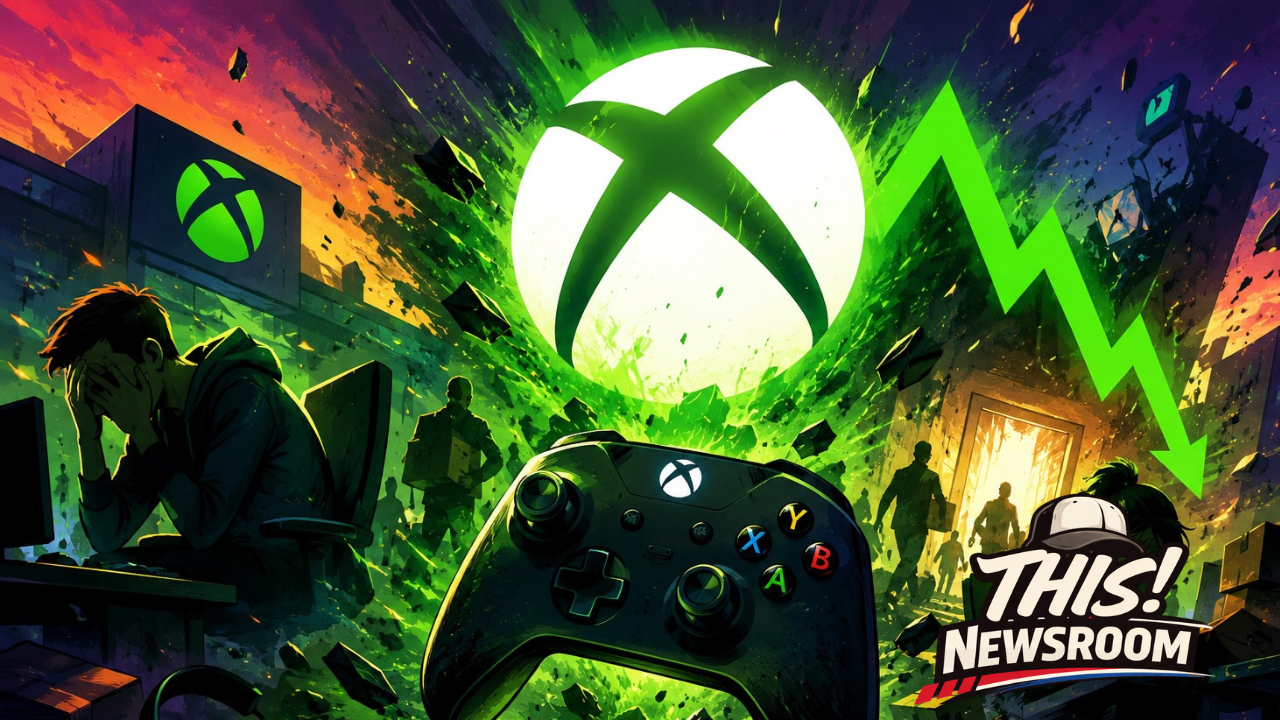
For years, Xbox looked like it was building an unstoppable gaming empire.
Microsoft spent billions acquiring legendary studios, invested heavily in subscriptions, expanded Game Pass, pushed cloud gaming, and promised gamers a future where Xbox could be played anywhere.
Now, after another massive round of layoffs impacting thousands of employees, it’s clear the strategy didn’t deliver the financial results Microsoft expected. The latest restructuring represents one of the biggest shakeups in Xbox history and signals that the company is resetting its gaming business after years of aggressive spending.
Thousands of Jobs Eliminated
Microsoft announced approximately 4,800 company-wide layoffs, with the majority impacting its Xbox gaming division. Around 1,600 Xbox employees were let go immediately, with additional reductions expected throughout the fiscal year as part of a broader restructuring.
The layoffs stretch across:
- Xbox Game Studios
- Bethesda and ZeniMax teams
- Activision-related operations
- Publishing and support organizations
- Corporate gaming divisions
Several studios are also being sold, spun off, or reorganized as Microsoft narrows its focus to its biggest franchises.
The $69 Billion Question
When Microsoft acquired Activision Blizzard for nearly $69 billion, many believed it had permanently changed the gaming landscape.
Instead, integrating one of gaming’s largest publishers proved expensive and complicated.
The expectation was that blockbuster franchises like Call of Duty, Diablo, World of Warcraft, and Candy Crush would dramatically accelerate Xbox’s growth.
That hasn’t happened at the pace investors anticipated.
Instead, Microsoft now finds itself reducing costs while trying to improve profitability across the entire gaming division.
Where Xbox Went Wrong
Xbox didn’t fail because it lacked great games.
It struggled because its overall strategy became too broad.
Betting Everything on Game Pass
Game Pass remains one of the best values in gaming.
But subscription businesses require enormous scale.
Microsoft invested billions into first-party content expecting subscriber growth to continue accelerating. Instead, growth slowed while development costs continued climbing. Executives have acknowledged that key growth initiatives failed to produce sustainable financial returns.
Buying Instead of Building
Xbox purchased studio after studio.
Bethesda.
Activision Blizzard.
Numerous independent developers.
Owning dozens of studios creates incredible potential—but also enormous overhead.
Managing creative teams is very different from managing enterprise software, and simply owning more developers doesn’t automatically produce more successful games.
Hardware Lost Momentum
Console sales have continued to lag behind competitors.
Sony’s PlayStation ecosystem has maintained stronger hardware demand, while Nintendo continues to thrive with its unique approach.
Meanwhile, rising component costs have squeezed Xbox hardware margins even further.
Too Many Priorities
Xbox attempted to be:
- A console company
- A PC gaming platform
- A cloud gaming service
- A subscription platform
- A mobile gaming company
- A publisher across competing platforms
Each initiative made strategic sense individually.
Combined, they created an expensive business that became increasingly difficult to optimize.
Developers Pay the Price
Perhaps the hardest part of these layoffs is who bears the consequences.
Developers.
Artists.
Designers.
QA testers.
Engineers.
Many of these employees worked on critically acclaimed games and successful franchises, yet still lost their jobs as Microsoft restructures the business.
Reports indicate some studios lost significant portions of their workforce, including major reductions at id Software despite its recent releases.
AI Is Also Changing Priorities
While Microsoft says the layoffs are primarily about restructuring Xbox, there’s little doubt the company’s broader investment priorities have shifted.
Microsoft continues spending heavily on artificial intelligence infrastructure, cloud computing, and enterprise AI products.
Like much of the technology industry, resources are increasingly flowing toward AI initiatives while slower-growing business units face greater pressure to improve profitability.
The Future of Xbox
Xbox isn’t disappearing.
Far from it.
Microsoft still owns some of the most valuable intellectual property in gaming.
- Call of Duty
- Minecraft
- Halo
- Forza
- Doom
- Fallout
- The Elder Scrolls
Those franchises alone ensure Xbox remains one of gaming’s biggest players.
But expect a much leaner company moving forward—one focused on fewer projects, larger franchises, and stronger financial discipline.
Final Thoughts
The Xbox layoffs are more than another round of corporate job cuts.
They represent the end of an era where growth at any cost dominated the gaming industry.
Microsoft spent years acquiring studios, expanding services, and chasing market share.
Now it’s shifting toward profitability.
Whether this reset ultimately strengthens Xbox—or limits the creative ambition that made gaming exciting in the first place—will be one of the biggest stories to watch over the next several years.