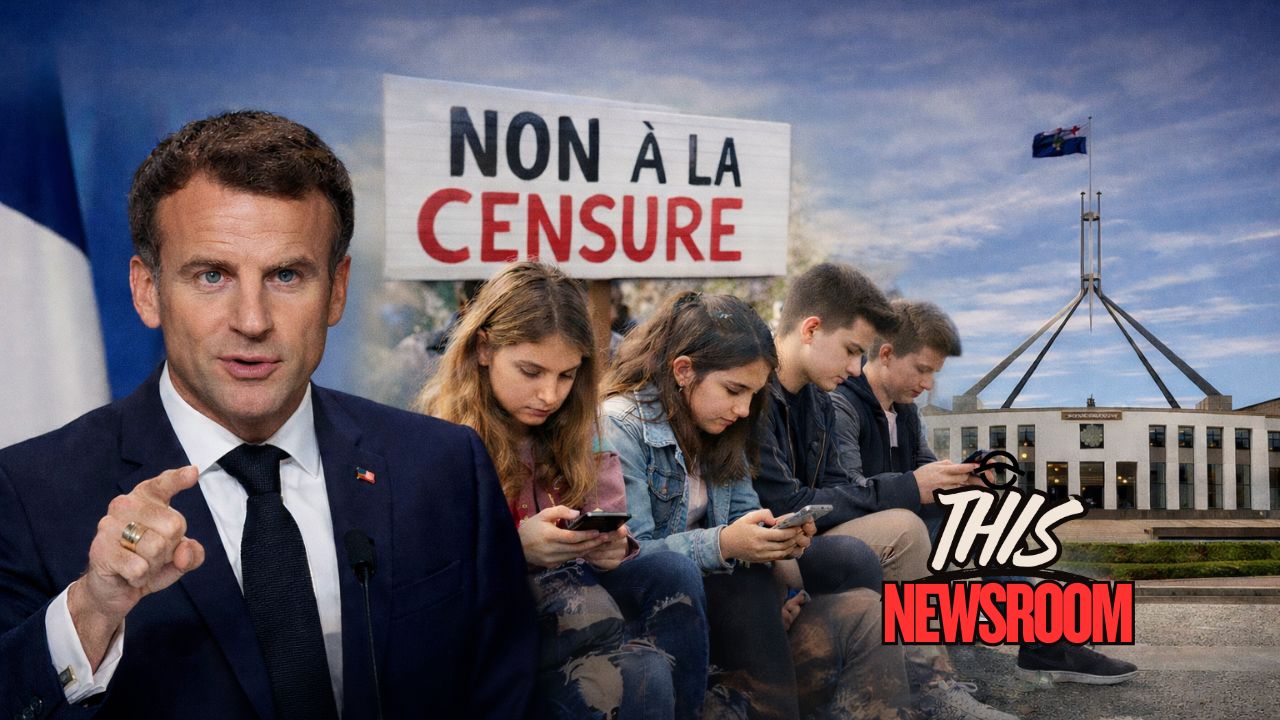
France’s president Emmanuel Macron has decided that if parents, schools, and culture can’t regulate children’s screen time, then the French government will step in and do it for them.
Specifically, Macron is pushing a proposal that would ban social media access for anyone under the age of 15. In practice, this would remove children from platforms like TikTok, Instagram, Snapchat, and X altogether. On the surface, the idea sounds protective and even reasonable. However, once you look at enforcement, privacy, and free speech implications, the plan quickly becomes far more complicated.
What Macron Is Proposing — And Why Now
This push did not appear out of thin air. Instead, it follows years of growing concern in France over teen mental health, online harassment, algorithm-driven radicalization, and excessive screen time replacing real-world interaction.
As a result, Macron’s government has framed this policy as a public health intervention rather than a censorship effort. In other words, the state is positioning itself as a necessary backstop where families and schools have supposedly failed.
Notably, responsibility would shift almost entirely to technology companies. If a 13-year-old accesses a banned platform, the fault would no longer rest with the user or their parents. Instead, liability would fall squarely on the platform itself.
How Enforcement Would Actually Work
This is where the proposal starts to wobble.
Mandatory Age Verification
First, platforms would be required to verify a user’s age before allowing access. That could involve uploading government-issued identification, integrating with national digital ID systems, or relying on third-party verification services. While the intent is safety, the reality is clear: more personal data would be collected, stored, and potentially exposed.
Platform Liability and Fines
Additionally, companies that fail to comply would face steep fines, potentially calculated as a percentage of global revenue. Consequently, platforms would be incentivized to over-verify everyone, including adults, to avoid penalties.
Blocking Non-Compliant Platforms
Finally, France could theoretically block platforms that refuse to comply at the ISP level. However, as experience has shown elsewhere, technical barriers rarely stop motivated teenagers armed with VPNs and YouTube tutorials.
Which Platforms Would Be Affected?
In practice, almost every major social platform would fall under the ban, including:
- TikTok
- Snapchat
- X
Meanwhile, messaging apps would remain in a regulatory gray area, largely because governments have never quite figured out how to classify them when it becomes inconvenient.
Potential Benefits — If Everything Goes Right
To be fair, the policy does have potential upside.
For example, reduced exposure to algorithmically amplified content could lower rates of cyberbullying and social comparison anxiety. Additionally, delaying social media use may help children develop healthier offline social skills before being dropped into engagement-driven ecosystems.
Moreover, the pressure on platforms could finally force the creation of genuinely youth-safe digital spaces instead of cosmetic parental controls layered onto adult products.
The Downsides — And They’re Significant
However, the drawbacks are difficult to ignore.
Privacy Tradeoffs
Age verification inevitably means increased data collection. Therefore, a policy designed to protect children from tech companies would require handing even more sensitive information to those same companies.
Uneven Enforcement
In contrast to the policy’s stated goals, enforcement would likely hit some families harder than others. Wealthier households can bypass restrictions with ease, while less tech-savvy families cannot. As a result, the ban risks creating a two-tier digital system.
Government as Parent
Perhaps most importantly, this approach subtly shifts responsibility away from families and toward the state. Instead of empowering parents, it assumes centralized control produces better outcomes — a belief that history rarely supports.
What This Means for Free Speech
Although children do not have unlimited speech rights online, broad bans still raise serious concerns. Teenagers use social media to engage in political discussion, find support communities, and express identity. Consequently, restricting access based solely on age risks silencing voices that already struggle to be heard.
Once governments normalize age-based restrictions on speech platforms, expansion becomes far easier than rollback.
Australia Tried This First — Here’s What Happened
Last year, Australia introduced similar youth-focused social media restrictions. Some progress followed, including improved parental tools and increased awareness. Nevertheless, the overall results were mixed.
VPN usage among teenagers surged, enforcement proved inconsistent, and privacy concerns remained unresolved. In short, the rules existed, but behavior adapted faster than regulation.
The Likely Outcome
France’s proposal will not eliminate teen social media use. Instead, it will push it underground, normalize surveillance-based access, and expand state involvement in digital identity.
Ultimately, the policy reflects a familiar European instinct: when faced with cultural complexity, regulate harder.
Whether that instinct protects children — or simply reshapes the problem — remains an open question.