
The tanker attacks Persian Gulf traders feared are no longer a Strait of Hormuz problem. A strike on a ship deep inside the Gulf has traders asking how far the shipping war can spread. The Wall Street Journal’s report captured exactly that fear.
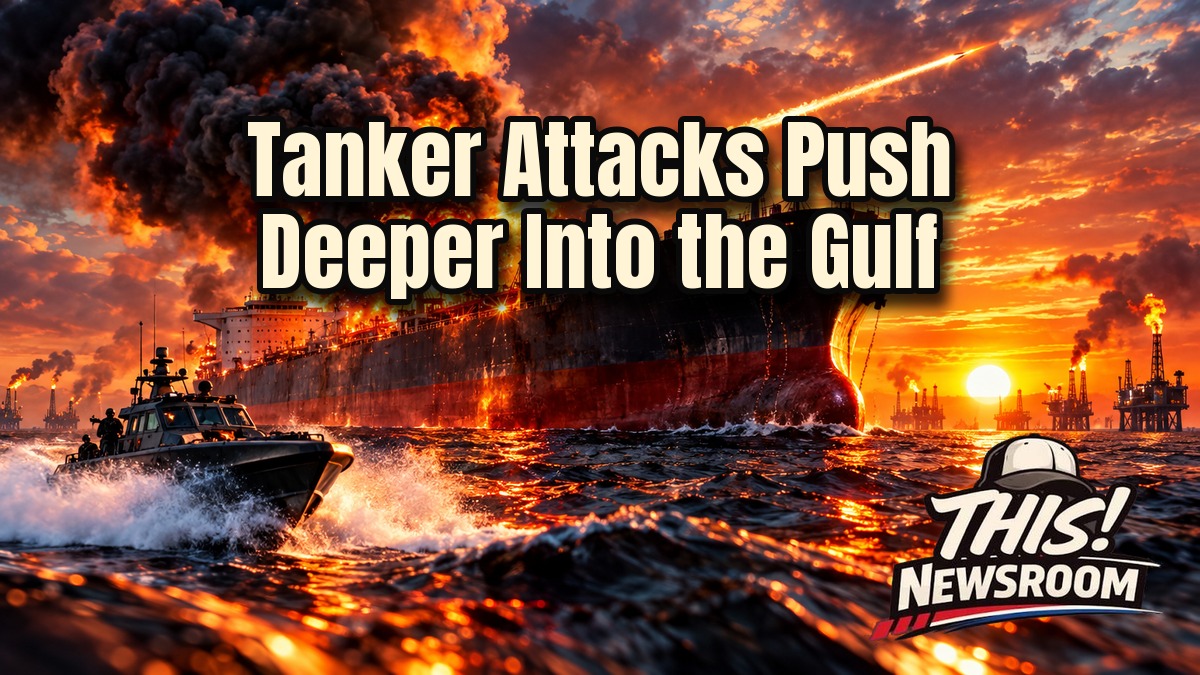
The Royal Navy-affiliated maritime monitor UKMTO said a tanker was hit by multiple projectiles. The ship was about 51 nautical miles north of Madinat ash Shamal, Qatar, around 1900 UTC on Oct. 7. That is roughly 94 kilometers off Qatar’s northern coast.
gCaptain later identified the ship as the Acers, an Antigua and Barbuda-flagged chemical and oil tanker. UKMTO reported casualties but gave no number. The strike also lands as the U.S.-Iran conflict escalates again, which makes every new incident harder to read as an isolated event.
Why Gulf Tanker Strikes Near Qatar Rattle Traders
Location is the whole story here. According to oilprice.com, it is the first reported attack this deep in the Gulf since Sept. 9. That day, a tanker was hit southeast of Al-Faw, Iraq. Most strikes since then have clustered in or near Hormuz.
That matters because the tankers moving oil through this war depend on predictable routes. The Journal’s framing is that the surge in strikes now threatens the tanker operations that have kept oil flowing despite the conflict. If ships feel unsafe well inside the Gulf, the choke point is no longer the only risk. Tanker attacks Persian Gulf operators once treated as a Hormuz-only danger now look like a regional one.
Nobody has said who fired. UKMTO did not name a responsible party, and we found no claim of responsibility. Bloomberg and CNBC frame the wider wave as Iranian attacks, but the Qatar strike itself remains unattributed. Qatar had not commented as of Al Jazeera’s report, even though the strike fell within its exclusive economic zone.
The Numbers Behind the Climb in Ship Strikes
The count of Gulf shipping attacks is climbing fast. UKMTO logged nine attacks in and around Hormuz in the first seven days of October. That is half the number reported in all of September. Kpler counted 10 tankers struck in the strait between Sept. 28 and Oct. 4, according to CNN. That beats the previous weekly high of six.
Other outlets count slightly differently. CNBC reports 11 tankers in the week ended Oct. 4, while Reuters, as cited by gCaptain, tallied at least 12 between Sept. 28 and Oct. 5. The windows differ, but every version points the same way: a wartime high.
Traffic reflects the fear. Preliminary Kpler data show only seven tankers transited Hormuz on Oct. 6, the lowest since July 23, though dark transits could push that figure up. On Monday, a projectile hit a tanker in the strait and started an engine-room fire. CNBC reports 12 sailors were injured.
What the Tanker Attacks Persian Gulf Shippers Face Did to Oil
Markets reacted the way markets do. Brent settled above $104 on Thursday, up 4.1%. That was its highest settle since September and its biggest one-day gain in a month. On Friday it rose about 0.4% to settle near $105. Stocks felt it too, as the market slid while oil jumped 5% in an earlier session.
Then there is the weather, because apparently one crisis at a time is too much to ask. Hurricane Isaias is bearing down on the US Gulf Coast. Shell and Chevron are curtailing output and evacuating nonessential staff. About 500,000 barrels a day of refining capacity sits in the storm’s projected path. Landfall is expected late Friday or early Saturday.
ING commodities strategists described the mood as a clear tug-of-war. Supply from the region is improving, but threats to it linger. Kpler data show Hormuz exports at 8.5 million barrels a day for the week ended Oct. 7, about 40% below normal before the war.
Here’s the Thing: Higher Costs Hit the Pump
Shipping risk is expensive, and somebody always pays for it. Freight rates for moving Gulf crude to East Asia run more than six times prewar levels. Refined fuels have risen even faster than crude. If you fill up a truck for a living, none of this is abstract. Tanker attacks Persian Gulf crews report are now a line item in what you pay.
Still, the picture is not simply doom. CENTCOM said Wednesday that 20 million barrels of crude had transited the strait. It also rejected Iranian claims that the waterway is closed. Oil is moving, just at a price that keeps climbing. Meanwhile, the U.S. Strategic Petroleum Reserve has fallen to its lowest level since 1983, which leaves less cushion if the disruption drags on.
So the question for Monday’s open is simple. Was the Qatar strike a one-off, or the first shot in a wider campaign? Brent near $105 suggests traders are not betting on the easy answer.