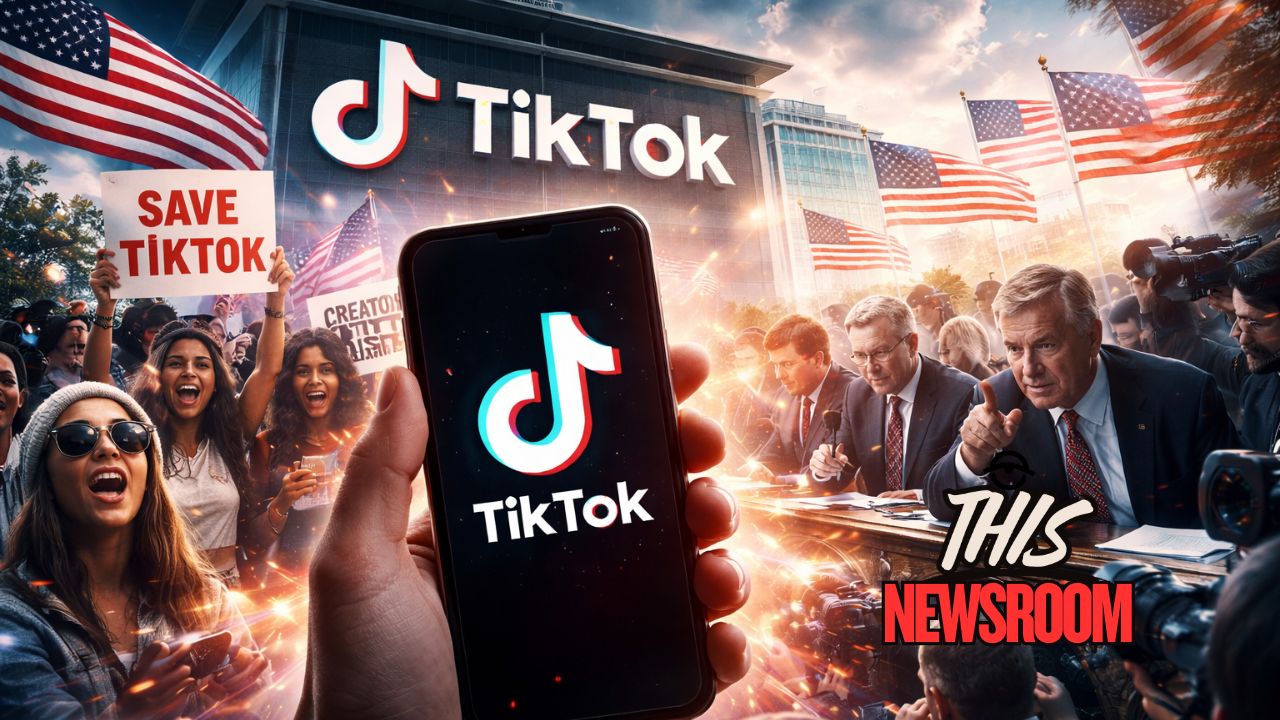
The launch of TikTok US was always going to be loud. Instead, it’s been downright noisy. In its very first week operating as a U.S.-based entity, TikTok US has already run into significant scrutiny, political pressure, creator anxiety, and public skepticism—proving that a change in paperwork does not instantly erase years of controversy.
While the restructured operation was designed to address national security concerns and data privacy fears, the early reaction suggests that trust, once broken, takes longer than a press release to rebuild.
A New Structure, Old Suspicions
TikTok US launched with the promise of American-based governance, U.S. data storage, and operational independence from its Chinese parent company. On paper, this restructuring was meant to satisfy lawmakers who have long argued that the platform posed a national security risk.
However, critics were quick to point out that structural changes do not automatically guarantee cultural or operational separation. Lawmakers from both parties raised questions about oversight, board influence, algorithm transparency, and whether any meaningful firewall truly exists between TikTok US and its former global parent.
In other words, the rebrand may say “Made in America,” but Washington wants to see the receipts.
Political Pushback Came Fast
Almost immediately, TikTok US found itself back under the microscope on Capitol Hill. Several lawmakers publicly questioned whether the new entity was simply a cosmetic adjustment designed to delay or avoid deeper regulation.
Concerns raised during the first week included:
- How content moderation decisions are made
- Who ultimately controls the recommendation algorithm
- Whether U.S. user data can ever be indirectly accessed overseas
- How future ownership changes would be handled
Rather than easing tensions, the launch appears to have reignited debates that many thought had already peaked.
Creators Are Nervous—and Vocal
Perhaps the most telling pushback hasn’t come from politicians, but from creators.
For years, TikTok’s creator economy has thrived on predictability—at least relative to social media standards. Now, many creators worry that regulatory uncertainty could disrupt monetization, algorithm performance, or even long-term platform stability.
In the first week alone:
- Some creators publicly questioned whether to diversify to other platforms
- Others expressed concern about potential content restrictions
- A few large accounts openly discussed exit strategies if instability continues
The irony is hard to miss: the very creators who made TikTok indispensable are now unsure whether TikTok US can protect them from the chaos surrounding it.
Privacy Advocates Aren’t Convinced
Privacy groups were equally unimpressed.
Advocates argue that without full algorithm transparency and enforceable, independent audits, TikTok US is asking Americans to “trust us” after years of distrust. Several organizations called for clearer disclosures, stronger federal oversight, and standardized data protections that would apply not just to TikTok, but to all major social platforms.
In short, TikTok US didn’t walk into a honeymoon phase—it walked into a courtroom of public opinion.
Market and Cultural Implications
The broader implication of TikTok US’s rocky start is bigger than one app.
This moment signals a shift in how the U.S. treats foreign-born technology platforms operating domestically. Structural spin-offs may become the new norm, but they won’t be accepted at face value. Companies will be expected to prove independence, not just declare it.
For the tech industry, TikTok US is now a test case:
- Can regulatory compliance coexist with global platforms?
- Can cultural trust be rebuilt after years of political tension?
- And can social media remain innovative while under constant scrutiny?
The Week That Set the Tone
One week in, TikTok US hasn’t collapsed—but it also hasn’t convinced skeptics. Instead, it has entered a long, public proving ground where every decision will be interpreted through a political, cultural, and national security lens.
Whether TikTok US ultimately succeeds or struggles will depend less on branding and more on transparency, accountability, and time. Right now, time is the one thing it doesn’t have much of.
As this story continues to unfold, THIS NEWSROOM will be tracking the implications not just for TikTok, but for the future of digital platforms operating in an increasingly fragmented global landscape. For deeper context, analysis, and straight talk on stories shaping tech, media, and culture, be sure to follow The This With Krish Show, where these issues don’t just get reported—they get unpacked.