

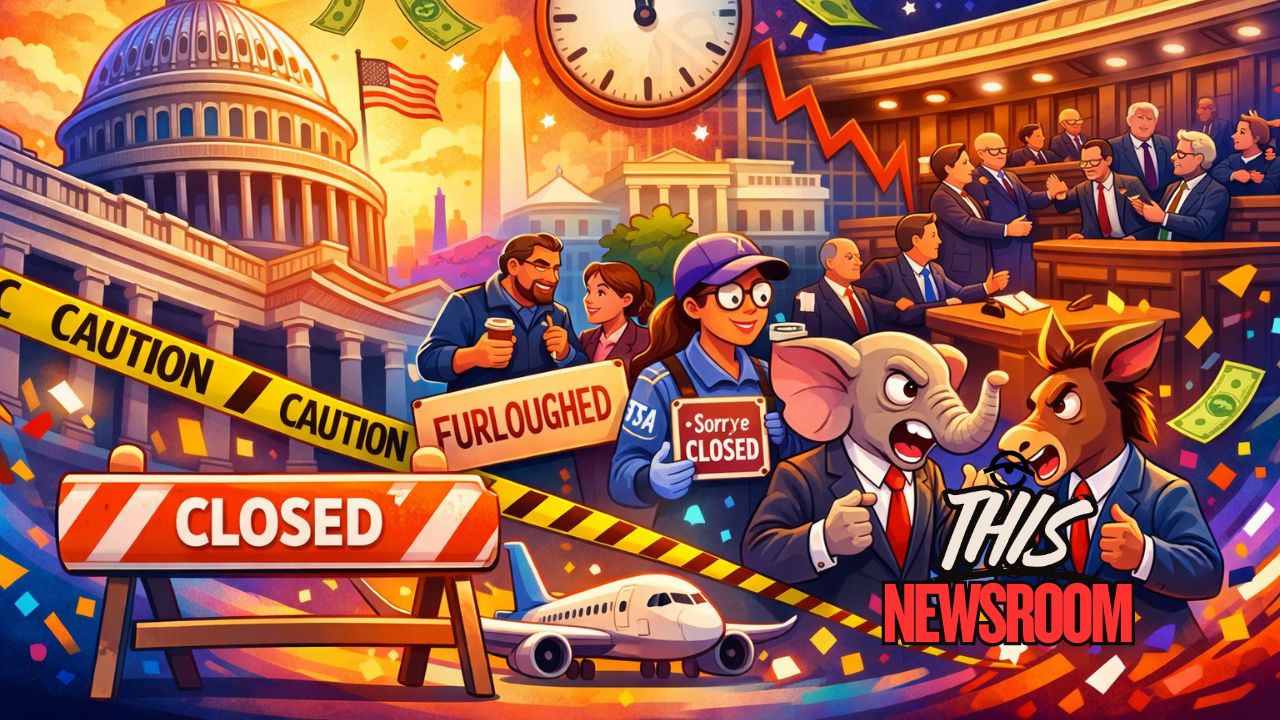
As of Monday morning, February 2, 2026, the United States remains in a partial federal government shutdown, entering its third day after Congress failed to finalize full-year funding before the deadline. Lawmakers are back in Washington today, but the path to reopening the government remains uncertain.
Why the Government Is Shut Down
Federal funding expired early Saturday morning after the House and Senate failed to agree on a final appropriations package. While the Senate passed a temporary funding framework late last week, the House did not take it up before the deadline.
At the center of the stalemate is a familiar mix of issues:
- Disagreements over Department of Homeland Security funding
- Immigration enforcement policy riders
- Broader spending limits and deficit concerns
The breakdown reflects deep divisions inside Congress, particularly within the House, where a narrow majority has made consensus harder to achieve.
What Congress Is Doing Today
The House returned to session this morning, with leadership signaling that votes could happen as early as Tuesday if procedural hurdles are cleared. Speaker Mike Johnson has said he is optimistic about a short shutdown, but that outcome depends on whether leadership can unify its caucus and move a bill to the floor.
Democrats have indicated they will not agree to fast-track funding without debate, especially around immigration-related provisions. That means the process may move slower than leadership hopes.
Who Is Affected Right Now
Because this is a partial shutdown, impacts vary by agency:
- Hundreds of thousands of federal employees are furloughed or working without pay
- Non-essential services at departments like Education, Housing and Urban Development, Transportation, and parts of Treasury are paused
- Independent agencies such as the Federal Election Commission have halted operations
- Essential services, including national security, air traffic control, border enforcement, and Social Security payments, continue
Federal workers will receive back pay once funding is restored, but timing remains uncertain.
The White House Position
The administration of Donald Trump has publicly urged Congress to resolve the shutdown quickly, while also pressing lawmakers to include stronger border and enforcement measures in any final deal. That pressure has added another layer of complexity to negotiations already under strain.
Market and Economic Implications
So far, markets have reacted cautiously. Short shutdowns typically have limited long-term economic impact, but each additional day increases strain on:
- Federal workers and contractors
- Small businesses that rely on federal payments
- Consumer confidence, especially if shutdown headlines linger
Economists warn that prolonged uncertainty, combined with already tight financial conditions, could amplify volatility.
What Happens Next
The most likely near-term scenarios:
- A short-term funding extension passed within the next 24–48 hours
- A negotiated compromise that pares back controversial policy riders
- Or a longer shutdown if internal House disagreements persist
For now, Washington is operating in wait-and-see mode.
Bottom Line
As of Monday morning, February 2, 2026, the federal government remains partially shut down. Lawmakers are back at work, talks are ongoing, and leadership is signaling optimism — but no deal has been finalized. Until a funding bill clears both chambers and reaches the president’s desk, the shutdown continues.