
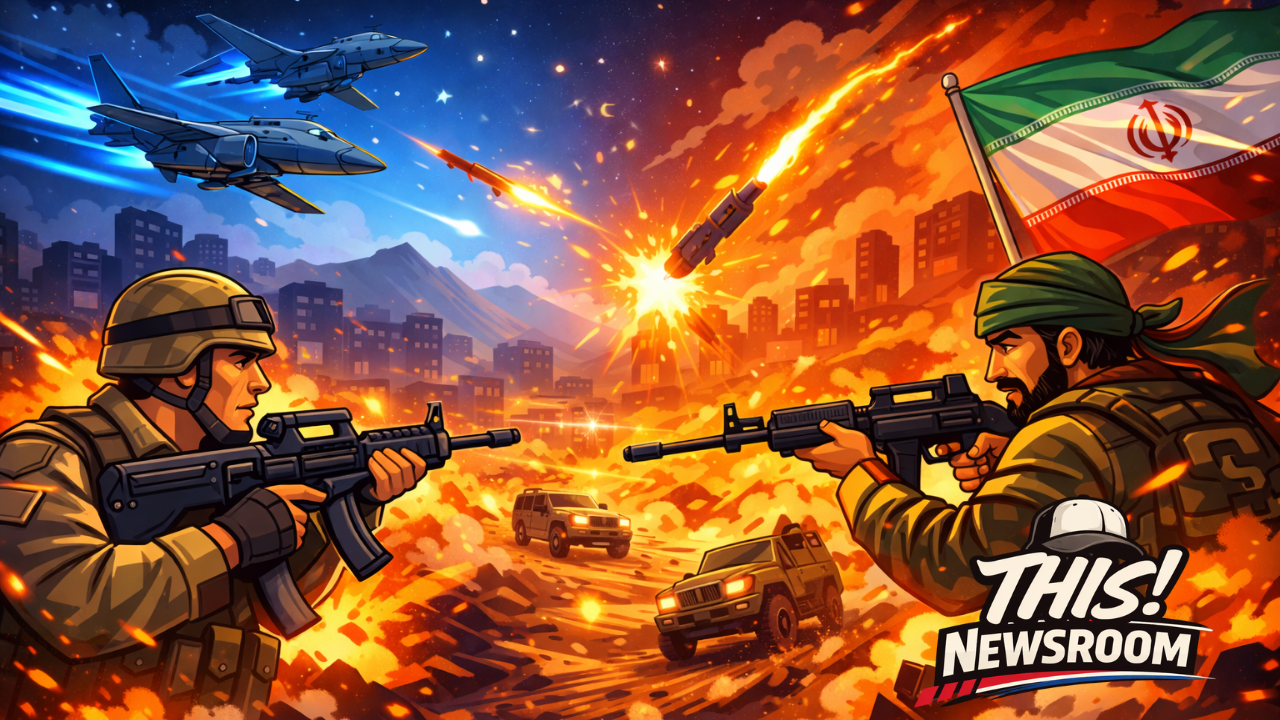
The U.S. and Israel strikes on Iran escalated tensions across the Middle East early this morning. Israel launched coordinated air operations targeting sites inside Iran. Soon after, the United States confirmed its involvement. Within hours, Iran retaliated with missile launches aimed at Gulf states that host U.S. forces.
The situation moved fast. And the region felt it immediately.
What Happened Overnight
First, Israel initiated what officials described as a pre-emptive strike. Explosions were reported near Tehran and other strategic locations. Israeli leadership warned citizens to prepare for retaliation. As a result, the country activated emergency protocols and tightened airspace controls.
Shortly afterward, the United States confirmed participation in the operation. Officials described the strikes as focused and strategic. They framed the action as a response to escalating security threats tied to Iran’s weapons development.
Then came Iran’s response.
Iran launched missiles toward several Gulf nations, including Qatar, Bahrain, Kuwait, and the UAE. Air defense systems intercepted many of the projectiles. However, regional alerts triggered widespread panic and air traffic disruptions.
Consequently, airlines rerouted flights across the Middle East. Several airports issued advisories. Meanwhile, military installations increased security posture.
Why This Is Escalating Now
Tensions between Iran and Israel have simmered for years. However, diplomacy recently stalled. Negotiations surrounding Iran’s nuclear program showed little progress. At the same time, rhetoric intensified on both sides.
As a result, military planning accelerated behind the scenes.
Israel signaled that it would not allow Iran’s weapons capability to expand unchecked. Likewise, U.S. officials emphasized deterrence. Therefore, the joint action appears designed to reset strategic calculations in the region.
Still, Iran views the strikes as direct aggression. That perception fuels the retaliation cycle.
What Happens Next
The key question now centers on scale.
Will Iran expand its missile campaign? Or will leadership attempt a controlled response to avoid full-scale war?
Additionally, Gulf nations face difficult decisions. They host U.S. forces, yet they must protect domestic stability. Consequently, regional diplomacy could intensify in the coming days.
Energy markets may also react. Historically, instability in the Gulf pressures oil prices. Therefore, investors will watch closely.
Furthermore, global leaders are calling for restraint. However, restraint depends on whether additional strikes occur.
The Bigger Picture
This moment represents more than a single exchange of fire. It reflects a broader power struggle in the Middle East. Israel aims to maintain military superiority. Iran seeks regional influence. Meanwhile, the United States attempts to balance deterrence and containment.
Because each side believes it must project strength, de-escalation becomes difficult.
Nevertheless, history shows that rapid escalation can reverse quickly when diplomatic channels reopen. Therefore, the next 48 hours matter most.
For now, air defenses remain active. Military assets stay on alert. And the world watches closely.