Nasdaq-100 futures fell as much as 2% Tuesday night, according to Bloomberg, erasing earlier gains. The stock futures midterms slide came as early returns pointed to a strong Democratic showing. Stocks tied to artificial intelligence took the hardest hit.
At the late-evening low, CNBC reported S&P 500 futures down 1.1% and Dow futures down 367 points.

How a Quiet Evening Turned Into an AI Sell-Off
The evening started out fine. S&P 500 futures were up 0.2% and Nasdaq-100 futures up 0.5% early Tuesday. Then the returns started coming in.
By 7:34 p.m. ET, as polls were closing, Dow futures were down 235 points. After that, the drop kept growing. That fits the pattern we saw when the Fed held rates with two officials wanting a hike: markets were already jumpy heading into election night.
AI names got hammered. CoreWeave fell about 6% in overnight trading, and Microsoft, Amazon and Nvidia all traded lower in extended hours.
Why Data Centers Drive the Futures Sell-Off
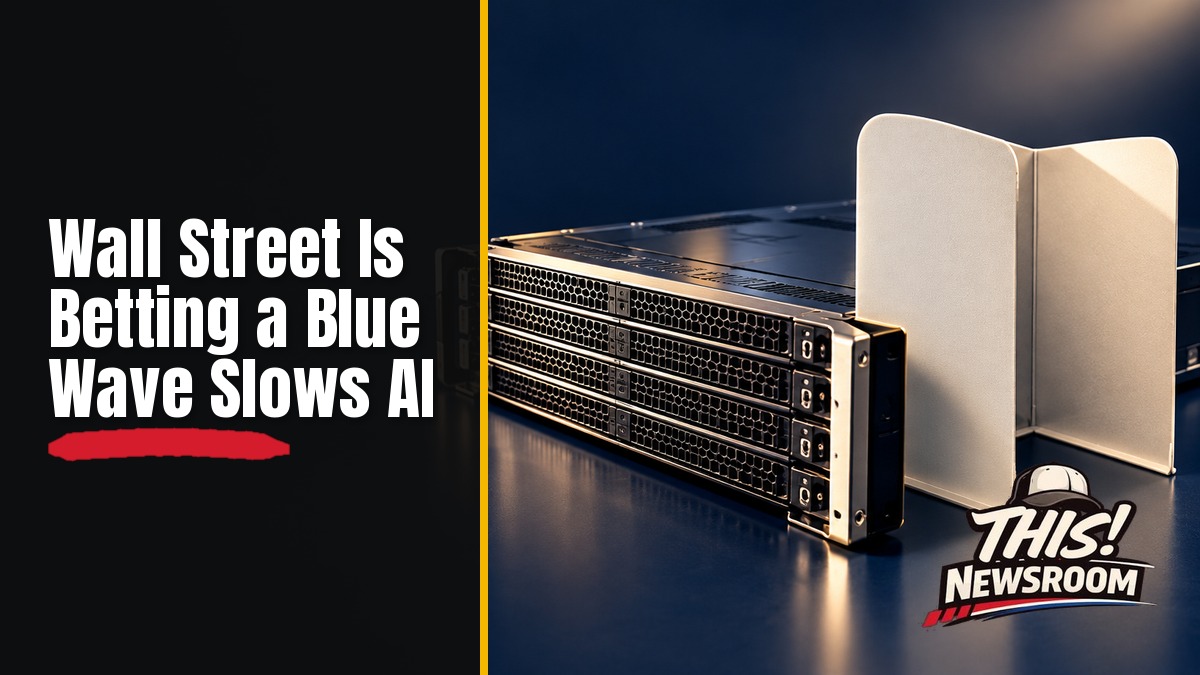
So why would a blue wave hit chip and cloud stocks? Because Wall Street has decided data centers are now a political target, so the futures sell-off centers on them. Traders are speculating that Democratic wins could mean more limits on the buildout that the whole AI trade runs on.
Texas is the center of that worry. Wells Fargo estimates the state holds 27% of US data center gigawatts. Gov. Greg Abbott halted data-center permitting in September, and Democratic nominee Gina Hinojosa wants a moratorium until lawmakers pass guardrails. Evercore expects Abbott to lift the current restrictions and Hinojosa to keep them.
“The health of the ‘AI Revolution’ will be influenced by the TX Governor’s Race,” Evercore ISI strategist Julian Emanuel wrote in a note to clients.
Here’s the thing for anyone with a 401(k): index funds are packed with these companies. As a result, a scare in AI stocks shows up in your retirement account, whether or not you ever think about a data center.
AI stocks were already wobbling before the polls closed. The Nasdaq fell more than 5% in October and slid more than 1% on Monday on worries about slowing data-center spending. Apple’s margin warning didn’t help either, so this wider stock futures midterms jitters story has more than one cause.
So how much of Tuesday’s drop is the election and how much is everything else? Nobody can say for sure.
Wall Street Midterm Reaction: Don’t Mistake Speculation for Results
Final results are not in. CNBC’s Election Desk projected Democrats will take the House and said they were poised to take the Senate. Still, those are projections, and the Senate is not called. Prediction-market odds are odds, not outcomes.
Analysts also disagree on how much policy would actually change. Goldman Sachs said a national moratorium looks unlikely under any election outcome. Reuters analysts doubt a bill that seriously impedes data center expansion would become law even with a Democratic sweep, though they expect more hearings and investigations. Citigroup said a Republican Senate hold alongside a Democratic House could even be a year-end tailwind.
History is on the market’s side, too. Stocks usually rise after midterms, though big gains already this year may blunt that. JPMorgan estimated a blue wave could weigh on the S&P 500 by about 0.5% on Wednesday.
What to Watch After the Stock Futures Midterms Drop
Wednesday’s open will show whether the futures drop sticks. The Texas governor’s race will say a lot about whether the state’s data-center permitting freeze stays or goes. Late counts could still change the picture. For the bigger economic backdrop, see why 3.4% growth isn’t felt by many voters.
The open question is whether Washington and Austin let the buildout keep running at full speed.