
Artificial intelligence continues to accelerate faster than many experts predicted. Now, one of the industry’s most influential voices has offered a candid look at what that acceleration could mean for the global workforce.
Dario Amodei, the CEO of Anthropic, recently discussed which professions are most likely to be affected by the rapid advancement of generative AI systems. His insights carry weight across the tech industry, especially because Anthropic is the company behind the widely used AI assistant Claude AI.
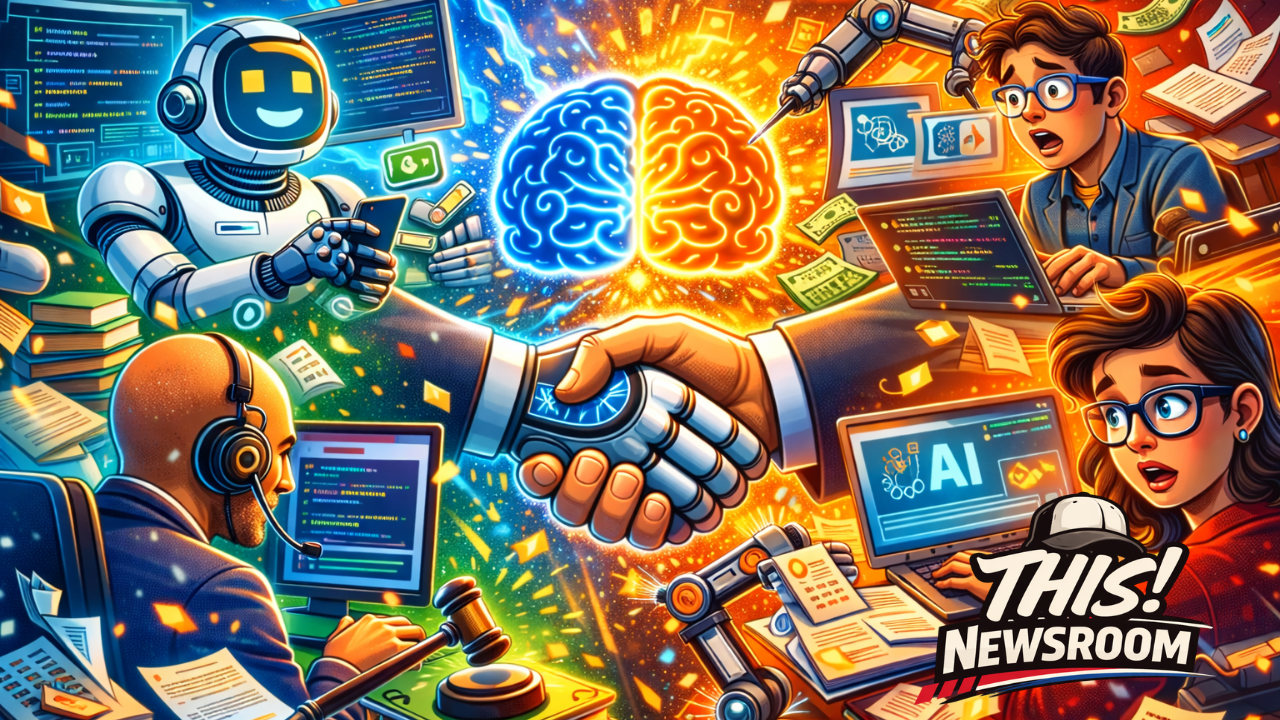
Amodei’s message wasn’t alarmist—but it was clear: AI will reshape many jobs that rely heavily on language, data analysis, and digital workflows.
Why AI Is Disrupting Knowledge Work First
Unlike previous waves of automation that targeted manual labor, modern AI systems excel at cognitive tasks. Large language models can summarize documents, write code, analyze spreadsheets, and answer complex questions within seconds.
That means roles centered around processing information—rather than physical work—are most vulnerable to change.
Amodei emphasized that AI will likely augment many workers rather than replace them entirely, but companies will need fewer people to accomplish the same tasks.
In other words: productivity rises, but workforce demand may shift.
Jobs Most Likely to Be Impacted by AI
According to Amodei’s analysis and broader discussions across the AI industry, several categories of jobs are especially exposed to AI disruption.
1. Customer Support Representatives
AI chatbots and virtual assistants have rapidly improved in their ability to handle complex conversations.
Companies increasingly rely on AI to manage customer service inquiries, refunds, scheduling, and troubleshooting—often with human oversight rather than large support teams.
2. Content Writers and Copy Editors
Generative AI tools can already draft blog posts, marketing emails, product descriptions, and social media content.
While human creativity and strategy still matter, many businesses are reducing the time and staff required to produce written content.
3. Data Analysts
AI systems can now analyze large datasets, generate charts, identify trends, and even recommend business decisions.
Tasks that previously required hours of manual spreadsheet work can now be completed in minutes.
4. Entry-Level Programmers
AI coding assistants have become increasingly capable.
Tools can write software functions, debug code, and even generate entire applications from simple prompts.
Amodei noted that this doesn’t eliminate developers—but it changes what junior engineers actually do.
5. Legal and Administrative Assistants
Many tasks performed by paralegals and administrative professionals—document review, scheduling, summarizing legal materials—are increasingly automated by AI tools.
Law firms and corporate legal departments are already experimenting with AI-driven workflows.
6. Translators
AI translation has improved dramatically.
Real-time translation systems are capable of handling dozens of languages with impressive accuracy, reducing the demand for routine translation services.
7. Research Assistants
AI can search academic papers, summarize research, and compile reports faster than traditional manual methods.
Researchers increasingly rely on AI tools to accelerate discovery.
Jobs That Are Less Vulnerable—for Now
Amodei also pointed out that many professions remain relatively protected in the near term.
These typically involve physical presence, human relationships, or complex judgment.
Examples include:
- Healthcare professionals
- Skilled trades (electricians, plumbers, mechanics)
- Teachers and educators
- Therapists and counselors
- Creative leadership roles
These jobs require emotional intelligence, real-world adaptability, and hands-on skills that AI still struggles to replicate.
The Bigger Question: Transformation, Not Just Replacement
Amodei and other AI leaders emphasize that the conversation should focus less on job elimination and more on job transformation.
History shows that technological revolutions often eliminate certain roles but create entirely new industries.
For example:
- The internet destroyed some traditional retail jobs but created e-commerce.
- Automation reduced manufacturing labor but expanded logistics and engineering.
AI may follow a similar path.
What Workers Should Do Now
Amodei has repeatedly encouraged professionals to focus on AI literacy and adaptability.
The most valuable workers in the coming decade will be those who learn how to work with AI systems rather than compete against them.
Skills likely to become more important include:
- Prompt engineering and AI workflow design
- Strategic thinking and problem solving
- Human-centered creativity
- Leadership and communication
In short, the future workforce may rely less on routine execution and more on decision-making, creativity, and oversight.
The AI Era Is Already Here
The rise of companies like Anthropic, OpenAI, and Google signals a technological shift that will likely define the next decade.
Amodei’s warning isn’t meant to scare workers—it’s meant to prepare them.
Artificial intelligence will not replace every job. But it will change how almost every job is done.
And those changes are arriving faster than anyone expected.