Pierre says its storage service helped one customer cut code retrieval latency by about 70%. Now OpenAI wants to own it. The OpenAI Pierre acquisition puts the Git storage layer that AI coding agents depend on inside Codex.
OpenAI says it will acquire Pierre Computer Company, Inc., the three-year-old startup behind Code Storage and a set of open-source developer tools, according to OpenAI’s announcement. The deal has not closed. SiliconANGLE reports that neither financial terms nor a closing date have been disclosed. (So yes, the price tag is a mystery.)

What Pierre does, and why OpenAI buys Pierre
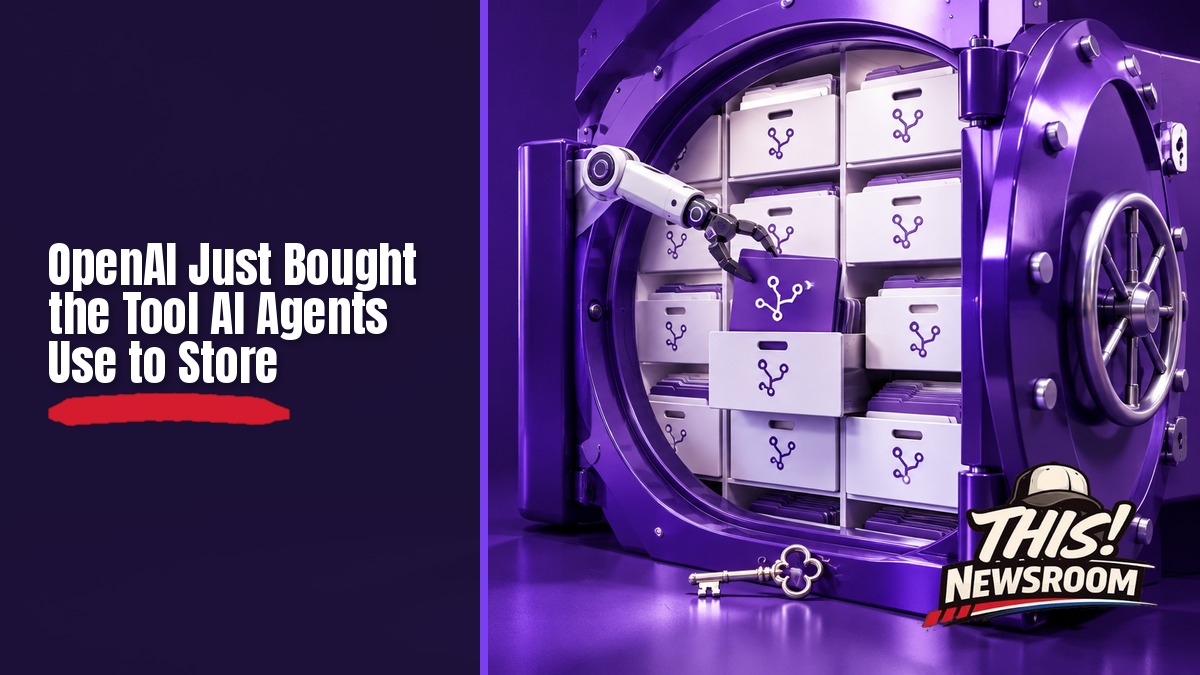
Think of Git as the filing cabinet where programmers keep every version of their code. Pierre built one for machines.
Code Storage is a cloud service where AI agents store the code they generate. Pierre says it helped customer Lovable cut code retrieval latency by about 70%, per SiliconANGLE. That’s a filing cabinet that opens a lot faster.
Jacob Thornton, the co-creator of Bootstrap, and Ian Ownbey, a former Twitter engineer, founded the startup in 2023. It also makes Highlights, a syntax highlighter, along with two libraries called Trees and Diffs.
You may have used those two without knowing it. In OpenAI’s words, “If you’ve browsed files or reviewed a change in the Codex app, you’ve already used Pierre’s Trees and Diffs libraries.”
Here’s the thing: why the OpenAI Pierre deal matters
Codex is OpenAI’s coding agent. Agents write a lot of code. That code needs a place to live, and someone has to review it and roll it back when something breaks.
Whoever owns that layer owns a big piece of how software gets built from here on. If you use apps built with AI help, you’re downstream of this decision whether you know it or not.
OpenAI is already working on this problem in-house. It described Pando, its own source control backend for engineers and agents, in a post called “Scaling Git at OpenAI” dated Nov. 2, according to BigGo Finance. That report says Pando cut median push latency by nearly 80%. We could not find that figure confirmed in OpenAI’s own announcement, so treat it as reported, not verified.
Buying Pierre two days later looks less like a coincidence and more like a plan.
The company isn’t hiding the ambition. “Once the acquisition closes, our ambition is to advance the future of source control across the industry,” OpenAI says.
Observers and Axios have framed this as a push toward GitHub’s territory. That’s their reading, not OpenAI’s statement. For more on that angle, see our look at OpenAI buying the plumbing behind AI coding.
What the OpenAI Pierre Computer purchase means for customers
For developers using Pierre’s work, OpenAI offers some reassurance. Pierre’s open-source projects will stay open source, and OpenAI says it will keep contributing to them.
Customers can keep using Code Storage after closing while OpenAI folds its features into Codex. Nobody has given an end date for that. Until the deal closes, which is subject to customary conditions including regulatory approvals, OpenAI and Pierre remain separate, independent companies.
There is a wrinkle, though. Reported Code Storage users include Lovable, Bolt and Amp, and some of those companies compete with OpenAI in AI coding. None of them has publicly commented on the deal in the sources we reviewed. OpenAI hasn’t said how it will handle the conflict either.
Storing your product’s code on a rival’s infrastructure is a vendor-risk conversation nobody wants to have.
The pattern behind the purchase
Pierre is the latest in a run of OpenAI developer-focused acquisitions, Benzinga notes. The same appetite shows up elsewhere, including OpenAI’s launch of the always-on “Dots” agents.
The Pierre team will help OpenAI “ship new products and platforms,” per SiliconANGLE, though nobody has said which ones.
Several questions remain unanswered. We don’t know what OpenAI paid. We don’t know how long Code Storage stays available as a standalone service. We also don’t know when anything built with the Pierre team will ship.
Until then, the smartest read is the simple one: the AI race is moving from who has the best model to who owns the plumbing the models run on. Pierre was plumbing. So who’s shopping for pipes next?