



4
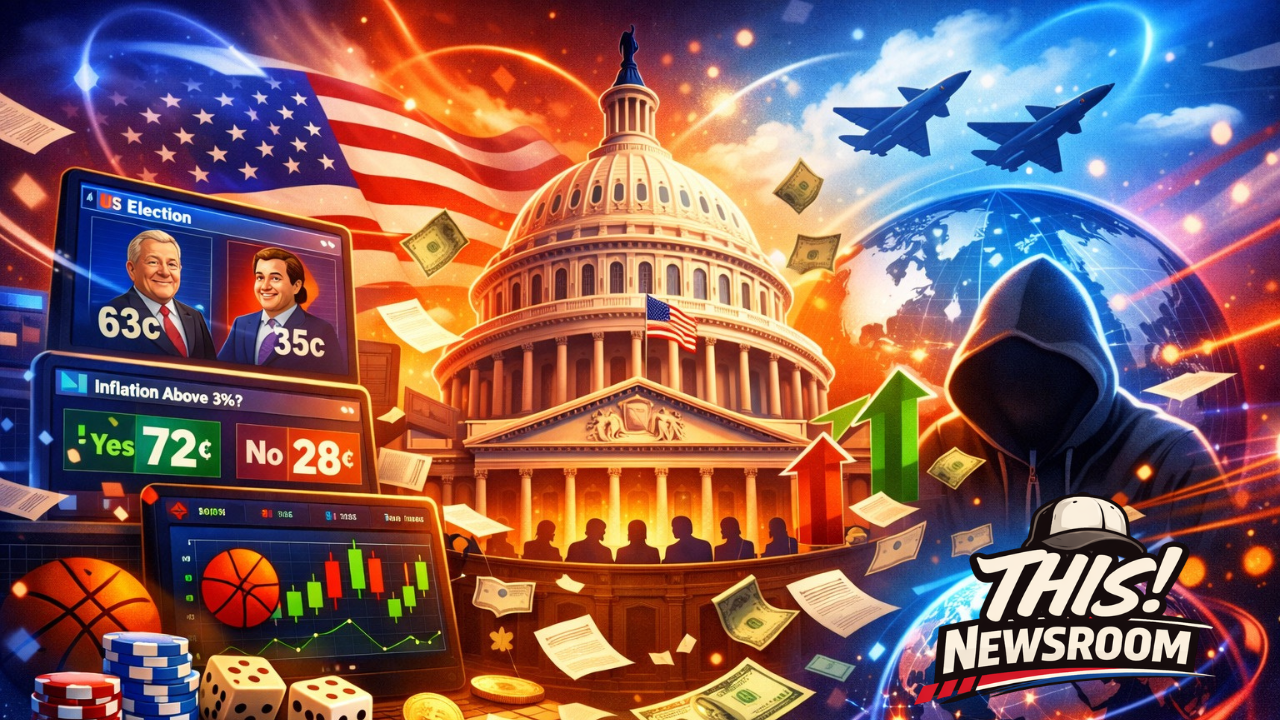
A new bill moving through the United States Senate could dramatically reshape a fast-growing corner of finance and internet culture: prediction markets.
At its core, the legislation aims to ban or severely restrict platforms where users bet on real-world outcomes—from elections and economic indicators to sports and even pop culture events.
But this isn’t just about betting. It’s about data, free markets, regulation, and how we forecast the future.
What Are Prediction Markets?
Prediction markets are platforms where users trade contracts based on the outcome of future events. Think:
- Will a candidate win an election?
- Will inflation rise above a certain level?
- Will a company hit earnings targets?
Popular platforms include Polymarket and Kalshi.
Instead of traditional gambling, these markets are often framed as information markets—where prices reflect collective belief and probability.
For example:
- If a contract for “Candidate X wins” trades at $0.65, the market implies a 65% chance of that outcome.
Why the Senate Wants to Ban Them
The proposed legislation reflects growing concern in Washington over several key issues:
1. Election Integrity Risks
Lawmakers argue that allowing people to bet on political outcomes could:
- Incentivize manipulation or misinformation
- Undermine public trust in elections
- Blur the line between civic engagement and gambling
2. Unregulated Gambling Concerns
Many prediction markets operate in a gray area between:
- Financial instruments
- Online betting
Critics say this creates a loophole that avoids traditional gambling laws.
3. Consumer Protection
There are concerns about:
- Lack of oversight
- Potential for fraud
- Users misunderstanding risks
While platforms like Kalshi are regulated by the Commodity Futures Trading Commission, others operate offshore or in less defined jurisdictions.
4. National Security & Market Manipulation
Some policymakers worry that:
- Foreign actors could influence markets
- Large bets could sway public perception
Because prediction markets often reflect public sentiment, they can become feedback loops that shape narratives—not just measure them.
The Case For Prediction Markets
Not everyone agrees with the crackdown.
Supporters argue that prediction markets are actually one of the most accurate forecasting tools ever created.
Better Than Polls?
Markets often outperform traditional polling because:
- Participants have “skin in the game”
- Prices update in real time
- Incentives reward accuracy
Used by Institutions
Prediction markets have been used internally by:
- Corporations forecasting product launches
- Governments analyzing geopolitical risks
Some economists argue banning them would be like turning off a powerful signal in a noisy world.
What Happens If the Ban Passes?
If this Senate bill becomes law, several major shifts could follow:
1. Platforms Could Shut Down or Exit the U.S.
Companies like Polymarket could:
- Block U.S. users
- Move operations offshore
- Face enforcement action
2. Innovation Moves Overseas
Just like with crypto regulation, stricter rules may push:
- Talent
- Capital
- Innovation
…to more permissive regions.
3. Loss of Public Forecasting Tools
Without prediction markets:
- Media relies more on polls and pundits
- Individuals lose a transparent probability signal
4. Rise of Underground Markets
History shows that when legal markets disappear:
- Black markets often emerge
- Oversight becomes harder—not easier
The Bigger Picture
This debate sits at the intersection of:
- Finance
- Technology
- Politics
- Freedom of information
It also echoes broader regulatory battles involving crypto, AI, and decentralized platforms.
At its core, the question is simple—but powerful:
Should people be allowed to financially bet on the future of real-world events?
Final Take
The Senate’s move to ban prediction markets is about more than regulation—it’s about who gets to interpret the future, and how.
If passed, this bill could:
- Redefine online forecasting
- Reshape emerging financial products
- And limit a growing tool used by traders, analysts, and everyday users alike
But if blocked, prediction markets may continue evolving into one of the most fascinating—and controversial—tools of the digital economy.