
The U.S. auto lending industry is heading into a regulatory showdown. At the center of it all: how artificial intelligence is used to approve loans—and who gets to decide the rules.
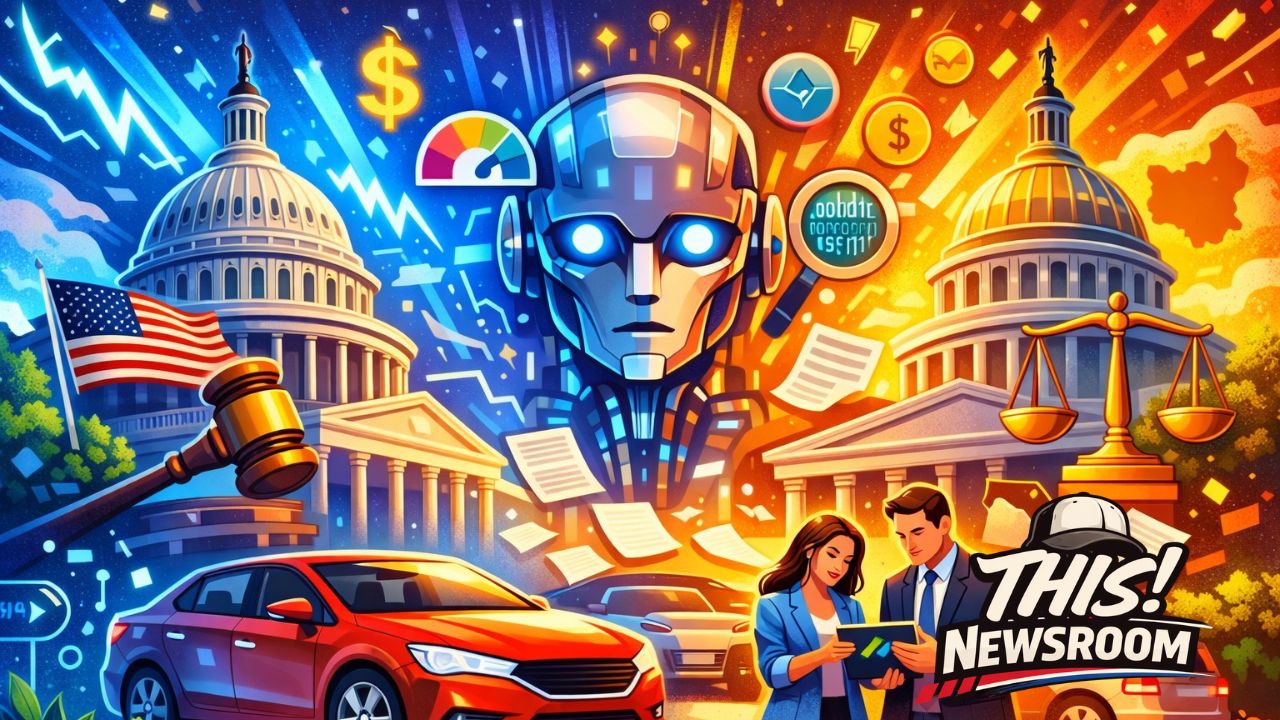
Auto lenders and dealership finance offices are increasingly relying on AI-driven underwriting tools to assess creditworthiness faster and more efficiently. However, as adoption accelerates, so does scrutiny. Now, two powerful forces are pulling the industry in opposite directions: state lawmakers pushing for stricter oversight, and federal leaders aiming to block or standardize those rules.
The Rise of AI in Auto Lending
Artificial intelligence has transformed how car loans are approved. Instead of relying solely on traditional credit scores, lenders now use algorithms that analyze broader datasets—income patterns, spending behavior, and even alternative credit signals.
The benefits are clear:
- Faster approvals
- Expanded access to credit
- More personalized loan offers
But there’s a growing concern: transparency and fairness.
Critics argue that AI models can unintentionally introduce bias, especially if the underlying data reflects historical inequalities. That concern has prompted lawmakers at the state level to act.
States Step In: A Patchwork of AI Rules
States like California, New York, and Illinois are leading the charge to regulate AI in financial services. Proposed and enacted laws focus on:
- Requiring disclosures when AI is used in lending decisions
- Mandating audits for algorithmic bias
- Giving consumers the right to explanations for denials
These efforts aim to ensure that AI doesn’t quietly discriminate against certain groups. Supporters say state-level regulation allows for faster, more tailored responses to emerging risks.
However, the result is becoming a fragmented regulatory landscape—a nightmare scenario for lenders operating nationwide.
Federal Pushback: One Standard, Not Fifty
On the other side, federal agencies and lawmakers are signaling concern over a patchwork system. Institutions like the Consumer Financial Protection Bureau and the Federal Trade Commission have already begun issuing guidance on AI use in lending.
Meanwhile, some federal policymakers are exploring ways to limit or preempt state-level AI regulations altogether.
Their argument:
- Too many different rules could stifle innovation
- Compliance costs could skyrocket
- National lenders need consistency to operate efficiently
In short, Washington wants a unified framework—one set of rules for the entire country.
Dealers and Lenders: Stuck in the Middle
For auto dealers and finance offices, this isn’t just a policy debate—it’s an operational headache.
They now face critical questions:
- Should they redesign AI systems to meet stricter state standards?
- Or wait for federal rules that could override those requirements?
- How do they explain AI-driven decisions to customers in the meantime?
Many are choosing a cautious approach, investing in compliance tools and human oversight to mitigate risk. Others are slowing AI adoption altogether until the regulatory dust settles.
The Consumer Impact
For consumers, the outcome of this tug-of-war could shape the future of car buying.
If states prevail:
- Expect more transparency
- More consumer protections
- Possibly slower loan approvals
If federal preemption wins:
- Faster, more streamlined experiences
- Greater consistency across lenders
- But potentially fewer localized safeguards
What Happens Next
The battle over AI regulation in auto lending is far from over. Legal challenges are likely. Federal legislation could emerge. And states aren’t backing down anytime soon.
What’s clear is this:
AI isn’t going anywhere—and neither is the debate over how to regulate it.
For now, auto lenders are navigating uncertainty, balancing innovation with compliance, and preparing for a future where every loan decision may need to be explained—not just approved.
The Bigger Picture
This isn’t just about car loans. It’s a preview of a much larger question facing every industry adopting AI:
Who gets to write the rules for the algorithms shaping our lives?
And right now, the answer depends on whether you’re looking at your state capitol—or Washington, D.C.