
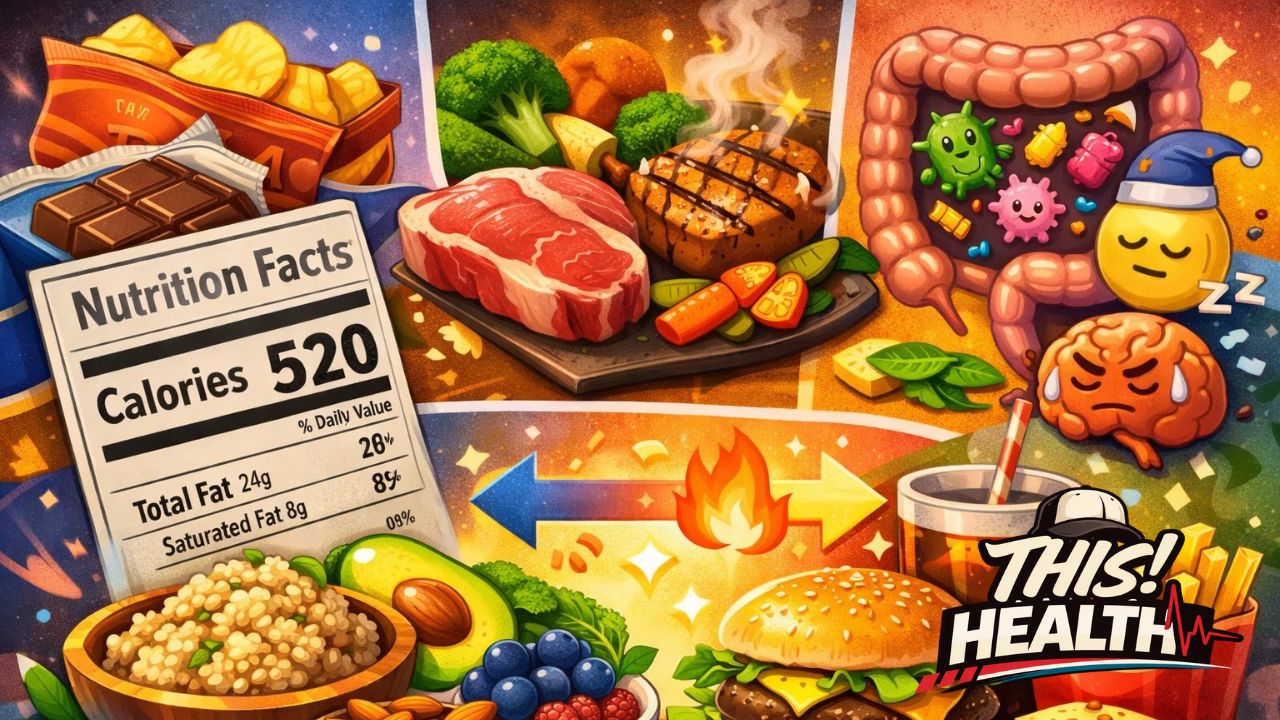

Walk down any grocery aisle and you’ll see it: calories in bold, front and center on every nutrition label. It feels definitive. Scientific. Precise.
But here’s the truth most people don’t realize:
Calorie counts are estimates — not exact numbers.
And according to nutrition scientists, the energy your body actually gets from food can vary more than you’d expect.
The Science Behind Calories (It’s Not That Simple)
At the core, calorie counts come from a system developed over a century ago called the Atwater system. It assigns standard values:
- Protein = 4 calories per gram
- Carbohydrates = 4 calories per gram
- Fat = 9 calories per gram
That system still forms the backbone of modern food labels.
However, it assumes your body extracts energy from food in a predictable, uniform way.
It doesn’t.
Why Calorie Counts Can Be Off
1. Your Body Isn’t a Machine
Digestion varies from person to person. Factors include:
- Gut microbiome
- Metabolism
- Hormones
- Even sleep and stress
Two people can eat the exact same meal and absorb different amounts of energy.
2. Cooking Changes Calories
Cooking breaks down food structure, making it easier to digest.
For example:
- Cooked starches (like rice or potatoes) deliver more usable calories than raw versions
- Softened proteins are easier to absorb
In short: the more processed or cooked a food is, the more energy your body may extract from it.
3. Processing Matters (A Lot)
Highly processed foods are easier to digest — meaning:
👉 You absorb more calories from them
👉 Your body burns fewer calories digesting them
Whole foods (like nuts, vegetables, whole grains) often require more energy to break down, reducing net calorie absorption.
This is why a handful of almonds may provide fewer usable calories than the label suggests.
4. Fiber Throws Off the Math
Fiber is listed under carbohydrates, but your body doesn’t fully digest it.
That means:
- Some labeled calories from carbs aren’t actually absorbed
- Foods high in fiber often deliver less energy than advertised
5. There’s a Legal Margin of Error
In the United States, the U.S. Food and Drug Administration allows packaged food labels to be off by up to 20%.
That’s not a rounding error — that’s significant.
A “500 calorie” meal could realistically be:
- 400 calories
- Or 600 calories
And still be considered compliant.
What Nutrition Scientists Say
Researchers generally agree on three key points:
- Calorie labels are directionally useful, not precise
- Food quality matters more than calorie perfection
- Your body’s response matters more than the label
In other words, calorie counts are a guide, not a guarantee.
So… Should You Trust Them?
Yes — but with context.
Think of calorie labels like a map, not a GPS.
They can help you:
- Compare foods
- Understand portion sizes
- Make better overall decisions
But they can’t tell you exactly how your body will respond.
The Bigger Picture
Focusing only on calories can miss what really matters:
- Nutrient density
- Protein quality
- Fiber content
- Ingredient quality
- How full and energized you feel
A 300-calorie snack made of ultra-processed ingredients isn’t the same as a 300-calorie whole-food meal.
Not even close.
Final Take
Calorie counts look precise, but biology is messy.
Your body isn’t a calculator — it’s a dynamic system.
So while food labels remain helpful, the smartest approach is this:
Use calorie counts as a tool — not the truth.