

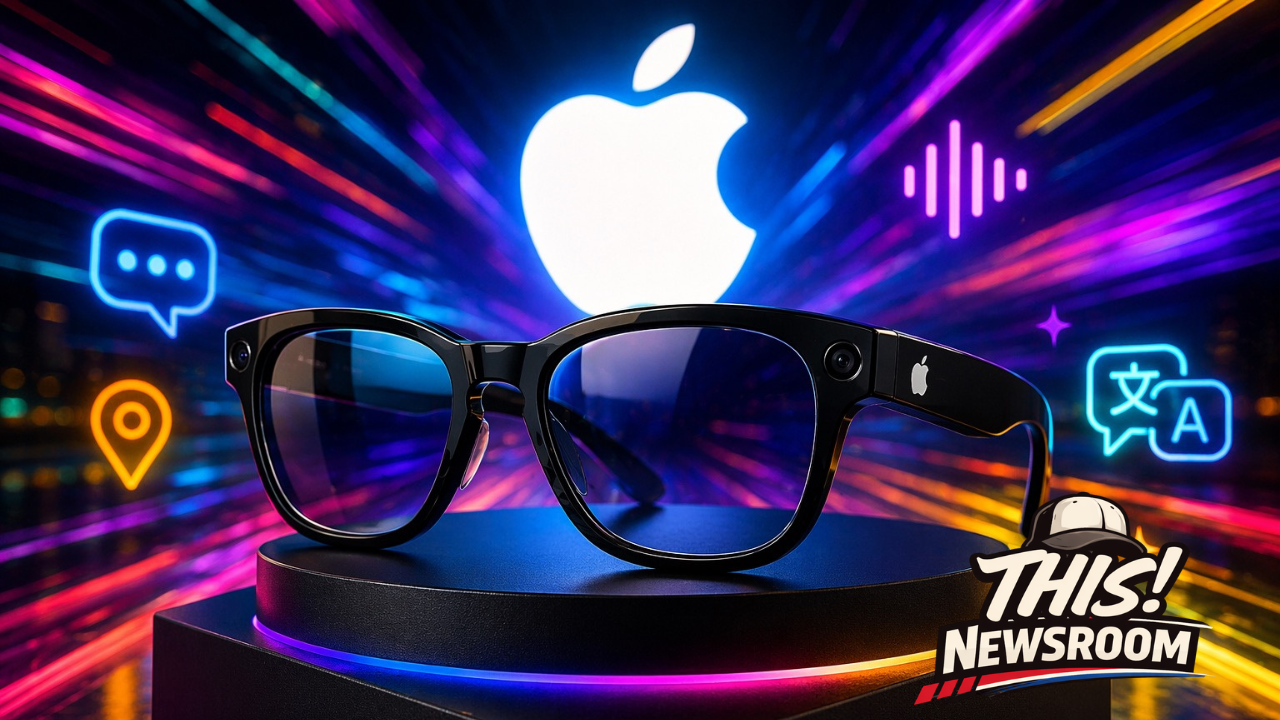


Apple may be getting ready to do something far more disruptive than the Apple Vision Pro — and this time, it’s aiming for your face in a way that actually fits your everyday life.
According to emerging reports and industry chatter, Apple Inc. is developing smart glasses targeted for a 2027 launch, and unlike the bulky, expensive Vision Pro, these would be designed to look and feel like… well, normal glasses.
And that’s the whole point.
From $3,500 Headset to Everyday Wear
The Vision Pro is powerful. It’s immersive. It’s also $3,500 and not exactly something you throw on to grab coffee or pick up your kids.
Apple seems to understand that.
The next phase isn’t about immersion — it’s about integration.
Think:
- Lightweight frames
- No bulky headset
- Possibly no visible screen at all
- Subtle cameras, sensors, and audio
Instead of pulling you out of reality, these glasses aim to blend technology into it.
The Big Shift: No Screen, Just Intelligence
Here’s where it gets interesting.
The concept being floated isn’t about projecting full AR overlays like Vision Pro. Instead, Apple’s glasses could rely heavily on:
- Voice interaction
- Audio feedback
- AI assistance
- Contextual awareness
In other words, less “Minority Report,” more invisible computing.
Imagine:
- Directions whispered in your ear
- Real-time translation during conversations
- Notifications without ever looking at a phone
- AI summarizing what you’re seeing or hearing
No screen might actually be the feature — not the limitation.
Why This Could Be Apple’s Biggest Product Yet
If Apple gets this right, it unlocks something massive:
A true iPhone successor category.
Smartphones changed everything because they were always with you. Smart glasses could take that even further — always on, always aware, hands-free.
And unlike VR headsets, these don’t require behavior change. You already wear glasses (or sunglasses). Apple just makes them smarter.
The Competitive Landscape Is Heating Up
Apple isn’t alone here.
Companies like:
- Meta Platforms (Ray-Ban smart glasses)
- Google (past and rumored AR efforts)
…have already tested the waters.
But Apple’s advantage has always been timing + ecosystem. When they enter a category, they don’t just participate — they refine and dominate.
The Real Question: Will People Actually Wear Them?
This is where everything hinges.
Google Glass failed because it felt invasive and awkward. Vision Pro is struggling with accessibility and price.
Apple’s challenge:
- Make it stylish
- Make it socially acceptable
- Make it genuinely useful
If they nail those three, this isn’t just another gadget — it’s a behavior shift.
Final Take
The Vision Pro showed us what’s possible.
Smart glasses could show us what’s practical.
And if Apple really delivers a lightweight, AI-powered, screen-free wearable by 2027…
We might look back at smartphones the same way we look at flip phones today.