

SpaceX caught a Starship upper stage, fresh from orbit, with the arms of its launch tower, something no rocket company has ever done. The Starship catch happened after 3 p.m. local time Saturday at Starbase, Texas, according to Bloomberg.
The ship came down belly-first, flipped upright and settled in beside the tower. CNN says it was the first time in rocketry history that an upper stage returned from orbit to a safe, upright landing.
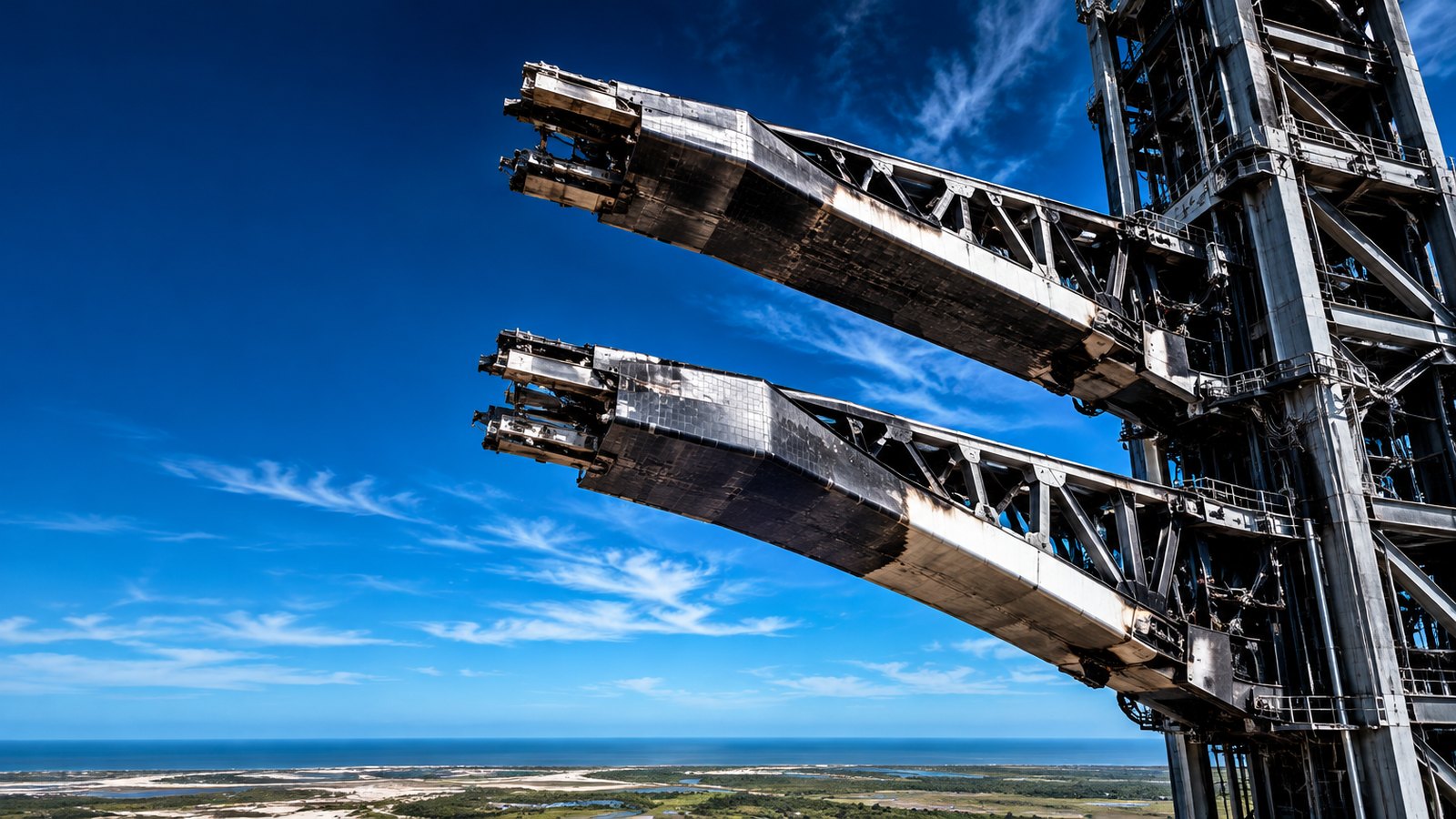
What happened on Starship Flight 15, ship and booster
The 407-foot stack lifted off late Friday from Starbase. It was SpaceX’s 15th full-scale Starship flight since 2023 and its second trip to orbit, per ValleyCentral. The ship, Ship 42, stands 171 feet tall and made 14 laps of the planet before heading home.
SpaceX also said everything on the ship, including the heat shield, appeared to work well. Spokesperson Dan Huot called the return burn a “good deorbit burn” on the webcast.
SpaceX meant this to be the first double catch, with the tower grabbing both stages. Half of that happened.
Booster 22, the first V3 booster to attempt a landing, never made it back to the tower. Its engines stopped firing too soon on the way down, SpaceX’s Kate Tice said. It diverted to the Gulf of Mexico, where it exploded, according to AP. The ship catch worked; the booster’s version did not.
Why the engines quit is still unclear. Space.com reports that SpaceX is still investigating, so nobody should be naming a cause yet.
Why the Starship catch matters beyond the spectacle
Here’s the thing: catching the ship is about money and speed, not just a cool video. A rocket you can catch is a rocket you can fly again, and reuse is what drives launch costs down.
The prize is large. SpaceX has long argued that full reuse could cut the cost of reaching orbit by orders of magnitude. We could not find a confirmed per-launch dollar figure for Starship in the coverage we reviewed, so treat any specific price you see with caution.
Nobody has confirmed that this particular ship is ready to fly again. Experts quoted by AP warn that reentry can damage the heat shield or engines, and no inspection results are out.
The business case is already visible. CNBC reports that Starship is key to growing Starlink, which it calls SpaceX’s current profit center. SpaceX says one Starship can carry up to 60 Starlink V3 satellites.
AP says the double catch is still the goal for speeding up trips to the moon and Mars. Investors are watching closely, too.
What the Starship landing means for people near Starbase
The takeaway for Texans: the safe Starship landing is good news for anyone living under the flight path. Starbase sits on the Texas border, and the ship flew over populated areas of Texas and Mexico on its way back to the tower, per CNN. A controlled catch beats an uncontrolled splashdown.
SpaceX also had a fallback. It could have deorbited early to a splashdown near Hawaii if something went wrong. It did not need it. Space.com’s live blog also lists FAA approval for Flight 15 ahead of launch.
The bigger local question is land, since Boca Chica is part of the story as SpaceX eyes more room.
What comes next after the first ship catch
SpaceX is still working through the booster abort. For background on how the licensing fight played out, see our look at SpaceX racing the FAA clock.
The question now is simple: if the ship can come home like this, how long until the booster does too? We could not find a date for Flight 16, an FAA decision on the booster loss, or a timeline for reusing the caught ship. Treat any “next launch” date you see online with caution until SpaceX or the FAA confirms it.