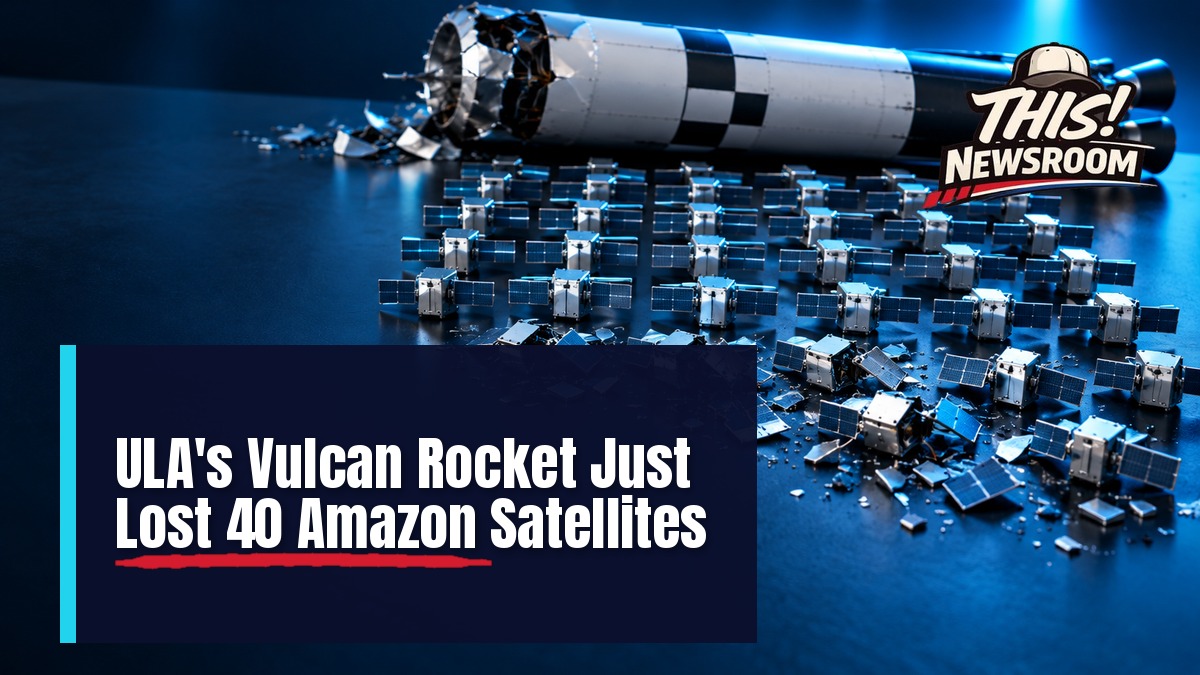
Ten minutes. That is how long it took for a Sunday launch to go from liftoff to disaster. The Vulcan rocket failed to reach orbit, and that Vulcan rocket failure destroyed all 40 Amazon Leo satellites riding on top of it.
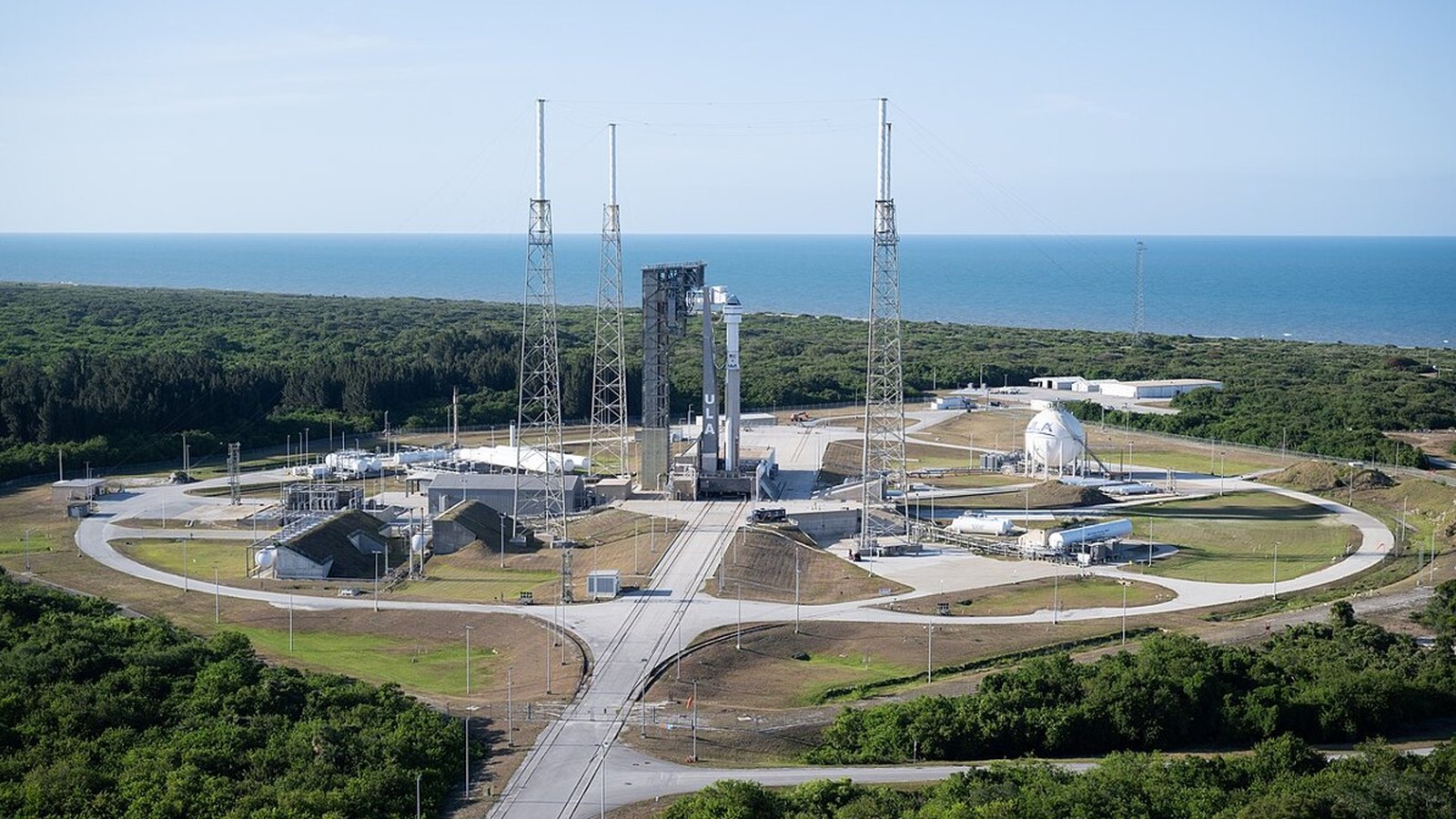
Vulcan lifted off from Space Launch Complex 41 at Cape Canaveral at 12:40 p.m. ET, according to Space.com. About ten minutes later, things went wrong. United Launch Alliance (ULA) said on X that the vehicle “suffered an anomaly 10 minutes into the flight and failed to deliver the Amazon mission to orbit.”
It was a rough day for American launch, which has seen bigger swings lately, like the Starship tower catch at Starbase. (Yes, that is a very expensive way to spend a Sunday afternoon.)
The first total ULA rocket failure in company history
This one is different from past hiccups. Both Spaceflight Now and Bloomberg call it the company’s first-ever total mission failure. ULA put it plainly in its own statement: “Today, we did not meet that standard.”
The cause is unknown. ULA says it has no specific data yet, so which stage or system failed is still an open question.
Anyone telling you otherwise tonight is guessing about this Vulcan anomaly.
A comeback flight that never got its comeback
The timing makes it sting. This was Vulcan’s first flight in nine months, per SpaceNews. It was also the fifth Vulcan flight overall and the first with six strap-on solid rocket boosters.
Vulcan’s last trip, on Feb. 12, still reached orbit, but one of its four solid rocket motors had a significant performance problem. ULA blamed a nozzle manufacturing defect, and the Space Force then paused national security launches on Vulcan.
This time, ULA said it fixed the problem with a redesigned nozzle. The rocket had already needed three tries to get off the ground, with scrubs on Nov. 13 and Nov. 14 for a nitrogen plant power interruption and a network communication issue. Sunday’s Vulcan launch failure came after all that patience.
Here’s the thing: this Vulcan rocket failure hits Amazon’s plan hard
Forty satellites is the largest batch Amazon has ever launched at once, so the loss is not small. Amazon had put nearly 400 Leo satellites into orbit across 14 missions since April 2025, using Atlas 5, Falcon 9 and Ariane 6. It had not launched any since July.
Amazon has bought 38 Vulcan flights for Leo, and this was the first. It also has 24 launches booked on New Glenn, 24 on Ariane 6 and 13 on Falcon 9.
The full constellation needs more than 3,300 satellites, and an FCC order requires full deployment by July 30, 2029, per EconoTimes. Amazon’s launch director has said Vulcan would carry close to half of the first-generation fleet. Amazon is chasing SpaceX’s Starlink, and tonight that chase got harder.
Blue Origin’s New Glenn, another Leo rocket, had a pad explosion in May, though no Leo satellites were attached. Amazon’s launch options are not exactly a deep bench right now.
For a sense of how one failure can ripple outward, see how a single nationwide ground stop spiraled into a $50 billion ask.
What happens after the Vulcan mission failure
ULA says it will work with Amazon and others to find the cause, set corrective action and return to flight “as quickly as possible.” The next Vulcan Leo launch, LV-02, was meant to follow within weeks if this one went smoothly. That date is now in doubt.
We have not found an Amazon statement, and the financial hit and insurance picture are unreported. Whether the failure affects Vulcan’s Space Force launch schedule is also unclear. Watch for those answers first.
Companies often stay quiet in moments like this, as with the Workday outage story, where the facts took days to settle.
So the real question is not whether ULA can find the problem. It is whether Amazon can afford to wait for it.