
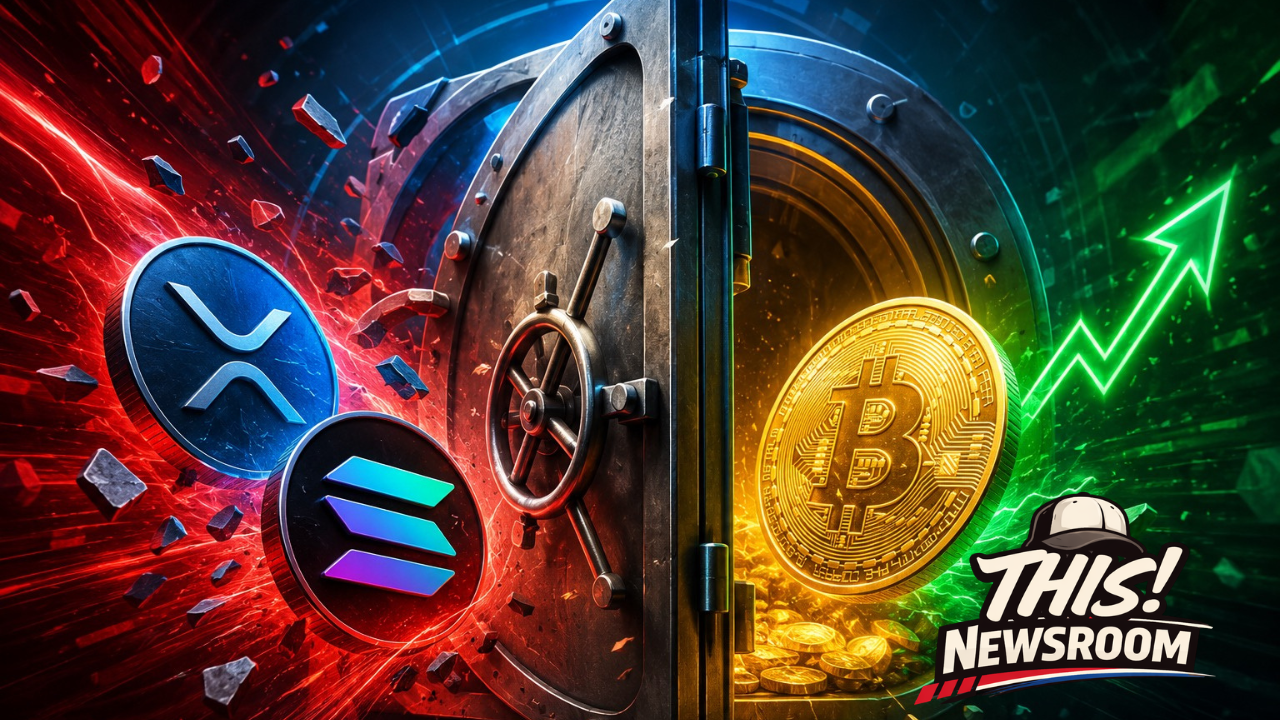
Fresh regulatory filings are sending shockwaves through the crypto world after reports surfaced that Goldman Sachs fully exited its XRP ETF position and sold all of its Solana ETF holdings during the first quarter of 2026.
According to the filing, Goldman Sachs previously held roughly $154 million in XRP-related ETF exposure before reducing that position to zero in a single quarter. The firm also reportedly slashed its Ethereum exposure by nearly 70% while maintaining a sizable Bitcoin allocation estimated around $700 million through funds tied to major asset managers like BlackRock and Fidelity.
The move immediately triggered speculation across crypto markets. Traders, analysts, and social media accounts quickly debated whether Goldman sees trouble ahead for altcoins or whether the transactions were simply institutional portfolio rebalancing.
Why Did Goldman Sachs Sell XRP and Solana?
That is the big question.
Some analysts believe the sale may not reflect a bearish long-term stance on XRP or Solana at all. Instead, Bloomberg analysts and institutional traders have suggested the positions could have been tied to trading desk facilitation rather than directional investment bets.
In simpler terms, Goldman may have temporarily held those ETF positions to support liquidity, client demand, or short-term market-making activities rather than because the bank believed XRP or Solana would outperform.
That theory helps explain how a position could move from $154 million to zero so quickly without months of gradual reductions.
Still, perception matters in financial markets. Even if the sale was procedural, headlines about a Wall Street giant exiting XRP and Solana can influence retail sentiment almost instantly.
Bitcoin Remains the Institutional Favorite
While Goldman reduced exposure to several altcoins, its Bitcoin holdings remained largely intact.
That detail stands out.
Institutional money continues to treat Bitcoin differently from the broader crypto market. Many large firms increasingly view Bitcoin as a macro asset similar to digital gold, while altcoins are often categorized as higher-risk speculative plays.
The contrast reinforces a growing divide in crypto investing:
- Bitcoin continues attracting long-term institutional capital.
- Ethereum remains important but faces increasing competition.
- Altcoins like XRP and Solana can experience sharp swings based on regulation, liquidity, and sentiment.
For many investors, the filing signals that Wall Street may still prefer Bitcoin as the “safe” crypto allocation while remaining more cautious about the broader digital asset ecosystem.
What Happens Next for XRP and Solana?
Crypto markets are notorious for overreacting to institutional headlines.
In the short term, news like this can create volatility and fear-driven selling. However, long-term performance will likely depend on much larger factors, including:
- ETF adoption growth
- Global crypto regulation
- Blockchain utility
- Network development
- Institutional demand beyond speculative trading
Both XRP and Solana still maintain massive communities and active ecosystems. Solana continues expanding in payments, gaming, and decentralized applications, while XRP remains heavily tied to cross-border payment discussions and Ripple’s ongoing enterprise ambitions.
One bank selling positions does not automatically mean either project is doomed.
But it does highlight how quickly institutional capital can rotate inside crypto markets.
The Bigger Story: Wall Street Is Becoming More Selective
The larger takeaway may be that institutional crypto investing is maturing.
In earlier cycles, many firms rushed into broad crypto exposure. Now, major financial institutions appear to be separating assets into categories based on perceived stability, liquidity, regulation, and long-term viability.
Bitcoin continues benefiting from that shift.
Altcoins now face a much tougher environment where institutions may demand clearer use cases, stronger regulatory clarity, and deeper liquidity before committing large allocations.
For crypto investors, that means the next phase of the market may reward projects with real adoption and durable infrastructure instead of pure hype cycles.