

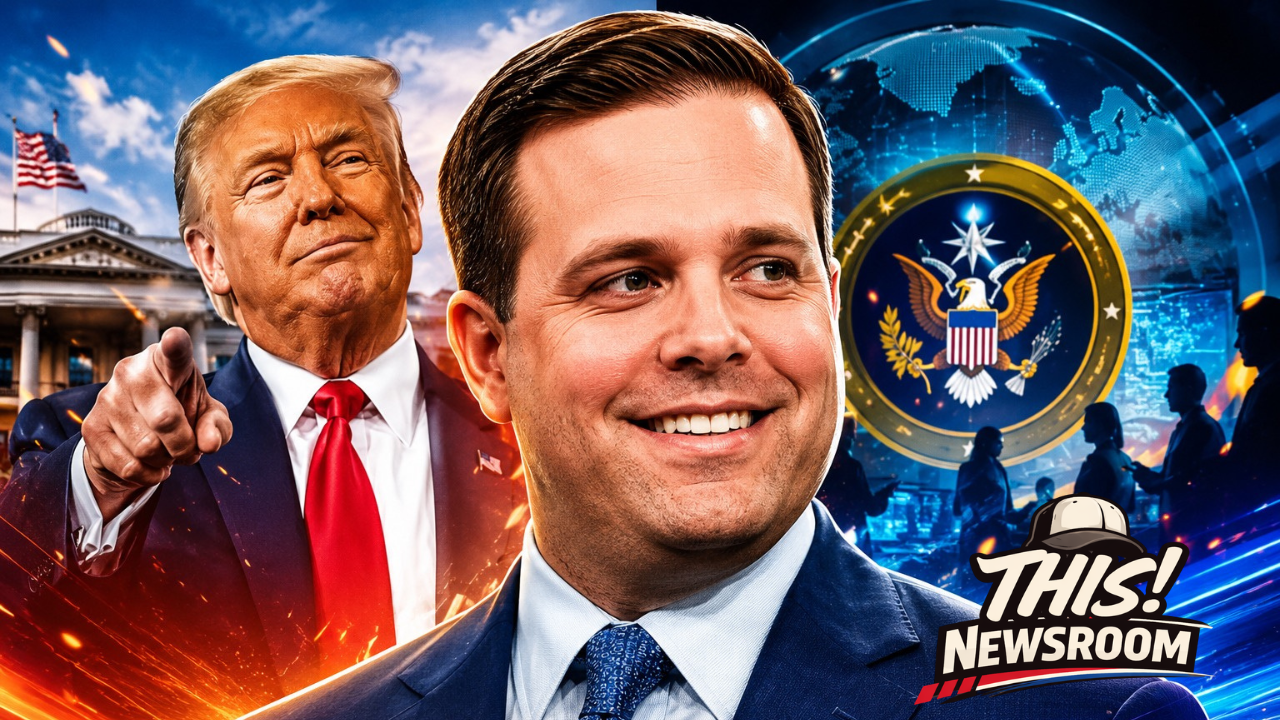
President Turns to Trusted Ally for One of Washington’s Most Powerful Intelligence Roles
President Donald Trump has tapped housing regulator and longtime political ally Bill Pulte to serve as Acting Director of National Intelligence (DNI), placing a close confidant at the helm of America’s intelligence apparatus during a period of heightened global instability.
The appointment immediately became one of the most talked-about personnel moves in Washington, drawing praise from Trump supporters who view Pulte as a loyal reformer and criticism from opponents who point to his lack of national security experience.
At just 38 years old, Pulte now steps into a position responsible for overseeing the nation’s intelligence community, which includes agencies such as the CIA, NSA, and numerous military intelligence organizations.
From Housing Regulator to Intelligence Chief
Before receiving the DNI appointment, Pulte served as director of the Federal Housing Finance Agency (FHFA), a role focused on overseeing major housing finance institutions and mortgage-related regulations.
While leading the agency, Pulte gained national attention for aggressively pursuing investigations into individuals he claimed may have committed mortgage-related fraud. Several of those inquiries involved people viewed as political adversaries of President Trump.
So far, none of those investigations have resulted in criminal charges, but they helped establish Pulte’s reputation as a combative regulator willing to challenge high-profile figures.
Now, he finds himself transitioning from the housing sector to one of the most sensitive national security positions in the federal government.
Replacing Tulsi Gabbard
Pulte succeeds Tulsi Gabbard, whose departure leaves a significant leadership opening within the intelligence community.
Gabbard’s tenure generated headlines for her efforts to reshape intelligence operations and challenge what she described as bureaucratic inefficiencies. Her exit opens the door for a dramatically different leadership style under Pulte.
The timing is especially notable as intelligence agencies continue monitoring multiple international flashpoints, including ongoing conflicts in Europe, rising tensions in the Middle East, cybersecurity threats from state actors, and increasing competition with China.
Supporters Say Fresh Perspective Is Needed
Trump allies argue that Washington has relied too heavily on career intelligence officials and national security veterans for decades.
Supporters believe Pulte’s outsider status could help challenge entrenched bureaucracies and bring a new level of accountability to intelligence agencies.
They also point to Trump’s broader pattern of selecting trusted advisers who align closely with his policy goals rather than choosing candidates solely based on traditional government credentials.
For many within Trump’s political movement, loyalty and willingness to execute reform have become just as important as prior experience.
Critics Raise National Security Concerns
Critics see the appointment differently.
National security experts and political opponents argue that overseeing America’s intelligence operations requires extensive experience in foreign policy, intelligence gathering, military affairs, or national security strategy.
They note that intelligence leaders routinely handle highly classified information, coordinate responses to emerging threats, and advise the president on matters that can impact global stability.
Those concerns have fueled debate over whether political loyalty should outweigh subject-matter expertise when filling one of the government’s most sensitive positions.
What Happens Next?
As acting director, Pulte assumes responsibility for coordinating intelligence assessments across numerous agencies while advising the White House on emerging threats around the world.
His performance will likely be closely watched by lawmakers, intelligence professionals, allies, and adversaries alike.
The appointment also serves as another example of Trump’s preference for placing trusted allies in influential positions throughout the federal government.
Whether supporters view it as bold reform or critics see it as a risky experiment, one thing is clear: Bill Pulte’s move from housing regulation to intelligence leadership is poised to become one of the defining political stories of the summer.
The Bottom Line
Bill Pulte’s appointment marks a significant shift in leadership at the top of America’s intelligence community. The decision highlights President Trump’s continued emphasis on loyalty and institutional change while raising questions about the balance between political trust and national security expertise.
With global tensions elevated and intelligence operations under constant scrutiny, the spotlight on Pulte’s tenure will be immediate and intense.