
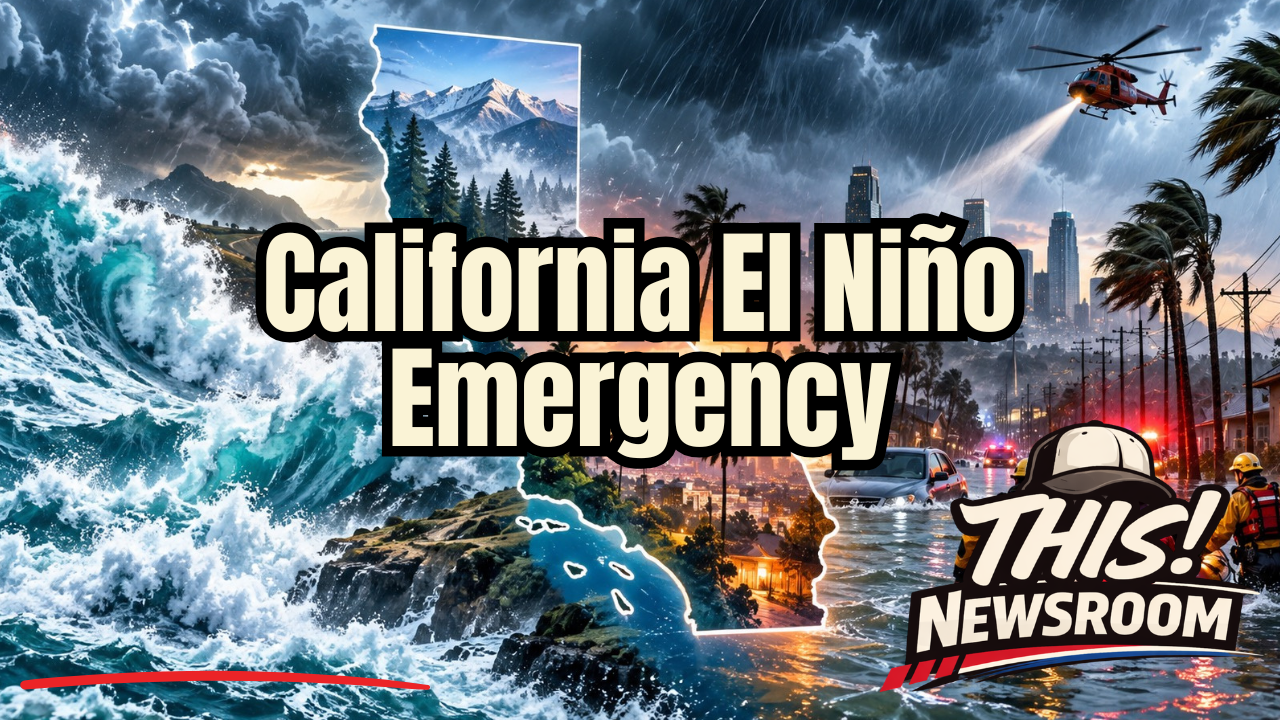
California has declared a statewide emergency as officials prepare for what could become one of the strongest El Niño events ever recorded.
Gov. Gavin Newsom issued the emergency proclamation Monday, September 21, directing state agencies to begin mobilizing resources ahead of potentially severe winter storms, flooding, landslides, coastal damage and infrastructure disruptions.
The move does not mean a major storm is currently striking California. Instead, state officials are acting months ahead of the winter storm season as forecasters warn that the developing El Niño could reach historic strength.
“This is about preparing early,” Newsom said as the state outlined plans to position emergency equipment, reinforce infrastructure and coordinate resources before conditions deteriorate.
California Preparing Before the Storms Arrive
The emergency declaration gives state agencies greater flexibility to move resources quickly and reduce delays associated with emergency preparation.
California plans to stage flood-fighting equipment such as pumps and sandbags in areas considered vulnerable to heavy rainfall.
Caltrans will also position road-closure equipment, traffic-control resources and snow-removal machinery near highways that could face flooding, rockslides or significant snowfall.
Meanwhile, the California National Guard is being prepared to assist with search-and-rescue operations, engineering support, transportation and emergency logistics if major storms develop.
Officials are particularly concerned about communities that could face flash flooding, debris flows or landslides.
Areas recently affected by wildfires can be especially vulnerable because burned hillsides may struggle to absorb heavy rainfall.
A Potentially Historic El Niño
El Niño develops when waters across portions of the tropical Pacific Ocean become significantly warmer than normal.
That warming can alter atmospheric circulation and shift storm tracks around the world.
For California, powerful El Niño years have historically been associated with an increased likelihood of heavy winter precipitation, particularly across Southern California.
State officials say federal forecasters currently estimate a greater than 90% chance that the developing El Niño will become very strong during the fall and winter, while the probability of reaching historic strength stands at roughly 75%.
Recent climate indicators have already drawn attention.
The developing 2026-27 El Niño shares characteristics with several previous powerful events that produced unusually wet winters across California, although forecasters continue to caution that El Niño does not guarantee any specific amount of rainfall in any particular location.
Flooding, Landslides and Coastal Damage Are Major Concerns
California officials are preparing for several potential hazards.
Heavy rain could overwhelm drainage systems and waterways, while saturated hillsides could trigger landslides and debris flows.
Coastal communities may face additional risks from powerful surf, erosion and flooding, particularly when storms coincide with high tides.
Some Southern California coastal areas have already experienced erosion and property impacts connected with unusually powerful Pacific surf.
Mountain communities could also experience significant snowfall.
While snow is critical for California’s water supply, major storms can close roads, isolate communities and place additional pressure on emergency responders.
Residents Urged to Prepare Early
California emergency officials are asking residents to begin preparing now rather than waiting for the first major winter storm.
That includes checking flood risks around homes and businesses, clearing gutters and storm drains, preparing emergency supplies and signing up for local emergency alerts.
Residents living near wildfire burn scars should pay particular attention to evacuation warnings because those areas can experience rapidly developing debris flows during intense rainfall.
Officials also warn drivers never to attempt to cross flooded roads.
Even shallow-looking floodwater can move vehicles or conceal damaged pavement underneath.
Why the Emergency Declaration Matters
A statewide emergency declaration allows California to coordinate resources more quickly across agencies and local governments.
It can streamline purchasing, accelerate certain permits and make it easier to deploy equipment before and during major weather events.
Newsom’s administration said the goal is to prepare infrastructure and emergency-response systems before the most dangerous portion of the storm season begins.
The state is also expanding multilingual public communication around flooding, evacuation procedures, emergency alerts and potential power outages.
California Has Seen Powerful El Niño Winters Before
Some of California’s most memorable storm seasons occurred during strong El Niño periods.
The 1982-83 and 1997-98 El Niño events brought widespread rainfall, flooding, coastal damage and landslides to parts of the state.
Scientists studying the current event say its developing Pacific Ocean patterns resemble some previous strong El Niño years, increasing confidence that California could experience an unusually wet winter.
Still, El Niño is only one factor influencing California’s weather.
Atmospheric circulation, ocean temperatures elsewhere around the globe and individual storm tracks will ultimately determine how much rain and snow reaches specific regions.
The Bottom Line
California is preparing for the possibility of an extraordinary winter.
The state of emergency allows agencies to stage equipment, strengthen infrastructure, coordinate emergency resources and respond faster if major storms begin developing.
Whether the 2026-27 El Niño ultimately becomes the strongest on record remains uncertain.
But with Pacific Ocean conditions already reaching unusual levels and forecasters warning that the event could continue strengthening, California officials have decided not to wait for the first major storm before preparing.
For millions of residents across the state, the coming winter could become one of the most closely watched weather seasons in years.