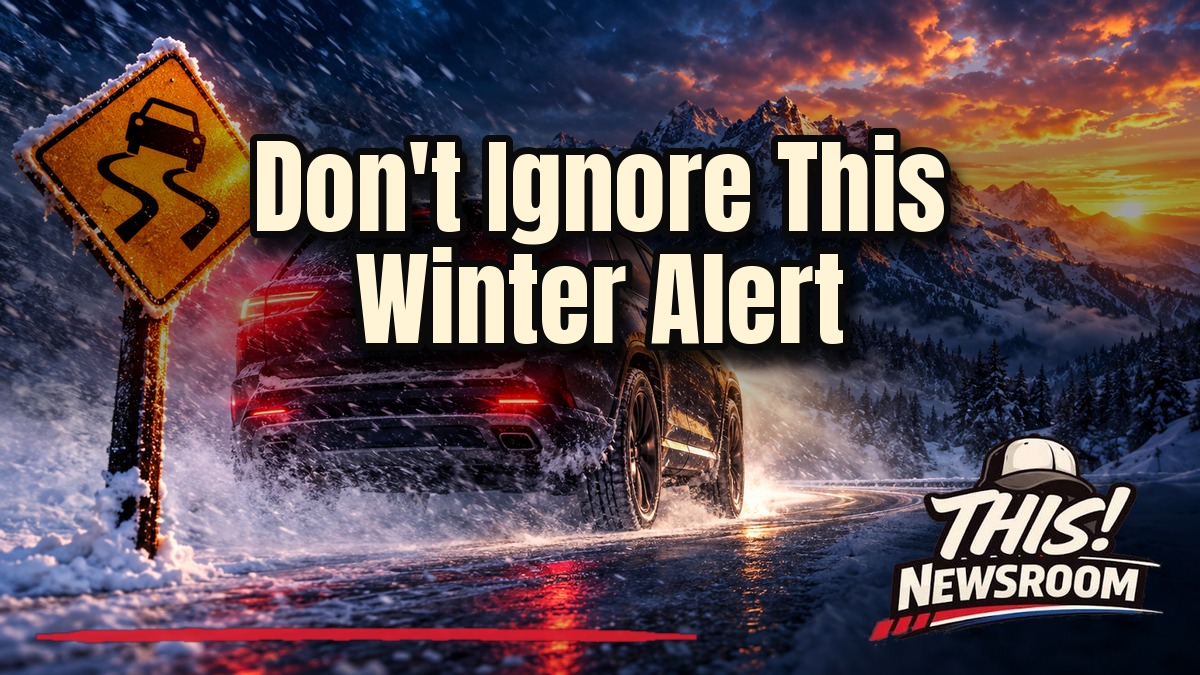
It sounds like a polite suggestion, but a winter weather advisory means snow, sleet or freezing rain is coming that could make travel hazardous. It isn’t severe enough to trigger a full winter storm warning. In plain English: you can still go, but plan for slow, slippery roads.
Utah is the reason a lot of people are searching it right now. The National Weather Service in Salt Lake City has issued its first winter weather advisory of the season for the state’s mountains.
What a winter weather advisory means
The weather service issues an advisory when a low-pressure system produces a winter hazard that doesn’t meet warning criteria, according to NOAA’s glossary. The state of Michigan’s guidance adds the practical translation. Conditions are expected to cause significant inconveniences and may be hazardous, so “caution should be used if traveling.”
Think of it as the yellow light of winter alerts. It’s the lowest of the three tiers. A watch means a major storm could develop, usually a day or two out. A warning means take action now. An advisory sits below both, and plenty of people shrug it off.
That’s the mistake.
Why every winter storm advisory uses different numbers
Here’s the part that trips people up: there is no single national snowfall number. Each local forecast office sets its own thresholds. On its winter weather safety page, the weather service says the snow needed for a winter storm warning in the Northern Plains is typically much higher than in the Southeast.
That makes sense once you picture it. Three inches of snow is a normal Tuesday in Minnesota. In Georgia, however, it can shut down a city. A winter storm advisory is built around what the weather does to travel and daily life in that area. No one magic measurement decides it.
The snow advisory covering Utah right now
The current Utah advisory covers the Wasatch Mountains south of I-80 from 6 a.m. Tuesday, Oct. 13, to 6 a.m. Wednesday, Oct. 14. The weather service expects snow, particularly above 8,500 feet. Totals could reach 4 to 6 inches in the upper Little and Big Cottonwood canyons, with more above 9,000 feet.
A second advisory covers the western Uinta Mountains, including Moon Lake and Mirror Lake Highway. According to Men’s Journal’s report on the advisories, it calls for an additional 8 to 14 inches, especially above 9,000 feet. Remnants of a tropical storm already soaked the mountains with rain. Then colder air arrived to turn the next round into snow. Odd weather is a theme this year, as our look at El Niño’s global weather impact shows.
The weather service’s own wording is blunt: “Winter driving conditions are expected.” It also warns that early season snowfall on roadways “may pose a significant risk to under-prepared travelers.”
The first-snow trap: why a winter weather alert still matters
Early-season storms are sneaky. Drivers haven’t shifted into winter mode yet. Tires are still summer-tired. The ice scraper is somewhere in the garage (good luck).
Seasonal mountain roads like Bald Mountain Pass remain open. Still, the weather service says they can pose a real risk to anyone who isn’t ready.
So what should you actually do when a winter weather advisory lands in your forecast?
- Slow down. Stopping distances get much longer on wet snow and slush.
- Check road conditions first. The weather service points Utah drivers to the state transportation department’s winter road reports.
- Pack the basics. Water, a blanket, a phone charger and a full tank cost almost nothing. Gas prices keep climbing, too, as we reported when Americans spent $300 million more on gasoline in a single month.
- Watch for elevation. A rainy valley can sit below a snowy pass.
Here’s the thing about a winter advisory
Nobody panics over the word “advisory.” It sounds like a polite suggestion. Yet in a lot of winter crashes, the forecast had said exactly what was coming. The alert was simply the quiet one.
That’s the point of the tiering. It’s an early heads-up so you can adjust your day, not a reason to cancel it. Move the trip, leave early or just drive like the road is slicker than it looks. Odds are it is.
What comes next
The Utah advisories expire at 6 a.m. Wednesday. A cutoff low crosses the state that day, and showers may linger in northeast Utah on Thursday, according to KSL. If you’re headed anywhere in the mountains before then, check conditions twice.
Ski season is coming, but the first storm of the year is the one that catches people off guard. Is your ice scraper where you think it is?