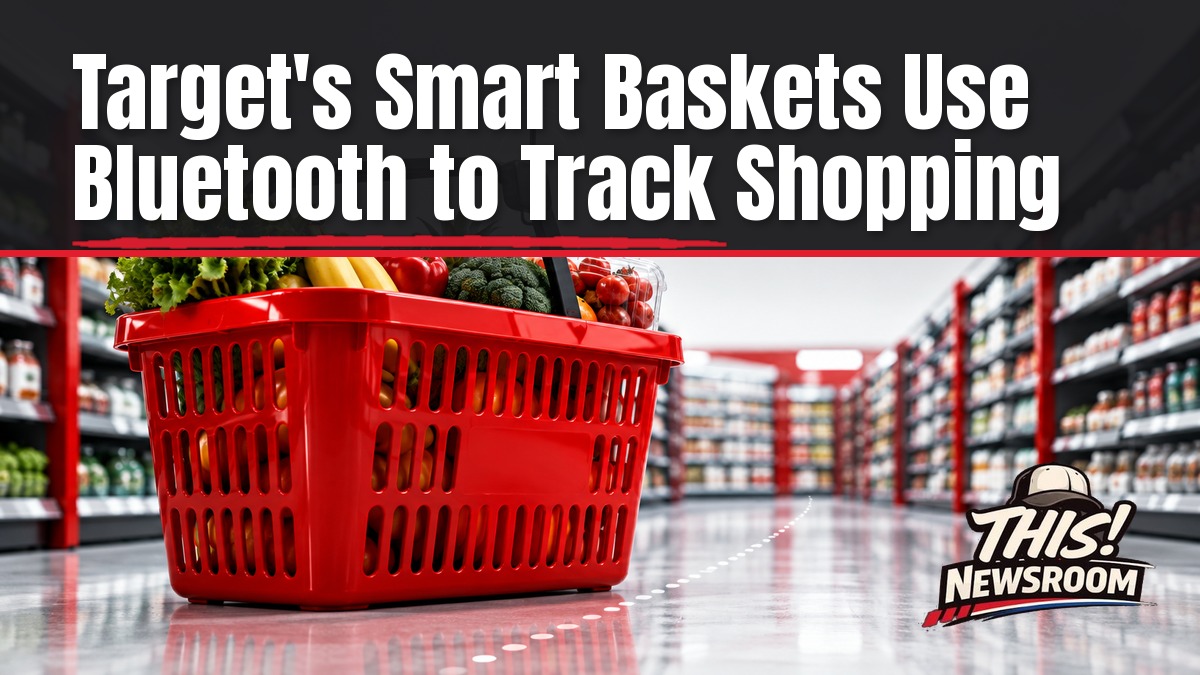
Your shopping basket has a Bluetooth beacon, and the internet has just discovered it. The viral claim says Target hides trackers in its baskets, and on the hardware it is mostly true, though that is where the truth stops. Target basket tracking is real, but “secret” is doing a lot of heavy lifting, and so is “new.”
Here is the short version for anyone who just saw the post in their feed: some Target baskets carry a small Bluetooth beacon that talks to smart LED lights overhead. This technology has been in Target stores for years, and the company has described parts of it publicly.
Where the Target basket tracking claim came from
The wave started with a TikTok video posted around Aug. 29, 2026, by someone who appeared to be a Target employee. In it, the poster declared, “You are now being tracked at Target.” The clip pulled roughly 3.4 to 3.7 million views, according to BroBible and KMOB.
A follow-up video then pointed to a beacon made by Acuity Brands. A Reddit post from about six months earlier showed a device with the same FCC ID, Snopes reports. Snopes rated the core claim “True.”
What the Target Bluetooth baskets actually do
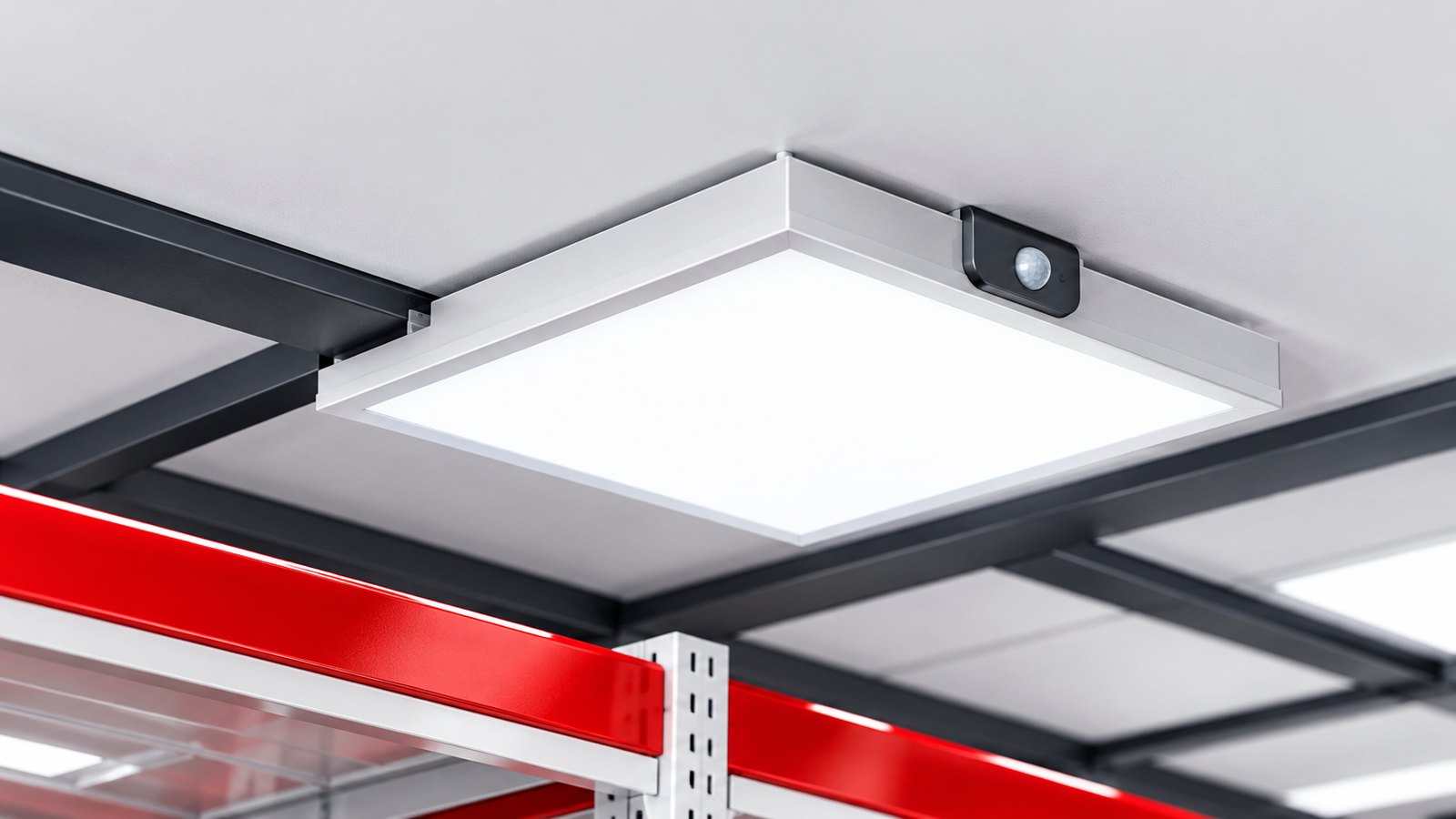
The beacon sends out a Bluetooth Low Energy signal that the ceiling lights can pick up. That lets Target’s systems work out where a basket is in the store.
Here is the part the viral posts skip. According to Snopes’ syndicated fact-check, the basket beacons transmit only a location. They do not collect information about the shopper. Tying a location to a person happens through Target’s app, not through the basket itself.
So the plastic basket is not secretly profiling you. It is basically a very boring dot on a map.
Your phone, and the app on it, is the piece that connects the dots.
Is Target basket tracking really secret?
That is the shakiest part of the claim. Target’s privacy policy mentions in-store location through “blue tooth signal, LED light chip technologies or other technologies,” per Snopes. It also lists “geolocation data,” which can include in-store location, as noted by BroBible. (Yes, “blue tooth” is spelled as two words in the policy. No, that is not the scandal.)
Target also announced in 2017 that it was putting beacon chips into LED lighting across roughly half of its 1,800 stores, working with Acuity Brands. Target and other retailers have used beacons for in-store tracking and location-based offers since at least 2015. Target added beacon-based indoor mapping to its app in 2017, according to Snopes’ summary of TechCrunch’s reporting.
What is not confirmed is whether Target specifically told shoppers about the beacons on the baskets. That is a fair question. “Never announced it” is not.
Here’s the thing: what Target in-store tracking means for your privacy
Honestly, the smartest move is also the least dramatic. If you do not want a store to know where you are walking, check what your phone allows the Target app to see. Turn off location and Bluetooth permissions for it, or just do not open the app in the aisles.
Privacy worries are running high everywhere right now. Readers who want to see how fast personal data can spill out can look at what the 11.7M-record Capcom breach exposed.
The posts going around also claim shoppers get tracked without downloading an app or giving consent. That line traces back to Acuity’s marketing, as repeated on Substack and Threads, and I could not verify the original document. Another viral line about a “$262 price gap between shelf and car park” comes from a single Threads post and has no independent backing. It also has nothing to do with the basket beacons, so I am leaving it out of the story.
The questions Target still has to answer
A few things remain unknown about Target basket tracking. Nobody has confirmed how many stores use the tracking baskets. The “nearly half of 1,800 stores” number refers to the 2017 lighting rollout, not necessarily the baskets. I did not find an on-the-record Target response to this latest wave, and no regulator has announced any action.
Target has also patented related technology. Target Brands holds a patent publication titled “Shopping Cart with Location-Based Item Verification,” per KMOB, which tells you retailers are thinking about carts and baskets as data points. Regulators have been slow on data cases before. Meta’s $25 billion penalty in New Mexico shows how long such fights can drag on.
So no, this is not a spy thriller. It is a store using the same kind of indoor-location tech it has talked about for nearly a decade, and a public that is only now noticing the plastic in its hands.
The real question is not whether your basket knows where it is. It is how much of that your phone shares, and whether anyone asked you.