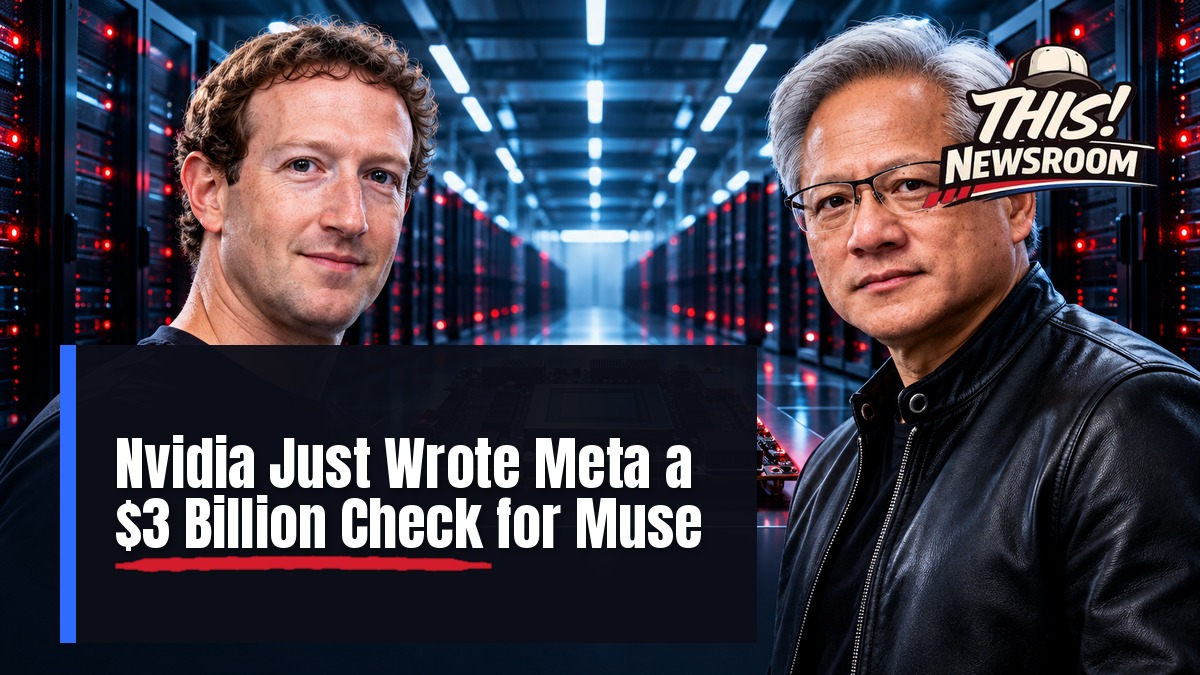
Nvidia is putting $3 billion into Meta, and critics are already asking whether the AI boom is feeding itself. Nvidia said Tuesday it will buy $3 billion of the $95 billion in stock Meta announced Monday. It will also expand its work on Meta’s Muse AI agent, according to Yahoo Finance. The catch is simple: Nvidia sells Meta the chips, and now it owns a slice of Meta too.
Why should you care? Because the Nvidia investment in Meta shows how AI spending is financed. If chipmakers fund their own biggest customers, a slowdown could hit both sides at once. That matters if you hold either stock, or if you wonder whether the AI buildout can sustain itself. It is also the exact bubble worry analysts keep raising.

Why the Nvidia Meta deal looks circular
Meta is raising nearly $100 billion to fund AI spending. Some of that cash comes from the companies that sell it the equipment. Nvidia is not alone. AMD said Tuesday it will put in $1 billion, so the two chipmakers are in for $4 billion together, CNBC reports.
Critics call this kind of arrangement “circular” financing. The money goes out the front door and comes back in through the side window. Still, that is commentary, not a confirmed problem. Meta gets cash and hardware, and Nvidia gets a stake in a huge customer. The real test is whether Meta’s AI products earn enough to justify the spending.
The scale fits a bigger pattern. JPMorgan estimates the AI buildout could cost $5.5 trillion by 2030, so the money has to come from somewhere.
The market’s first read was mixed. Meta shares fell about 1.9% and Nvidia rose about 2.4% when the reports came out.
What Muse gets from Nvidia
The deal isn’t only cash. Meta will expand its use of Nvidia hardware, and the companies say they will work together to speed up how Muse trains and answers questions, HotHardware reports.
Muse is Meta’s personal AI agent, the kind that can book travel and make purchases. Mark Zuckerberg said the company wants to “deliver the best personal agents and frontier models for billions of people.” Jensen Huang called agents “a new computing paradigm.” For more on why Huang is so bullish, see our look at his view that Meta may use AI better than anyone.
What to watch next
Nvidia did not publish a share count or an ownership percentage that we could confirm. Its stake is therefore still unknown. Meta’s SEC filings and the sale of the remaining shares should give the next real answer.
Investors are already bracing for the next round of numbers, as our Big Tech earnings preview explains.
In the AI boom, the customer is now also the shareholder. Let’s hope the receipts keep up.