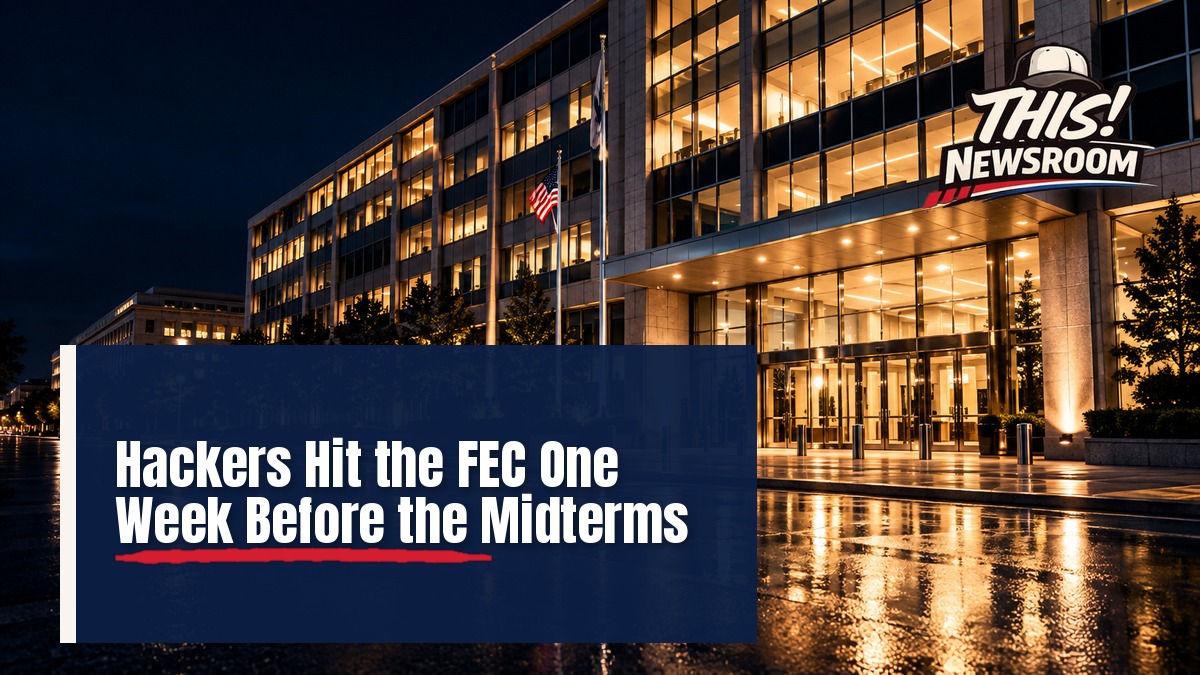
Of all the weeks for the campaign money tracker to go dark. The Federal Election Commission’s filing platform went down Monday night and the agency says it is still offline, and a hacker may be the reason behind the FEC filing system outage.
The timing is hard to miss: seven days before the Nov. 3 midterms, the system that shows who is paying for last-minute political ads is offline.

So, here is what is confirmed, and what is not.
What the FEC filing system outage means right now
The FEC’s electronic filing system has been offline since about 10 p.m. ET Monday, Oct. 26, according to the agency’s status message, as reported by Reuters. The FEC posted the notice because campaign finance officers could not file mandatory reports late Monday. As of its 3:48 p.m. Tuesday update, the system was still down and the agency said work continues to fix it.
“At this time, the FEC’s electronic filing system is currently offline and our IT staff are actively working to restore service,” the agency said in its statement.
The outage covers direct electronic filing, filing through commercial software and the FECfile+ application. Even so, reports filed before the outage remain searchable, and the FEC’s other campaign finance searches and PDFs are still available, according to Verity News.
Was the FEC hacking attempt real?
That part rests on one source so far. An email from an FEC electronic filings officer to campaign compliance firms, seen by Reuters, said: “We have a bad actor attempting to breach FEC systems. As a result, we’ve had to temporarily shut down our web-facing services.”
However, the FEC itself has not confirmed an attack. A spokesperson told Fox News, “We have no comment on that story.” The agency has not said who is responsible or whether anyone got into its systems or accessed any data. Reports describe an attempt to breach, not a successful break-in. It would not be the first time hackers have gone after a household-name system, as the Quest Diagnostics breach of patient records showed.
The Cybersecurity and Infrastructure Security Agency referred questions to the FEC. The FBI did not immediately respond to Reuters. Some partisan outlets are already speculating about foreign interference, but nobody has offered evidence. Investigators have established no actor and no motive.
Here’s the thing: your vote is safe, your view is not
First, the reassuring part. The FEC does not run elections. It does not operate polling places, voting machines or ballot counting, so the Federal Election Commission outage should have no effect on your ability to vote. Early turnout is already running hot, as the record early-voting pace in Minnesota shows.
What you lose is a window. The blocked filings include the 24-hour and 48-hour spending reports, which show how much political groups and others are spending on specific races right now. In other words, those are the reports that reveal who is paying for the ad blitz in your district.
“It’s a big deal,” Brendan Glavin, research director at OpenSecrets, told NBC News. “These are the key reports that tell us what is happening.”
The timing is the sting. AdImpact says about $11.21 billion has been spent on advertising and future reservations, making these the most expensive U.S. elections ever, ahead of the $11.2 billion spent in all of 2024. Super PACs and other groups have spent an average of more than $50 million a day over the last week, Glavin said. Meanwhile, they reported more than $250 million in spending on Oct. 20 alone.
Steven Mele of MBA Consulting Group, a compliance firm, put it bluntly: “I’ve never seen this in 26 years.” He added, “The result is there will be less disclosure on the elections” until the FEC fixes it.
What happens next after the campaign finance filing outage
The FEC gave no estimate for when filing will return. Three questions are still open: whether the agency will extend deadlines or accept filings another way, whether the FBI and CISA are investigating, and whether anyone accessed any data. So far, nobody has answered any of them publicly. The FEC’s status page and its X account are where answers will appear first.
The stakes of the election itself are not small. Control of Congress for the final two years of President Trump’s term is on the line. If the FEC filing system outage drags into the final days, voters, reporters and watchdogs will head into Nov. 3 knowing less than usual about who is spending to move their vote.
Voters can still cast their ballots. They just may have to do it without the receipts.