

Taxes may not be exciting, but understanding the 2026 federal tax brackets can save you real money—and help you plan smarter for the year ahead. Whether you’re a W-2 employee, self-employed, or running multiple income streams, knowing how the IRS taxes income in 2026 matters more than ever.
The 2026 tax brackets apply to income earned in 2026, with tax returns due April 15, 2027, according to the Internal Revenue Service. These brackets reflect inflation adjustments, not new tax laws, but the impact on your paycheck and tax bill can still be meaningful.
Let’s break it all down.
How Federal Tax Brackets Actually Work (Quick Refresher)
The U.S. uses a progressive tax system, which means:
- You do not pay one flat tax rate on all your income
- Income is taxed in layers, with higher portions taxed at higher rates
- Moving into a higher bracket does not mean all your income is taxed higher
This misunderstanding alone causes millions of Americans to overestimate their tax burden.
2026 Federal Income Tax Brackets
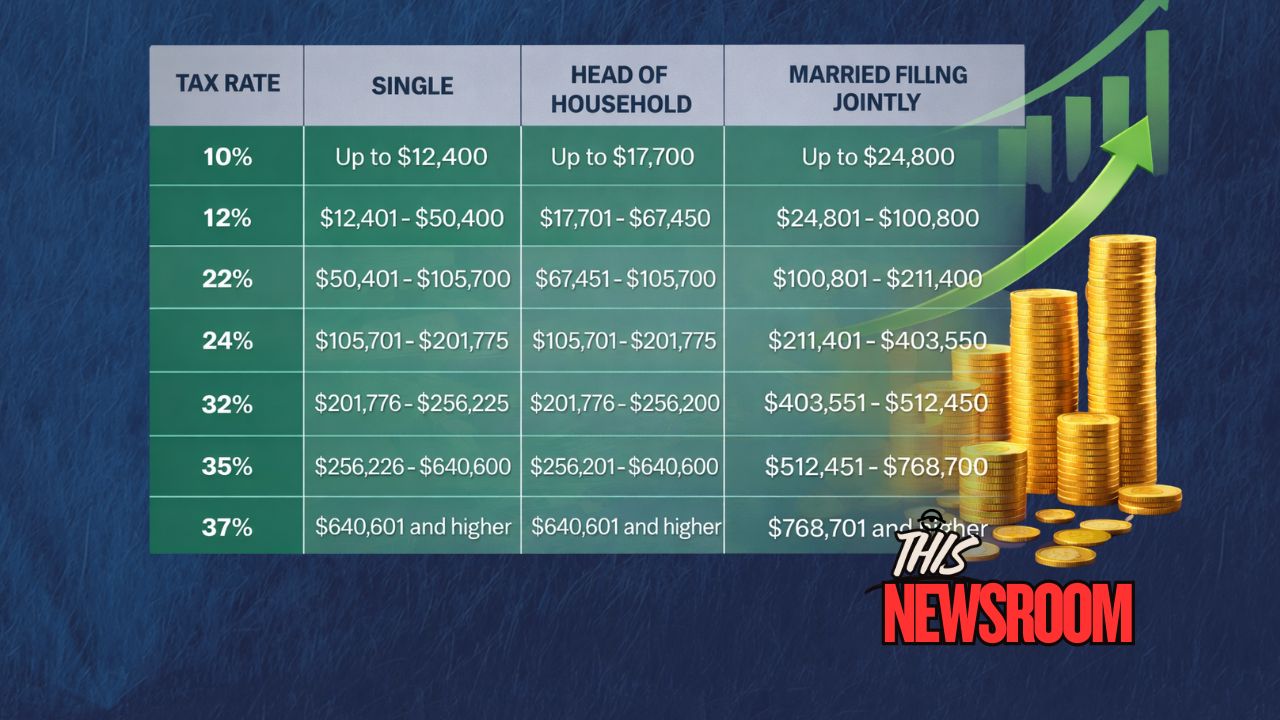
Below are the official 2026 federal income tax brackets, broken out by filing status.
Single Filers
- 10%: Up to $12,400
- 12%: $12,401 – $50,400
- 22%: $50,401 – $105,700
- 24%: $105,701 – $201,775
- 32%: $201,776 – $256,225
- 35%: $256,226 – $640,600
- 37%: $640,601 and higher
Head of Household
- 10%: Up to $17,700
- 12%: $17,701 – $67,450
- 22%: $67,451 – $105,700
- 24%: $105,701 – $201,775
- 32%: $201,776 – $256,200
- 35%: $256,201 – $640,600
- 37%: $640,601 and higher
Married Filing Jointly
- 10%: Up to $24,800
- 12%: $24,801 – $100,800
- 22%: $100,801 – $211,400
- 24%: $211,401 – $403,550
- 32%: $403,551 – $512,450
- 35%: $512,451 – $768,700
- 37%: $768,701 and higher
What Changed From 2025 to 2026?
The IRS adjusts tax brackets annually for inflation, which helps prevent “bracket creep”—where inflation alone pushes taxpayers into higher brackets.
For 2026:
- Bracket thresholds increased slightly across all filing statuses
- Middle-income households benefit the most from these adjustments
- High earners still face the same top marginal rate (37%)
No new tax law was passed here—this is strictly an inflation recalibration.
Why These Brackets Matter More Than You Think
Understanding your tax bracket helps you:
- Estimate take-home pay more accurately
- Adjust withholding before surprises hit
- Make smarter decisions on bonuses, side income, and capital gains
- Time deductions and income strategically
For business owners, real-estate investors, and self-employed earners, these brackets are especially important when planning quarterly estimated payments.
Common Tax Bracket Myths (Still Everywhere)
Myth: “If I enter the 24% bracket, all my income is taxed at 24%.”
Reality: Only the portion within that bracket is taxed at that rate.
Myth: “Making more money can leave you worse off after taxes.”
Reality: You always net more income—even if some is taxed higher.
How to Lower Your Taxable Income in 2026
Regardless of bracket, legal tax strategies include:
- Maxing out retirement contributions (401(k), IRA)
- Using HSAs if eligible
- Itemizing deductions when beneficial
- Managing timing of bonuses and capital gains
- Leveraging business deductions if self-employed
This is where tax planning beats tax preparation.
Important Deadlines to Remember
- Income Year: January 1 – December 31, 2026
- Tax Filing Deadline: April 15, 2027
- Estimated Tax Payments: Quarterly for self-employed earners
Official IRS Resources & Tools
For primary sources and calculators, use:
- IRS Tax Brackets Overview
https://www.irs.gov/filing/federal-income-tax-rates-and-brackets - IRS Withholding Estimator
https://www.irs.gov/individuals/tax-withholding-estimator - IRS Tax Publications
https://www.irs.gov/forms-instructions - Summary reporting via Yahoo Finance
https://finance.yahoo.com
Final Takeaway
The 2026 federal tax brackets don’t change the rules—but they change the math. Knowing where your income falls and how it’s taxed can be the difference between feeling squeezed and feeling in control.
Tax knowledge isn’t about avoiding responsibility. It’s about understanding the system well enough to play it intelligently.
If you want deeper dives into tax strategy, income optimization, and financial planning—this is exactly the stuff we’ll keep breaking down here.