

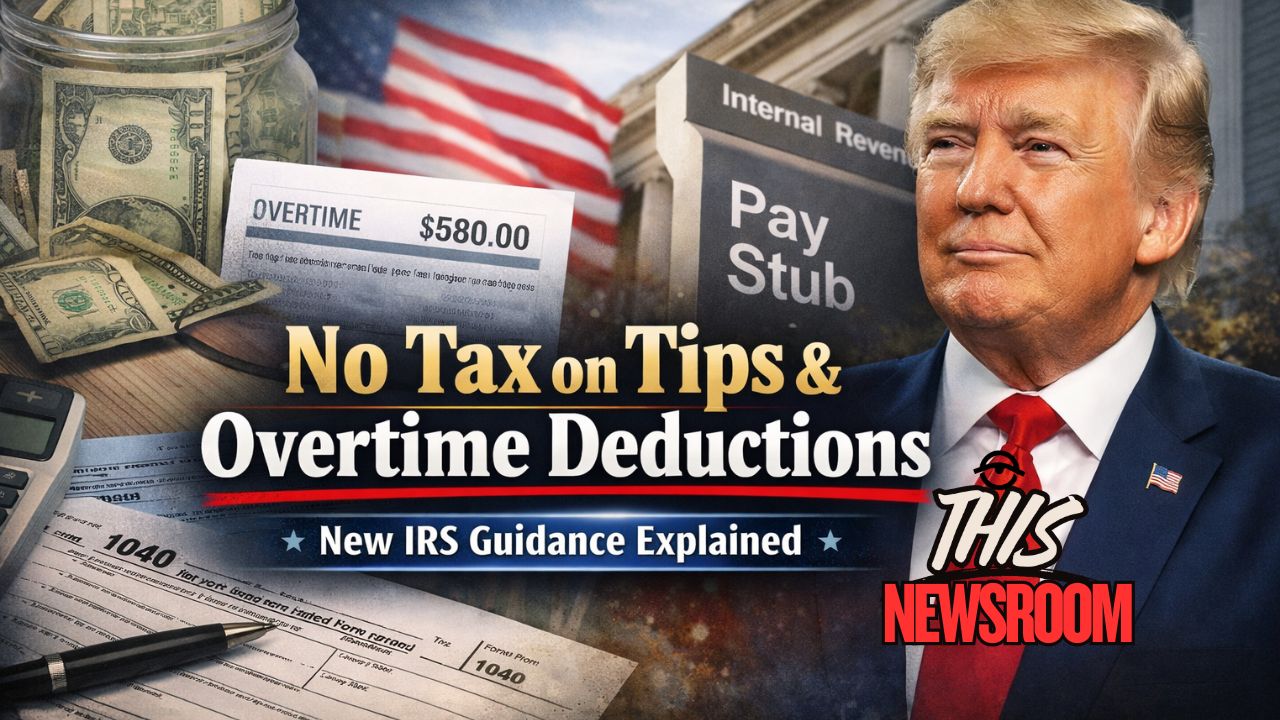
If you’ve ever relied on tips or overtime to make ends meet, this is one tax headline you probably read twice—maybe even three times—just to make sure it wasn’t satire.
Under new tax law provisions backed by former President Donald Trump, the Internal Revenue Service has released early guidance clarifying how “no tax on tips” and overtime deductions could work in practice. And yes, this could mean up to $25,000 in tips and more than $12,000 in overtime pay becoming tax-deductible for eligible workers.
Before we all start planning celebratory dinners paid for with untaxed gratuities, let’s break this down—clearly, responsibly, and with just enough humor to keep it human.
What Is the “No Tax on Tips” Policy?
At its core, the proposal aims to exempt a significant portion of tip-based income from federal income taxes. According to IRS guidance, qualifying workers may be able to deduct up to $25,000 per year in tips from their taxable income.
This policy primarily impacts:
- Restaurant servers
- Bartenders
- Hotel and hospitality workers
- Delivery drivers
- Salon and service professionals
In other words, if your income depends on the generosity of strangers having a good—or very bad—day, this matters.
The Big Idea
The rationale is simple: tips are earned income, but they are often volatile, unpredictable, and already subject to payroll reporting headaches. This provision is designed to increase take-home pay without raising hourly wages or forcing small businesses to restructure compensation models.
You can read the IRS’s broader tax guidance updates directly here:
👉 https://www.irs.gov/newsroom
Overtime Deductions: Yes, That’s Real Too
Alongside tips, the new guidance outlines deductions for overtime pay, allowing workers to deduct over $12,000 annually in qualifying overtime earnings.
That’s especially meaningful for:
- Healthcare workers
- First responders
- Manufacturing and warehouse employees
- Trades and skilled labor
- Public safety and transportation workers
If you’re clocking 50–60 hour weeks and watching Uncle Sam take a big bite out of the extra hours, this provision is designed to soften that blow.
Important Note
This is a deduction, not an exemption. That means it reduces taxable income rather than eliminating reporting requirements altogether.
For official IRS definitions on deductions vs. credits, see:
👉 https://www.irs.gov/credits-deductions
How the IRS Says This Will Work
The Internal Revenue Service has emphasized a few key guardrails:
- Income must still be reported
Tips and overtime are not “off the books.” Employers and employees must continue accurate reporting. - Caps apply
- Tips: up to $25,000 annually
- Overtime: just over $12,000 annually
- Documentation matters
Pay stubs, employer records, and tip logs will be essential if audited. - W-2 and payroll systems will change
Employers may need updated payroll coding to reflect deductible portions correctly.
Translation: this is not a free-for-all. It’s structured, capped, and very IRS-y.
Who Benefits the Most?
Let’s be honest—this policy disproportionately helps working-class and middle-income Americans, especially those in service and labor-intensive industries.
For example:
- A server earning $45,000 annually, with $20,000 in tips, could see a meaningful reduction in taxable income.
- A nurse working heavy overtime could keep more of the pay earned during already exhausting shifts.
It’s one of the rare tax proposals that doesn’t require a CPA and a glass of whiskey just to understand the intent.
The Political Angle (Brief, Promise)
Trump’s backing of this policy is deliberate. It polls extremely well with:
- Service industry workers
- Union households
- Younger voters juggling multiple jobs
Whether you view it as smart economics or smart politics, it squarely targets voters who feel inflation the hardest—at the grocery store, the gas pump, and yes, at tax time.
What Workers Should Do Right Now
If this policy moves fully into effect, preparation will matter.
Action steps:
- Start tracking tips carefully (apps, logs, or employer systems)
- Save pay stubs showing overtime hours
- Talk to a tax professional early
- Watch IRS updates closely throughout the year
You can also follow IRS tax season updates here:
👉 https://www.irs.gov/filing
Final Thoughts: Is This a Big Deal?
Short answer: Yes.
Long answer: This could reshape how millions of Americans experience tax season—less stress, more take-home pay, and a rare sense that the tax code actually noticed how people work in the real world.
It’s not perfect. It’s not simple. But for tipped and overtime workers, it’s one of the most tangible tax changes in years.
And for once, when someone says “the government is letting you keep more of your money,” it might actually be true.
For more breakdowns on taxes, the economy, and policies that hit your wallet where it hurts, visit ThisWithKrish.com.