
Another wave of Big Tech layoffs may be about to hit — and this time, it’s reportedly coming from one of the largest companies in the world.
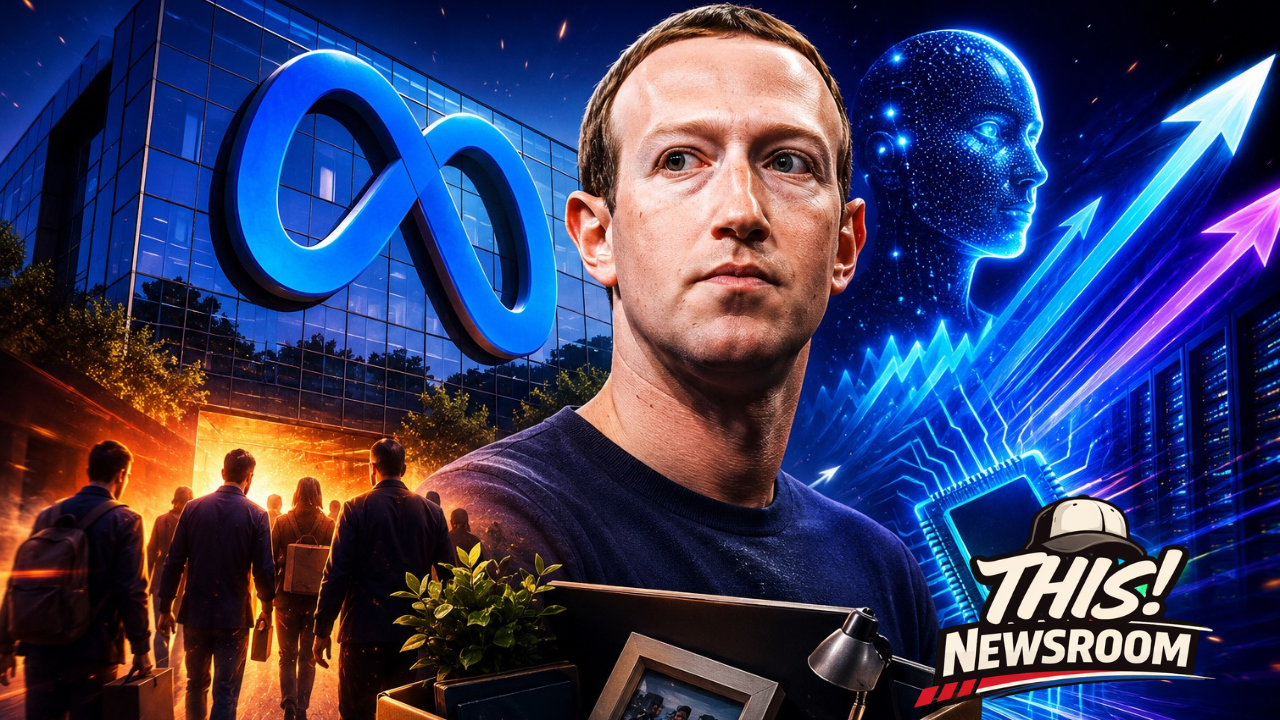
According to reports circulating online and across financial media, Meta is preparing to lay off approximately 8,000 employees, or roughly 10% of its workforce, as the company shifts more aggressively toward artificial intelligence infrastructure and operational efficiency.
If true, the move would become one of Meta’s biggest workforce reductions since the company’s highly publicized “Year of Efficiency” cuts that began in 2023.

Why Meta Is Cutting Jobs
The reported layoffs are not simply about slowing revenue or a weak economy. They appear tied to a much larger transformation happening across Silicon Valley.
Meta has been spending enormous amounts of money on AI infrastructure, including:
- Massive GPU purchases
- AI training clusters
- Data center expansion
- Proprietary AI model development
- Smart glasses and wearable AI initiatives
- Automation tools across its platforms
Reports indicate Meta’s projected 2026 capital expenditures could reach between $125 billion and $145 billion, a staggering number even by Big Tech standards.
That means the company is likely looking for ways to redirect resources toward AI while flattening management structures and trimming operational costs elsewhere.
This is becoming a common theme across the tech industry:
fewer middle-management layers, leaner teams, and heavier investment into automation and artificial intelligence.
The AI Boom Is Creating Winners — and Eliminating Roles
There’s an uncomfortable reality emerging in the tech world right now.
AI is not just creating products. It is replacing workflows.
Tasks that once required:
- junior developers
- designers
- support teams
- copywriters
- analysts
- ad operations staff
…can now often be assisted or partially automated by AI systems.
That does not mean humans disappear overnight. But it does mean companies are rethinking how many people they need to operate at scale.
Ironically, many of the companies building AI tools are simultaneously reducing headcount while telling investors they are becoming “more efficient.”
And Wall Street usually rewards it.
Mark Zuckerberg’s High-Stakes Bet
Mark Zuckerberg has made it clear that he believes AI will define the next decade of computing.
After spending years pushing the metaverse vision, Meta now appears fully focused on becoming one of the dominant AI companies on Earth.
The company is aggressively competing with:
- OpenAI
- Microsoft
- Anthropic
- xAI
Meta’s open-source AI strategy with its Llama models has already become one of the company’s biggest competitive plays.
But building AI at this level is brutally expensive.
The cost of chips, power, cooling, networking, and data centers has exploded. Companies are now spending billions just to stay competitive.
The Bigger Question Nobody Wants to Ask
If AI keeps improving at this pace, what happens to white-collar jobs over the next five years?
That is the real story behind headlines like this.
Not just Meta.
Not just one round of layoffs.
But an entire economic shift where companies may produce more output with fewer people.
Some experts believe AI will create entirely new industries and opportunities. Others worry the transition period could become painful for millions of workers.
Both things may end up being true at the same time.
Is This the New Normal for Tech?
For years, Silicon Valley operated with a growth-at-all-costs mentality:
hire fast, expand teams, build aggressively.
Now the mood has changed.
Investors want:
- profitability
- leaner organizations
- faster execution
- AI-first operations
The companies that fail to adapt may fall behind quickly.
The companies that adapt too aggressively risk damaging morale, culture, and innovation.
That tension is now defining the entire tech industry.
Final Thoughts
If these reported layoffs move forward, they will represent more than another round of tech cuts.
They will signal how seriously Meta is betting its future on AI.
And that should probably make everyone pay attention — not just people working in tech.
Because the AI race is no longer theoretical.
It is already reshaping the workforce in real time.