
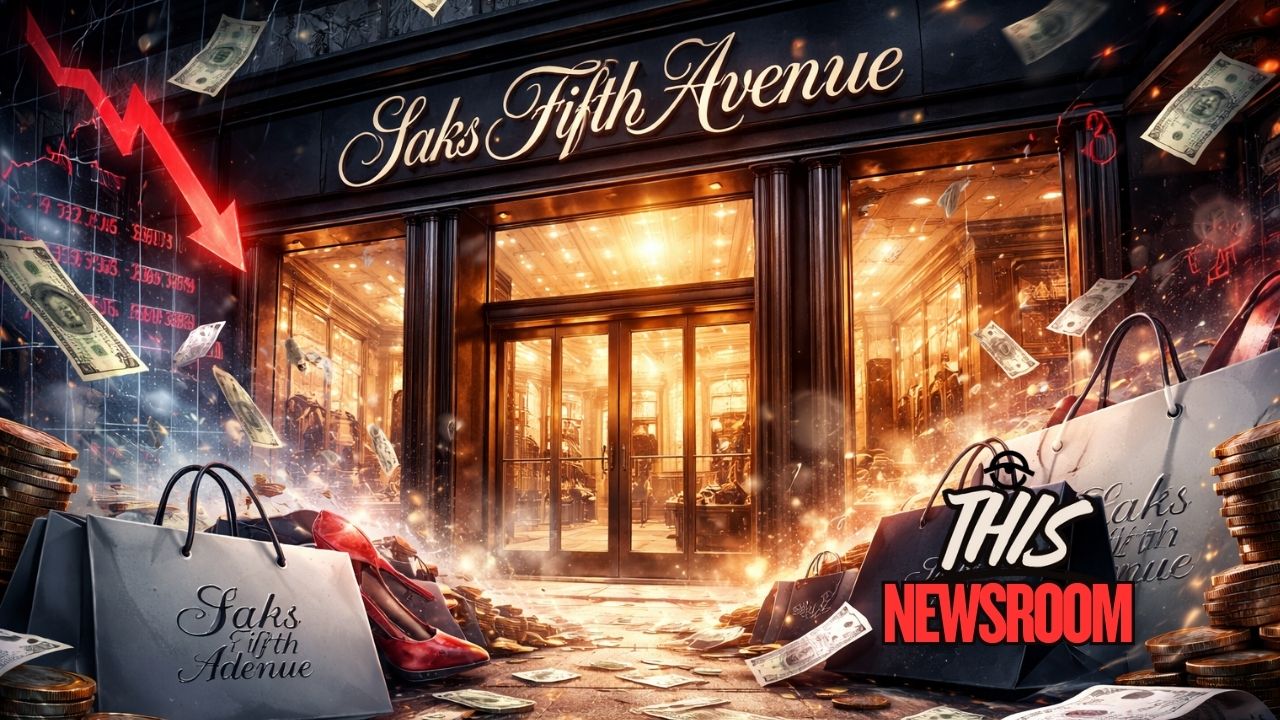
The luxury retail world prefers velvet ropes and polished mirrors, not court filings. Yet this week, that contrast became unavoidable as Saks Global filed for Chapter 11 bankruptcy protection, marking a significant moment for one of America’s most recognizable high-end retail operators.
While the word “bankruptcy” often triggers panic, this move is less about collapse and more about correction. Still, it sends a clear signal: even luxury is no longer immune to the economic and behavioral shifts reshaping retail.
What Is Saks Global?
Saks Global is the parent company overseeing Saks Fifth Avenue, including its flagship stores, e-commerce operations, and broader luxury retail strategy. Long positioned as a cornerstone of American luxury shopping, Saks has historically relied on affluent consumers, premium brands, and high-traffic urban locations.
However, the environment that once fueled that success has changed rapidly. As a result, scale and brand recognition alone are no longer guarantees of financial stability.
Why Saks Global Filed for Chapter 11
Chapter 11 bankruptcy allows a company to continue operating while restructuring debt and contracts. In Saks Global’s case, several pressures converged.
Debt and Interest Rates
Years of leveraged growth and expansion became more difficult to sustain once interest rates rose. Debt servicing costs increased sharply, tightening cash flow at the worst possible time.
Brick-and-Mortar Costs
Flagship luxury stores carry prestige, but they also carry massive fixed expenses. As foot traffic declined, those leases became harder to justify on traditional retail economics.
E-Commerce Margins
Online luxury sales grew, but not profitably enough to offset physical store costs. Shipping, returns, and digital marketing expenses eroded margins faster than many consumers realize.
Consumer Behavior Shift
Even high-income shoppers have grown cautious. Discretionary spending is increasingly delayed, redirected toward experiences, or avoided entirely amid inflation and economic uncertainty.
What Happens to Saks Fifth Avenue Stores?
For now, stores remain open and online shopping continues uninterrupted. Chapter 11 is designed to preserve operations while management renegotiates debt, leases, and vendor agreements.
That said, restructuring often comes with difficult decisions. Store footprints may shrink, underperforming locations may close, and operational models may change to reflect new buying habits.
What This Means for Luxury Retail
Saks Global’s bankruptcy filing is not an isolated incident. Instead, it reflects a broader recalibration across luxury and department store retail.
Direct-to-consumer luxury brands, resale platforms, and online marketplaces are steadily pulling market share away from traditional department stores. Meanwhile, younger consumers place less value on brand legacy and more on convenience, authenticity, and price transparency.
In short, the old model of “big stores, big brands, big margins” is under pressure from every angle.
Is This the End of Saks?
No, but it is a crossroads.
If Saks Global successfully restructures its debt and modernizes its cost structure, it can remain a meaningful player in luxury retail. However, survival will depend on adapting to how people actually shop today, not how they shopped twenty years ago.
Luxury can still sell aspiration. It just has to do so with sustainable economics.
The Bigger Economic Signal
When a luxury retailer files for bankruptcy, it reflects more than internal missteps. It highlights how rising rates, cautious consumers, and digital disruption are rewriting the rules across the retail economy.
For investors, brands, and consumers alike, Saks Global’s move is a reminder that prestige does not replace profitability. Even the most iconic names must evolve or risk becoming case studies instead of destinations.
Related Reading on This Newsroom
- Retail Bankruptcies Are Reshaping American Shopping
- Why Department Stores Keep Losing Market Share
- How Interest Rates Are Changing Consumer Spending Habits
External Sources
- Reuters: Coverage on luxury retail restructuring and bankruptcy trends
- The Wall Street Journal: Department store economics and consumer behavior analysis
- U.S. Courts: Chapter 11 bankruptcy overview
Saks Global is still open for business. The real question is whether luxury retail, as we once knew it, is open for reinvention.