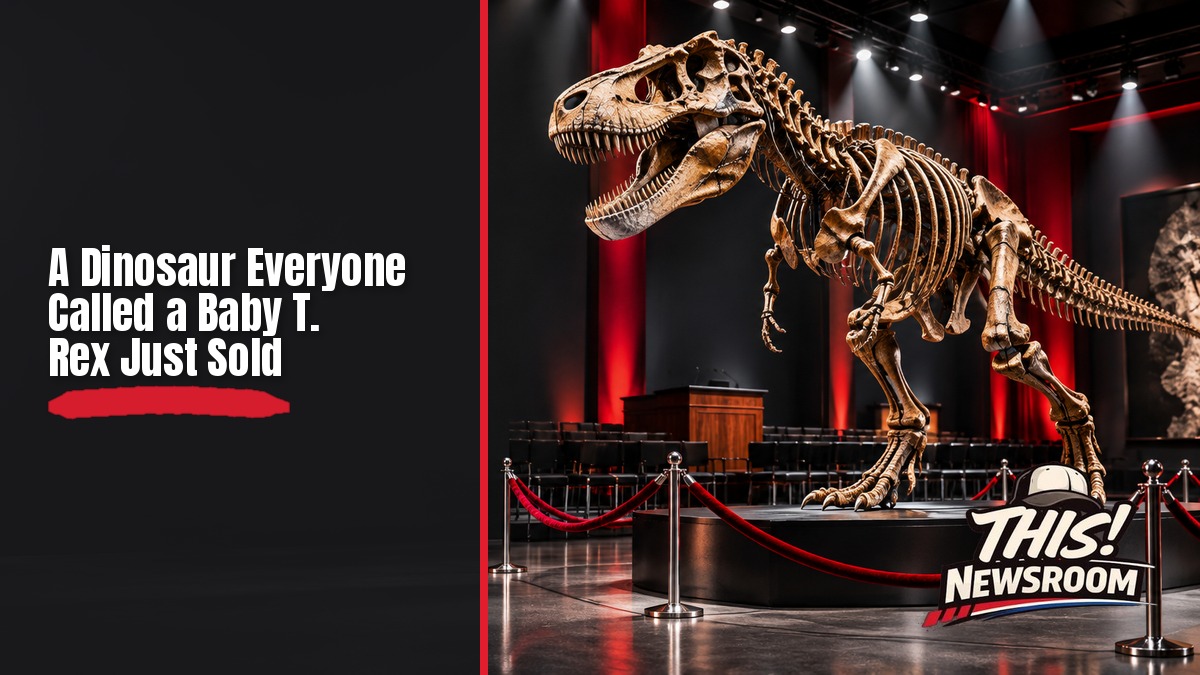
Imagine paying $47.3 million for a “mini T. rex” and finding out it was never a T. rex at all. That is the plot of Tuesday’s sale of a 67-million-year-old dinosaur. The Nanotyrannus skeleton named “Jodi” went to an unnamed buyer at Sotheby’s in New York on Tuesday, Oct. 27, 2026.
The final price was $47,255,000 including fees. The hammer came down at $40.5 million. The pre-sale estimate was $6 million to $9 million, so the winning bid landed at more than five times the high end.
Somebody’s estimate was off. It wasn’t the dinosaur’s.
Twelve Minutes, Six Bidders, One Very Big Check for a Nanotyrannus Fossil
Six bidders went at it online and by phone for about 12 minutes, the Washington Times reports. That is a long time for an auction room to hold its breath. Collectors are paying record sums elsewhere too, as Michael Jordan’s $14 million jersey sale showed.
Sotheby’s has not said who won. Nothing public suggests the buyer is a museum, so this Nanotyrannus auction may end in a private collection.
Where Jodi Ranks Among Dinosaur Sales
Jodi is now the second-most-expensive dinosaur fossil ever sold at auction. Only “Gus,” a T. rex that went for $50.1 million at Sotheby’s this year, brought more. Third place belongs to the Stegosaurus “Apex,” which Sotheby’s sold for $44.6 million in July 2024, according to BBC reporting. Reports differ on the month of the Gus sale, so we are not putting a date on it.
So the market for old bones keeps climbing. Collectors treat dinosaurs like blue-chip art, and they price them that way. The Jodi dinosaur skeleton now sits near the top of that list.
Why “Mini T. Rex” Is the Wrong Label
Here is the twist. For years, experts treated skeletons like this as teenage T. rexes. Research published in 2025 concluded that Nanotyrannus is its own species, a smaller predator rather than a juvenile of the famous one, according to Anadolu Agency. Some debate remains over whether there is one Nanotyrannus species or two.
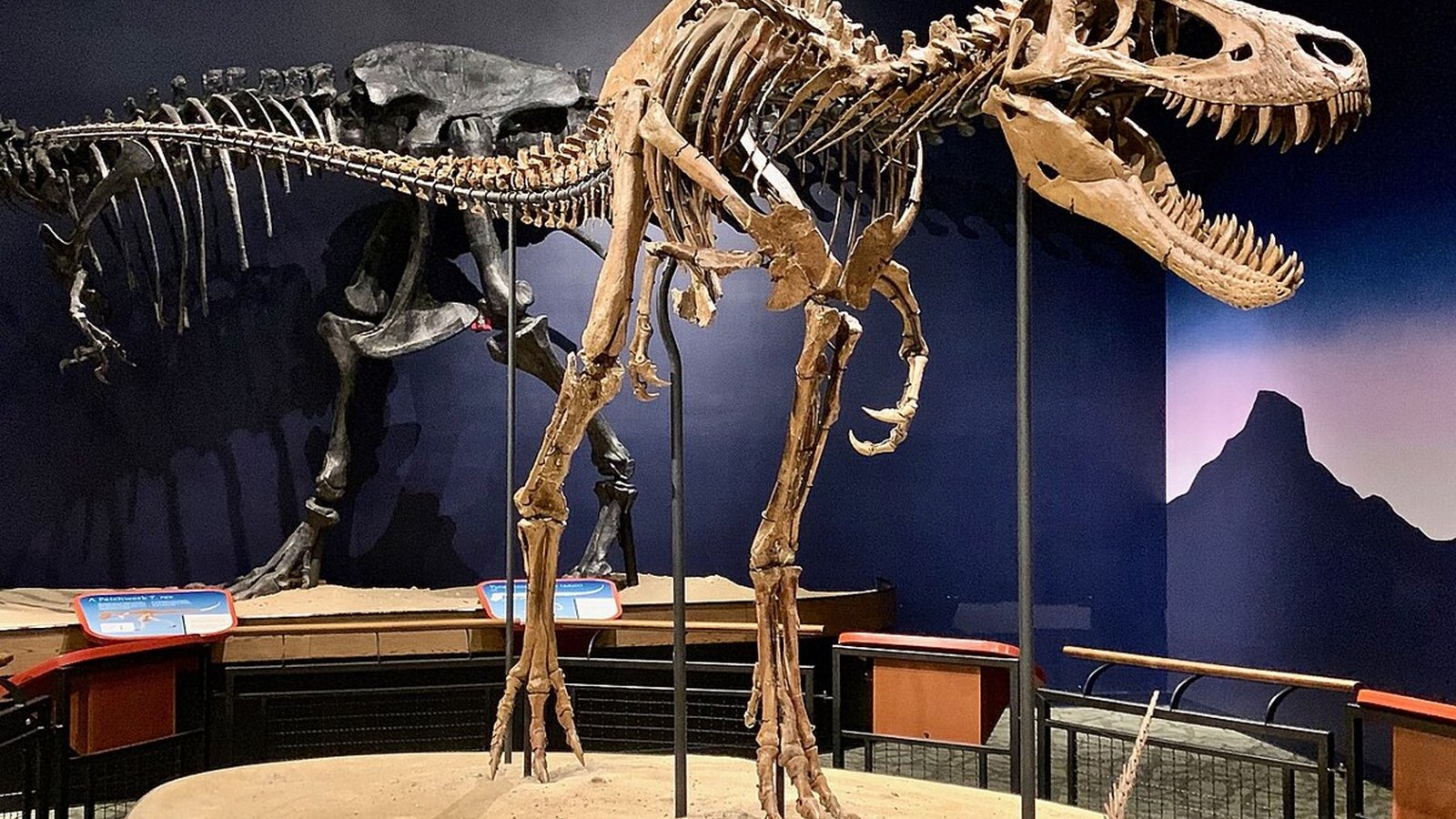
Jodi is about 19 feet long and about 9 feet tall, with roughly 191 fossil bone elements, including a nearly complete skull. Sotheby’s says it is one of only three known Nanotyrannus skeletons. It is also the first to reach auction since the research established the genus as distinct, per Yahoo News.
A rancher found it in 2019 in Montana’s Hell Creek Formation. Her name was Jodi Pierson, and that is how the skeleton got its name.
Here’s the Thing: The Fine Print on This Nanotyrannus Skeleton Is Wild
Restorers replaced missing bones with 3D-printed and sculpted pieces. The sale also came with “full rights,” which means the new owner can make and sell replicas. You are not just buying a dinosaur. You are buying the right to sell more of it.
The backstory gets stranger. Artnet reports that the same specimen first went on offer as “Chomper,” billed as a juvenile T. rex with a roughly $20 million price tag, and buyers passed on it. Sotheby’s provenance says the current consignor acquired it in 2021.
Rename it, reclassify it, and it fetches more than double the old ask. Science gave it a promotion, and the market paid for it. Resale markets do not always reward scarcity this way, as the sliding Birkin resale premium proves.
The Science Side Isn’t Cheering This Mini T. Rex Fossil Sale
Scientists worry that a skeleton this important could vanish into a private vault. Paleontologist Steve Brusatte told the BBC it is “harrowing to think it could disappear into the vaults of a collector rather than displayed in a museum where it can wow and inspire kids and families and the public at large.”
That is the real argument behind the price tag: should collectors buy fossils privately, or should museums show them publicly? A 12-minute auction just made that debate louder.
Sotheby’s has not set a date to reveal the buyer. Until the name comes out, the biggest question about a 67-million-year-old predator is a simple one: whose living room, or whose museum wing, is it going to?