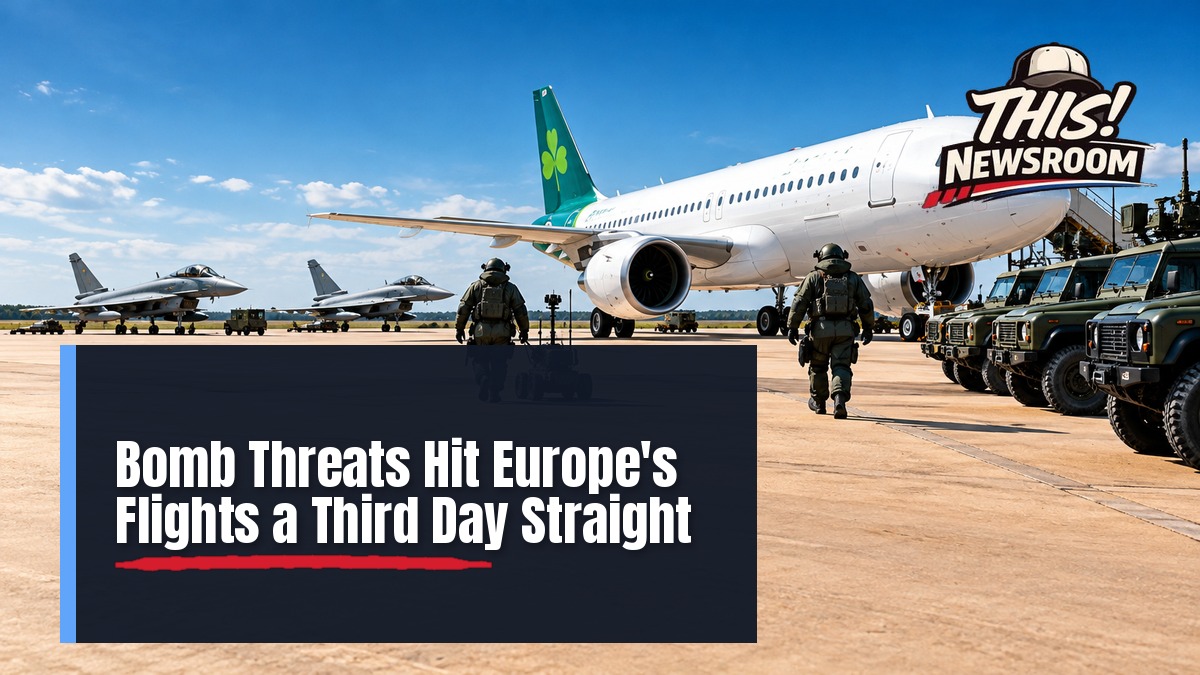
Three days of threats, zero explosives. Europe bomb threats hit a third day this week on Thursday, with at least eight flights targeted, fighter jets scrambled and one Aer Lingus plane forced onto a French military air base.
So far, nobody has found a single explosive.
The headline flight was Aer Lingus EI402 from Dublin to Rome. French authorities diverted it, and it landed at the Evreux military air base, about 100 km west of Paris. A bomb squad then inspected it, according to NBC News. The French prime minister’s office confirmed the diversion.
How many flights did the plane bomb scare hit?
That depends on who is holding the clipboard. The Associated Press tallied at least eight flights. CBS News counted 15, and ABC Australia said 19. New alerts kept arriving through the day, so treat every number as a floor, not a final tally.
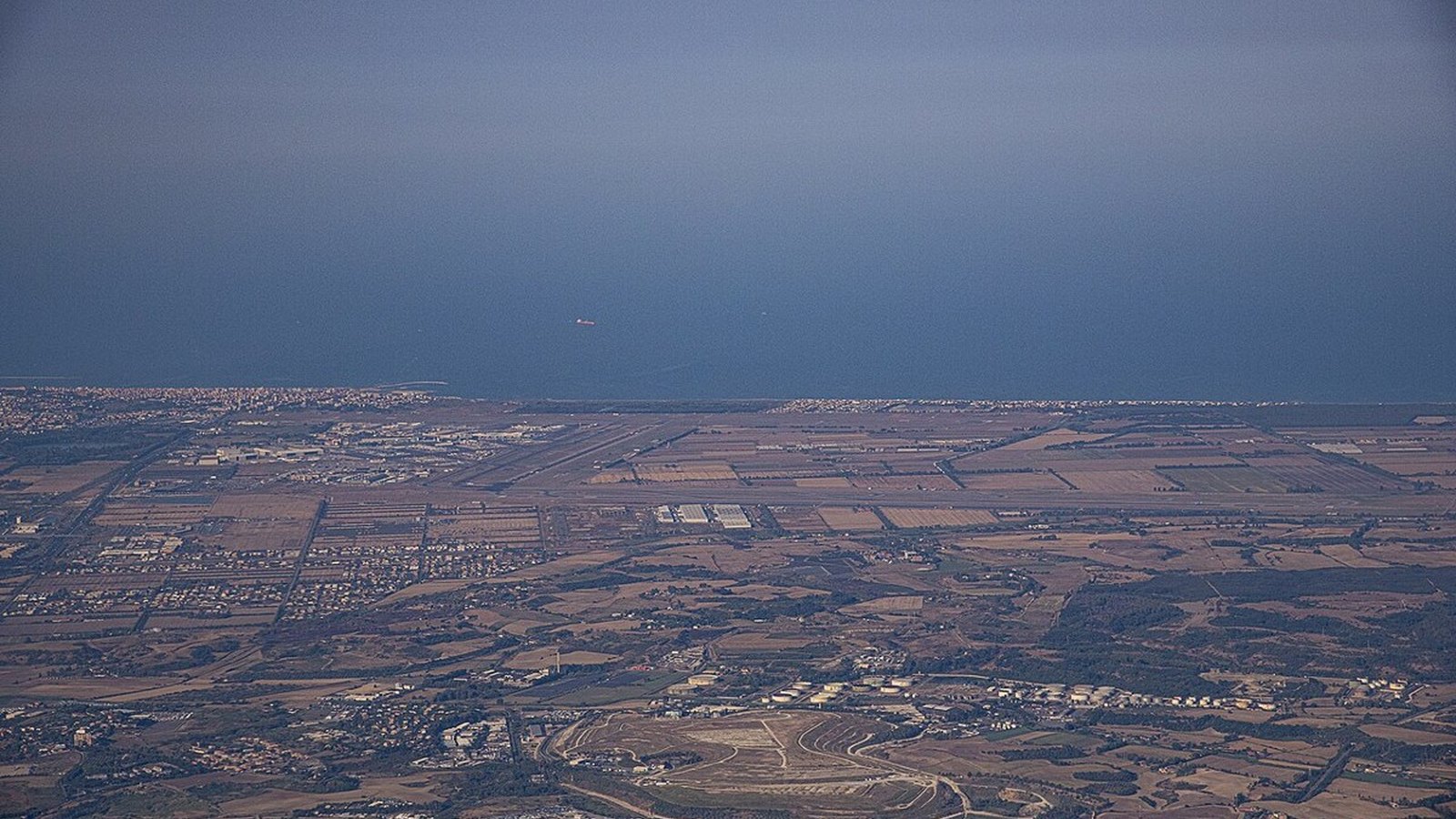
The pattern is clear, though. Italian fighter jets escorted a Finnair flight from Helsinki to Rome into Fiumicino. Bomb experts checked it after landing, per CNN’s live coverage. Meanwhile, Rome’s airport halted flights for 30 minutes. A Wizz Air flight from Milan to Warsaw also changed course. It went to Vienna after an email to Polish authorities carried an “abstract threat,” according to Austrian police.
Elsewhere, two Bulgaria-bound flights landed safely in Sofia. A Ryanair flight from London Stansted to Sofia diverted to Plovdiv. Bulgaria’s air force escorted three planes. Czech police searched four Prague-bound planes after landing and found nothing suspicious. Two more planes diverted to Milan Malpensa for bomb checks.
Flight diversions Europe has seen three times this week
This was not a one-off. On Monday, a Wizz Air flight from London Luton to Sofia diverted to Budapest. On Tuesday, at least seven flights were targeted. They included a LOT flight from Heathrow to Warsaw-Modlin and two Ryanair flights into Rome, according to Gulf Business. Every one of those turned out to be a hoax.
In all, the airline bomb hoaxes of the three days snared LOT, SAS, Wizz Air, Ryanair, Aer Lingus, Finnair and easyJet.
Who is behind the European flight bomb threats?
Nobody knows. No one has claimed responsibility, and no official has named a culprit.
Irish MEP Barry Andrews called it “several hybrid threats and attacks across Europe.” He also noted the timing, ahead of a major European summit in Dublin next week. That is his characterization, not an official finding. CBS News quoted an expert who said the scale suggests a deliberate act.
Hoax waves like this have happened before. In 2024, more than 70 fake threats hit Indian airlines in a single week. And the Associated Press notes this one lands amid drone incursions, attacks on supermarket refrigeration systems and fake alert-app triggers across Europe. We saw a similar pattern when fake nuclear alerts hit Ukraine and Russia within hours of each other.
Here’s the thing: Europe bomb threats cost real money
A fake threat is cheap to send and expensive to answer. Every one means a diversion, a military escort, a ground search and a delayed crew. That ripple adds up to missed connections and rebooking headaches for thousands of passengers.
The retrieved reporting does not say whether any US carriers or US-origin flights were affected. Still, Rome, Prague, Vienna, Milan and Sofia are common connection points for Americans heading to Europe. If your trip runs through any of them in the next few days, check your airline’s app and the airport’s advisories before you head out. Fans flying in for the TCU vs. North Carolina game in Dublin should do the same.
What happens next for Europe bomb threats
Czech police’s terror and cybercrime squad is investigating, and the big question is attribution. Police have reported no arrests. No EU or national aviation authority has announced a coordinated response.
Europe’s airlines are bracing for a fourth day. The Dublin summit next week now looks like a tempting target for whoever keeps hitting send.