
A bank that handed out cash back on groceries has just cost a president his job. Santiago Peña, one of Donald Trump’s closest allies in South America, announced his resignation on Thursday, Nov. 5, after the central bank seized Ueno Bank, a digital lender with ties to his government, and froze deposits for millions of customers, the Associated Press reports. Yes, the Paraguay president resigns over a bank failure.
“I have made the decision to submit my resignation as president of the republic,” Peña said in a recorded video address. He said he was acting for “the stability of our country, social peace and preservation of our democracy,” according to Bloomberg. He also apologized “if I have failed them at any point,” though the AP notes he stopped short of accepting responsibility.
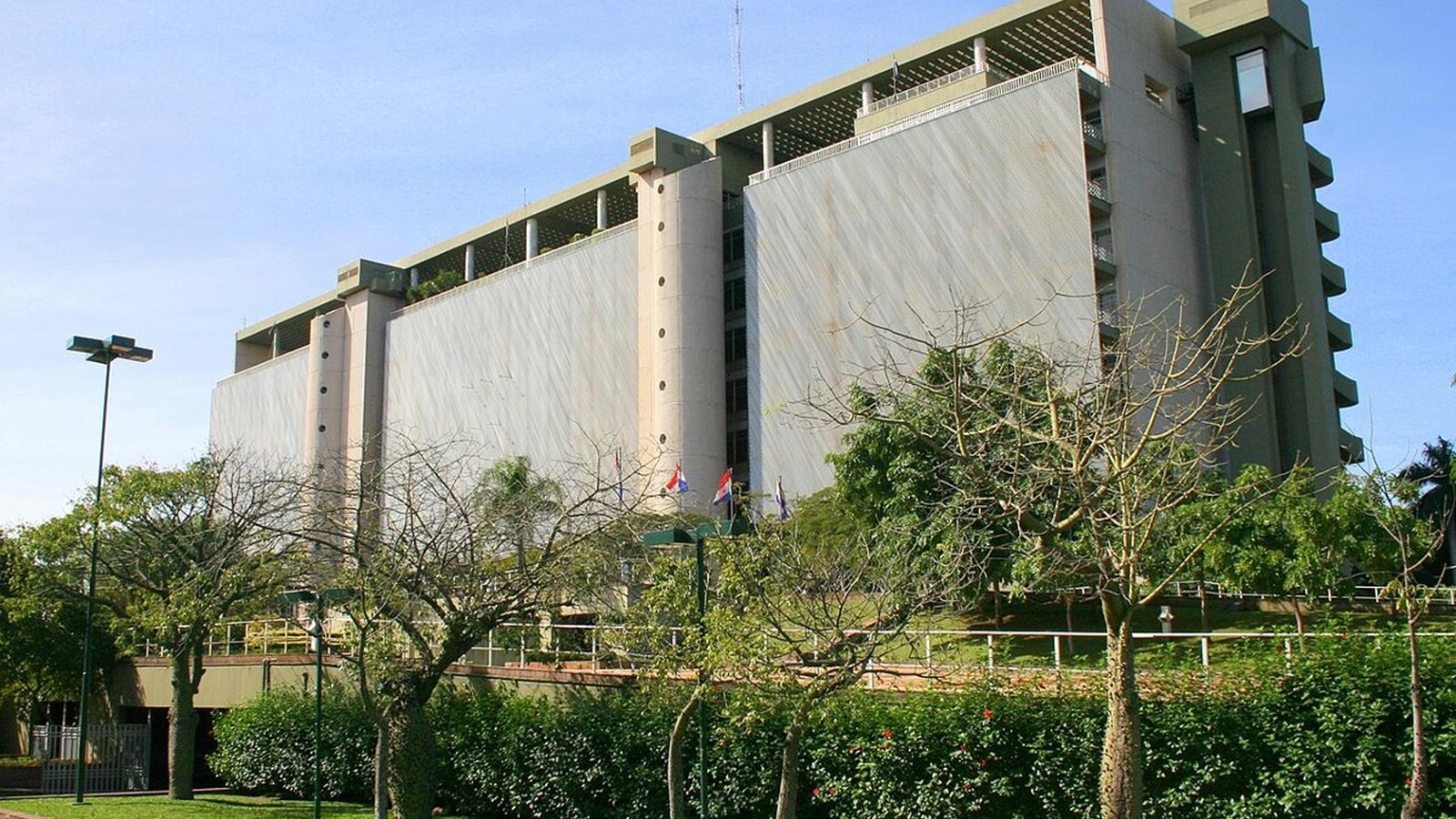
The Ueno Bank collapse: how a household name vanished in days
Ueno was hard to miss. It grew from an obscure finance company into a household name in under five years, the AP says. It handed out cash back on groceries and sponsored local soccer teams and the national team. Its name even sat atop the national stadium. Workers have now scrubbed that logo off.
Then regulators looked at the books. They found poorly documented loans to companies linked to Ueno’s owners, plus expenses wrongly counted as assets. Per CNN’s account of the central bank’s findings, once the statements were adjusted, the bank’s solvency ratio fell below 50% of the required minimum. In plain English: the numbers did not hold up.
Ueno had about 2.9 million customers in a country of roughly 6 million people. As a result, Reuters reports, nearly half the population is now locked out of its money. Meanwhile, authorities have detained eight senior executives, including founder Miguel Vázquez and bank president Juan Manuel Gustale. If you follow global news, the story is as big as any headline from a World Cup opening day, just far less fun.
Why the Peña resignation followed the bank’s fall
Here’s the thing: this was not just a private bank failing. Al Jazeera reports Ueno was administering almost $850 million in public funds. CNN adds that public entities, including the Social Security Institute that manages most workers’ pensions, put money into Ueno during Peña’s term.
Then there is the personal link. Peña was a one-time investor in a company related to Ueno and held a stake in its holding company until last year, AP reporting shows. The unanswered question is how a bank tied to the president grew so fast despite repeated warnings about dubious lending. For now, those are accusations and open questions, not findings.
The political floor gave way quickly. Peña lost support from members of his own Colorado Party. On Wednesday he approved emergency payouts to depositors and installed a new central bank chief.
By Thursday, 35 opposition lawmakers and ruling-party dissidents had filed charges alleging “serious and systematic dereliction of duty,” and CNN reports the Chamber of Deputies voted unanimously to start impeachment proceedings. So far, that vote appears only in CNN’s account.
Outside, the anger was raw. Ueno employees protested at the Labour Ministry, demanding severance and unpaid wages because their salaries were trapped in the failed bank. “Santiago Peña and the Colorado Party have stolen all our savings,” protester Luis Pineda said. The interim central bank president, Pedro Acosta Bernal, insisted that “the banking system is sound.”
What it means for our readers
This is a story about a worry that travels well: what happens when the bank you trust stops letting you in. If you have no money in Paraguay, your account is safe. Still, there are real ripples.
Bloomberg reports Paraguay’s bonds fell across the curve, some of the worst performances in emerging markets. Reuters says the crisis hurts the country’s reputation as a stable place for foreign investment, especially from neighbor Brazil.
There is a Washington angle too. Peña is a 47-year-old former IMF economist who took office in August 2023, and Bloomberg calls him a key Trump ally. Just last month, Deputy Secretary of State Christopher Landau met him in Asunción and said Paraguay “plays a very key role in the region” as the administration works to pull Latin America closer. That plan just lost a friendly face, because Paraguay’s president steps down at a moment when Washington wanted a steady partner.
What happens next after the Paraguay president resigns
Not everything is settled. Reuters says the Senate must ratify the resignation and is expected to move fast. CNN says Congress must decide whether to accept or reject it. Meanwhile, Al Jazeera reports protesters outside Congress urging lawmakers to reject it so Peña can be tried and impeached. We found no confirmation that anyone has formally accepted the resignation.
Reports say Vice President Pedro Alliana is set to take over, but no one has reported a swearing-in. Al Jazeera’s reporter said Congress was also trying to impeach the vice president. Officials have approved depositor payouts, but amounts and timing are not public. Also, the anti-corruption prosecutor’s office is working the case against the eight detained executives.
Paraguay scored 24 out of 100 on Transparency International’s most recent corruption index. Readers who want a break from the heavy news can check the full World Cup knockout bracket.
A bank that promised cash back on groceries just cost a president his job. The question now is who gets their money back, and who gets charged.