

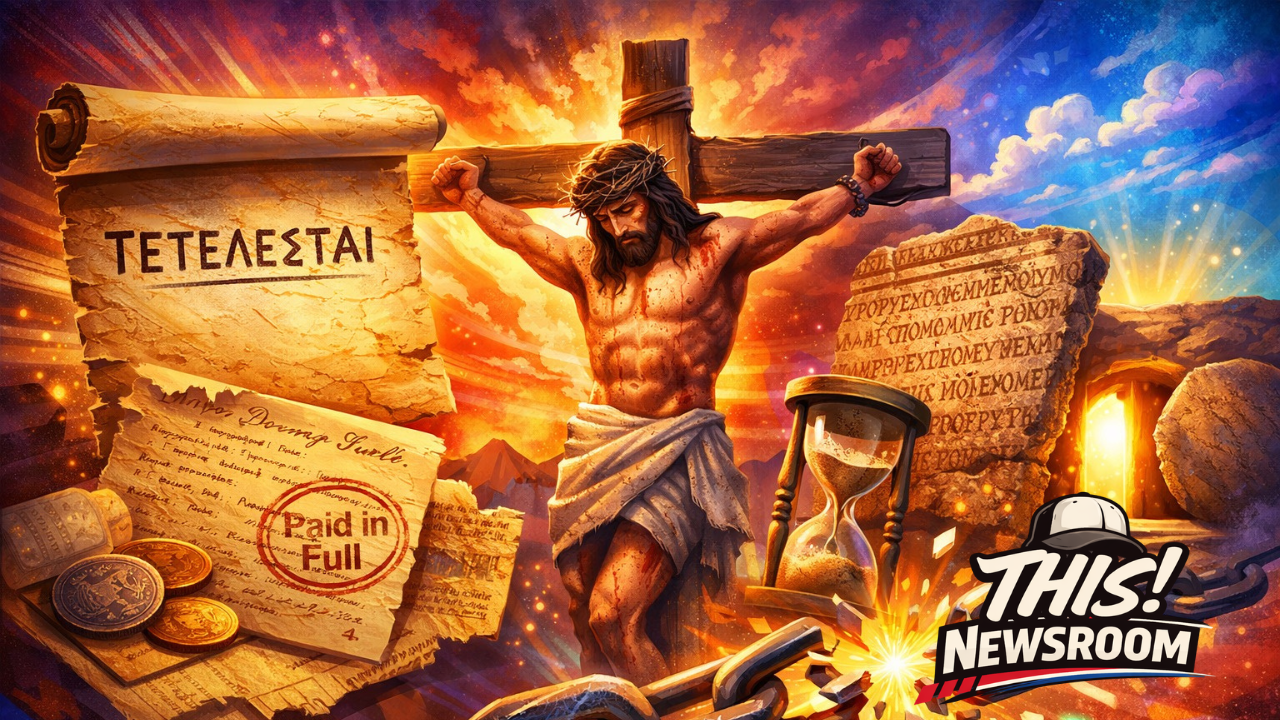
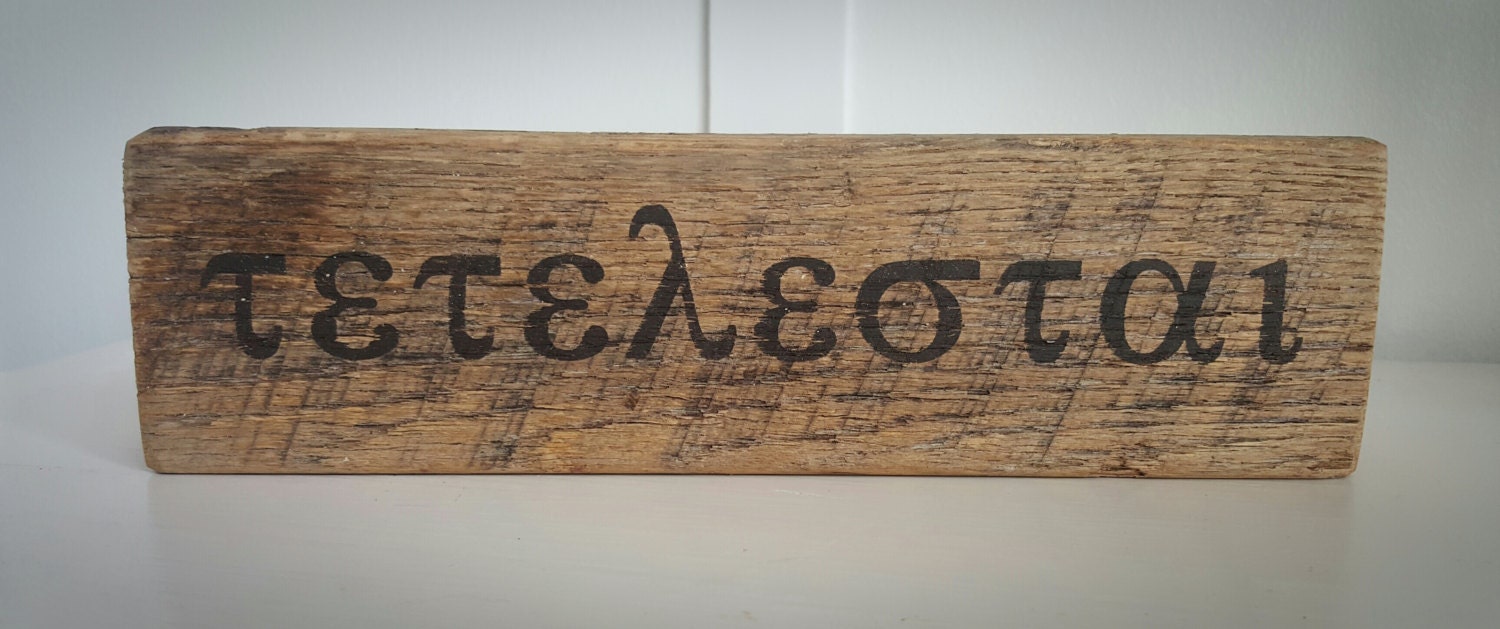
At one of the most defining moments in history, Jesus Christ spoke a single Greek word from the cross:
“Tetelestai.”
Most English translations of The Bible render this as:
“It is finished.”
At first glance, that translation feels simple. However, when you explore the original language and cultural context, the meaning expands dramatically. In fact, tetelestai carries legal, spiritual, and eternal weight far beyond a surface-level reading.
What Does “Tetelestai” Actually Mean?
The Greek word τετέλεσται (tetelestai) comes from the root “telos,” which means:
- End
- Purpose
- Completion
- Fulfillment
More importantly, the word appears in the perfect tense. In ancient Greek, this tense describes an action completed in the past that continues to have lasting effects.
Therefore, a fuller translation would read:
“It has been completed, and it remains completed.”
In other words, the action reached its conclusion, and its impact continues indefinitely. This nuance transforms the phrase from a simple ending into a declaration of permanence.
A Legal and Financial Term in the Ancient World
Interestingly, tetelestai also carried strong legal and financial meaning in ancient Greek and Roman culture.
When someone paid off a debt, officials often marked the document with the word:
“Tetelestai” — Paid in Full
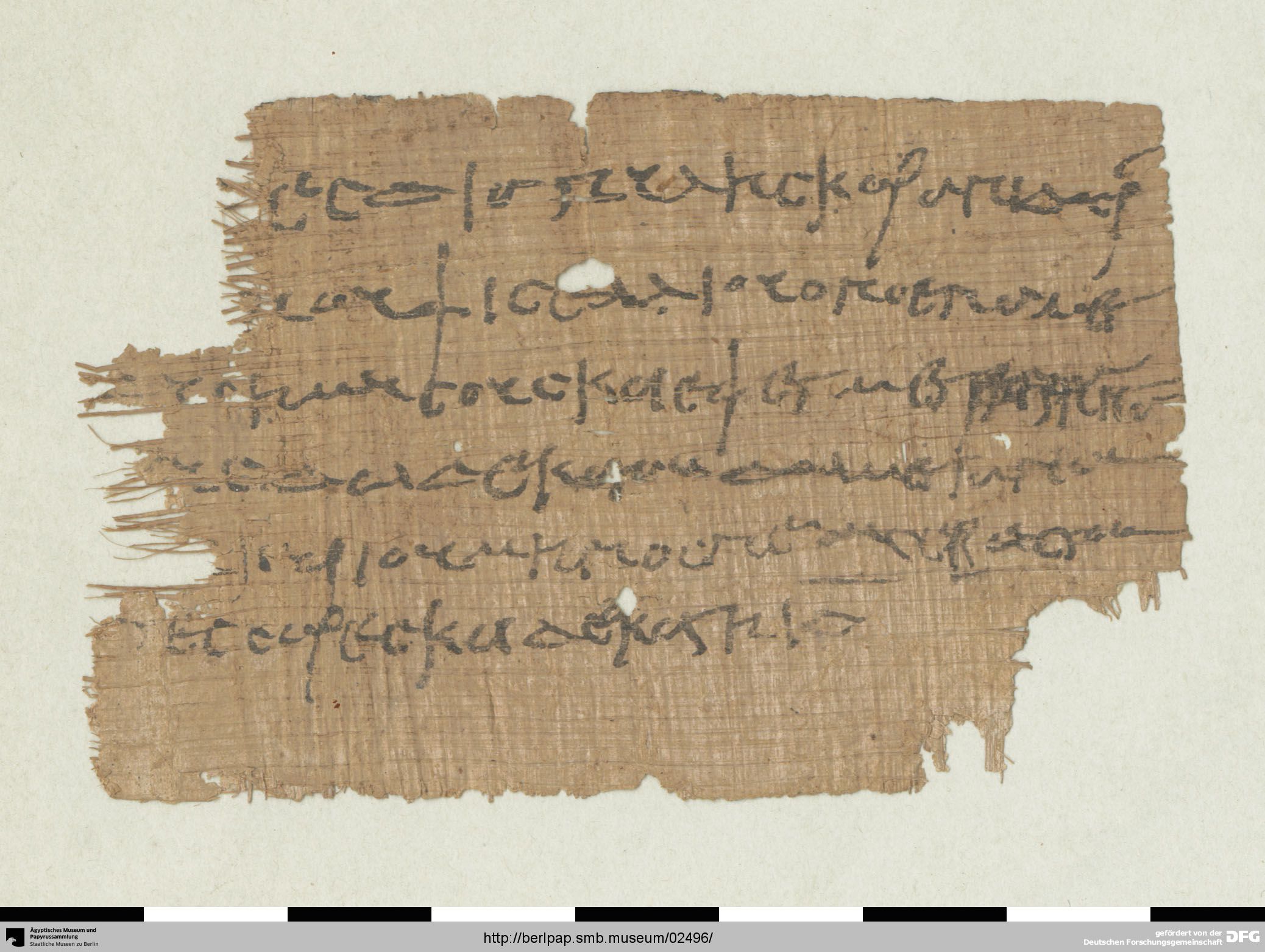
Archaeologists have uncovered ancient receipts and tax records stamped with this exact term. As a result, the word immediately communicated that no balance remained and no further obligation existed.
Consider what that meant in practice:
- A debt no longer existed
- A record no longer accused
- A burden no longer remained
Rather than suggesting partial progress, the word confirmed total completion. Consequently, the person walked away free, with nothing left to settle.
A Declaration, Not a Defeat
From a human perspective, the crucifixion looked like defeat. Yet the word choice tells a completely different story.
Instead of signaling surrender, Jesus Christ made a declaration of victory.
He did not say, “I am finished.”
Rather, He declared, “The work is finished.”
That distinction matters.
Because of that single word:
- The mission reached completion
- The purpose found fulfillment
- The cost received full payment
Thus, what appeared tragic on the surface actually represented triumph at a deeper level.
The Spiritual Meaning: Completion, Not Continuation
Beyond its legal use, tetelestai carries profound spiritual significance.
Within Christian theology, the word represents:
- The debt of sin fully paid
- The divide between God and humanity bridged
- The system of sacrifice fulfilled
Furthermore, the term emphasizes completion rather than continuation. Nothing remained unfinished, and nothing required addition.
For that reason, this moment stands as a cornerstone of faith. It signals that the work did not pause or partially succeed—it finished completely.
Why the Translation Still Matters Today
Although “It is finished” remains an accurate translation, it does not fully capture the depth of the original word.
Without context, readers may miss:
- The legal authority behind the statement
- The permanence of the action
- The ongoing impact implied in the tense
In modern terms, the closest parallels might include:
- “Balance: $0.00”
- “Account Settled”
- “No Further Action Required”
Even so, those phrases still fall short. Unlike modern financial language, tetelestai speaks to something eternal, not temporary.
A Word That Still Echoes
More than 2,000 years later, tetelestai continues to resonate across cultures and generations.
It reflects something deeply human:
- The need for closure
- The relief of a burden lifted
- The power of true completion
In a world filled with unfinished tasks and ongoing obligations, this word stands apart.
Finished.
Completed.
Paid in full.
And importantly—because of its tense and meaning—
it remains that way.