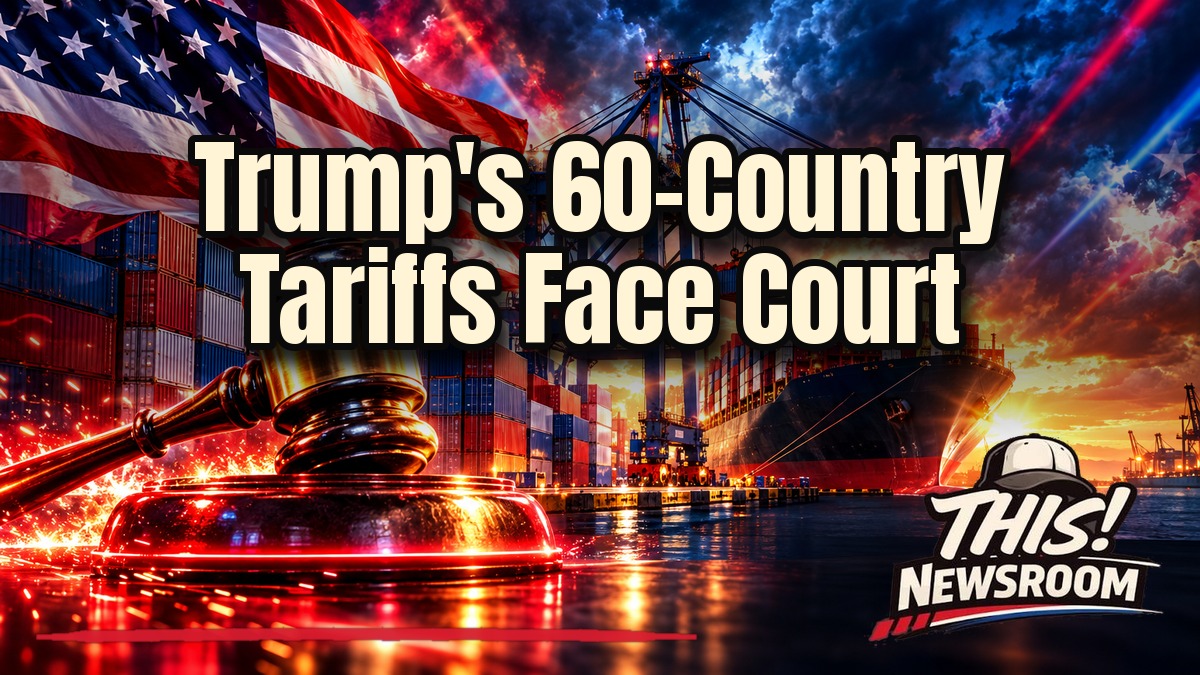
In July, the headline said Trump was “set to impose” sweeping tariffs on 60 trade partners. Now the forced labor tariffs are in force, and a federal trade court is deciding whether they can stay.
Here is where things stand, because the answer reaches grocery shelves, store prices and the midterm ballot.
What the forced labor tariffs actually are
On July 23, the office of U.S. Trade Representative Jamieson Greer released a notice imposing new duties on 60 trading partners. The rates are 10% or 12.5%. Greer framed them as a response to “forced labor” violations.

The tariffs took effect at 12:01 a.m. ET on July 24. They also replaced the temporary 10% global tariff, which expired at that same moment. A senior administration official called the move “the most sweeping international labor rights action” the U.S. has ever taken.
The USTR’s fact sheet says the duties cover 99.4% of U.S. trade. Even so, when CNBC asked about revenue, USTR said it could not estimate the amount. (A 99.4% reach and no revenue estimate is quite a combination.)
Who pays 10% and who pays 12.5% under the 60-country tariffs
The split depends on a simple test: did the country commit to adopting and enforcing a ban on forced-labor imports?
- 10% tier: 17 partners that made that commitment, including Canada, Mexico, India, the UK, Indonesia and Malaysia. The EU and Taiwan are also at 10%.
- 12.5% tier: 41 countries that have not adopted such a ban, including China, Japan, Australia, Brazil, Israel and Norway.
One caution on the numbers. Most outlets say 60 partners, but Quartz has described the reach as “between 60 and 86 nations.” The exact count is still muddy.
Why this is a do-over
If this feels familiar, it should. The Supreme Court struck down most of Trump’s sweeping tariffs in February 2026. A temporary global tariff filled the gap, then ran out in July.
Instead of starting fresh, the forced labor tariffs rebuild much of that structure on a different legal footing, Section 301 of the Trade Act. The final version also closely resembles a June USTR proposal. Meanwhile, the Tax Foundation counts more than 50 changes to U.S. tariff policy since January 2025.
Keeping up is a part-time job.
The court fight over the Section 301 tariffs is the real story now
So can this version survive? That is the question in front of the Court of International Trade.
An importer legal group sued the day the duties took effect, according to Holland & Knight. Then, on Aug. 3, attorneys general from 25 states, co-led by Oregon, Arizona and California, filed their own challenge.
On Sept. 30, a three-judge panel heard arguments from four small businesses and those states. The judges pressed the government on its legal basis. Plaintiffs argue the forced labor rationale is a pretext. They also say Section 301 requires findings about each country, not one blanket rule.
“It’s the lack of the country-specific findings,” Pratik Shah, an attorney for the small-business plaintiffs, said at the hearing.
No ruling date has been set. Until the court acts, the forced-labor duties stay in place.
Here’s the thing: the politics of the new Trump tariffs
The timing is awkward for the White House. AP reported on Oct. 11 that Trump is sticking with tariffs even as a recent poll shows most U.S. adults disapprove of them. The midterms are Nov. 3, less than three weeks away. Voters are already feeling prices, as our look at inflation jumping to 3.7% shows.
For households, the practical point is that the tariff bill has not gone away. Importers pay the duty first, and the cost of imported goods tends to find its way to the checkout line. Automakers face the same squeeze, which is part of why the Stellantis CEO’s view of the EV market matters here too.
Election Day has a date. The court ruling does not. Which one lands first?