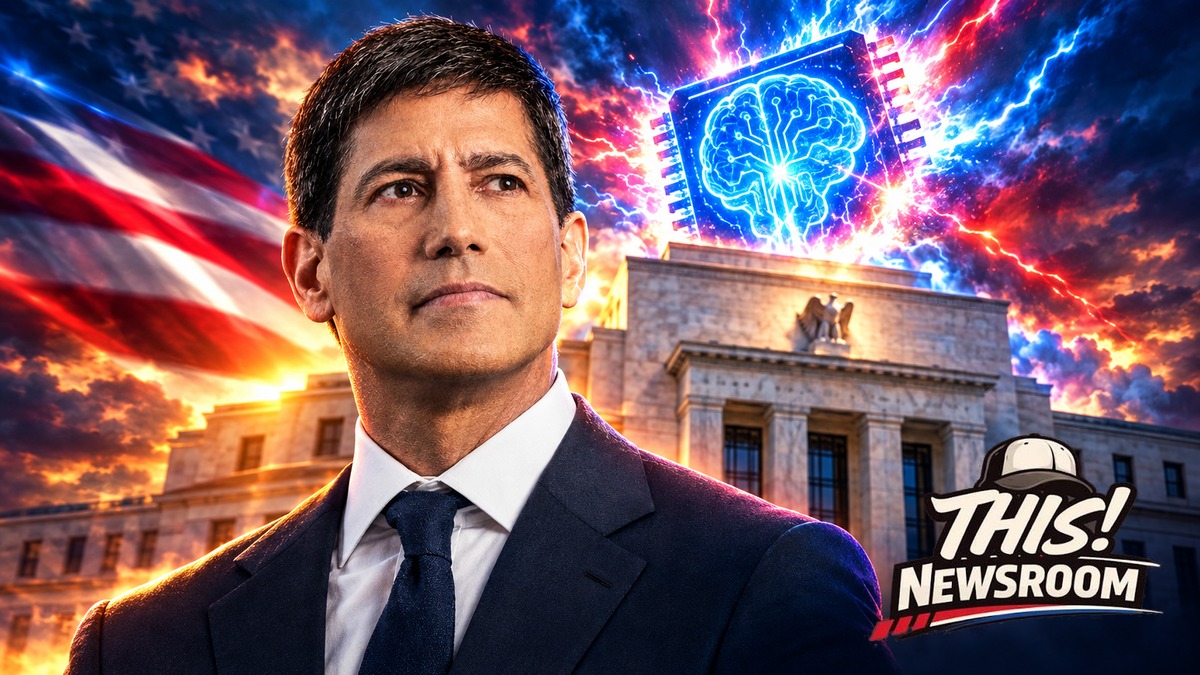
Picture running the nation’s interest rates, calling the AI boom a “shock,” and then politely declining to say what you’ll do about it. Fed Chair Kevin Warsh did exactly that on Friday in Bangkok, and the Fed chair AI shock comment is the one Wall Street will chew on all weekend.
Warsh spoke at an IMF conference during the IMF and World Bank annual meetings, in conversation with IMF Managing Director Kristalina Georgieva, ABC News reported. His message was simple. AI money is flooding in now, and the benefits come later.
Why the Fed chair AI shock hits demand first
Warsh said AI spending is “obviously hitting the demand side of the economy before it’s hitting the supply side.” In plain English, companies are buying chips, building data centers and hiring now. The productivity payoff hasn’t shown up yet.
That matters because demand without new supply tends to push prices up. “If you’re a central banker, you’re in the business of trying to ensure stable prices and full employment, you’ve got to recognize this as a shock,” he said.
He wasn’t gloomy about the long run. Warsh said he expects AI to ultimately generate productivity and wealth. Still, he warned that “the path from where we are to there is likely to be a very bumpy one.”
The Associated Press, via PBS NewsHour, quoted him calling AI “probably the most consequential change to the U.S. and the global economy in my lifetime to this point.” Bloomberg reported he also said AI will “fundamentally change the conduct of monetary policy.”
Here’s the thing: no rate signal from the Fed chair AI shock talk
Anyone hoping for a hint about the October meeting went home empty-handed. Warsh said he won’t prejudge what the Fed does at its remaining meetings this year. His words: “I don’t prejudge meetings. I don’t believe in saying now what I might do at the meetings that we have in the balance of this year.”
Here’s why that lands in your wallet: rates and prices touch your loans, your savings and your grocery bill, and the person steering them just told you not to expect a heads-up.
He framed the silence as a feature, not a bug. “It’s a new chapter at the Fed [and] we’re not in that business anymore,” he said of giving rate guidance, per CNBC. Translation: markets will have to guess, and so will you.
That is a sharp break from his predecessor’s style. For more on how the handoff at the central bank is playing out, see our look at how Jerome Powell is changing seats at the table.
He did offer one hint about the past. Warsh said the Fed “removed a dose of accommodation about a month ago.” That was the September move, when the central bank raised rates to a range of 3.75% to 4.00%. It was the first hike since 2023.
The AI inflation shock behind it all
The timing is awkward. September consumer prices rose 3.7%, hotter than forecasters expected, according to The Hill. ABC says inflation now sits more than a percentage point above the Fed’s 2% target.
Quick note on the math. The Fed’s official target uses a different gauge, so the headline CPI number and the gap to 2% won’t always line up neatly.
AFP reports that energy prices have surged since the U.S. war on Iran began in February. Add AI spending on top, and you get two forces pushing prices higher at once.
The Fed has now missed its 2% goal for more than five years.
Warsh has been upfront about the limits of forecasting. After the September hike, he said he was “ill-prepared” to predict future moves. And on AI itself, he admitted, “We really don’t know what the market structure will be of these new technologies.” He also said he doesn’t know how AI will affect jobs over the next 12 to 18 months.
One bright spot: he said global economies are showing resilience he wouldn’t have predicted five or six months ago, and that “secular stagnation” is in the rearview mirror.
What the Warsh AI warning means next
Markets shrugged. S&P 500 and Nasdaq futures edged up about 0.2%, and Asian stocks and Treasury yields stayed mostly flat. Traders seem to have priced in a quiet October. Rising yields have rattled investors before, as in our report on stocks sliding as Treasury yields climb and oil jumps.
The Fed’s blackout period on policy comments starts Saturday. The FOMC meets Oct. 27-28, where most traders expect a hold, and again in December, where a quarter-point hike is the majority bet. The odds shifted during the talk itself. Bloomberg said October hike odds fell to about 17% from about 30%, while CNBC cited CME FedWatch at roughly 72% for a hold.
Warsh also said the Fed’s AI task force meets Nov. 16, per AP. The economic models guiding all this have a famous pedigree, as we covered when two Americans won the Nobel for the models behind how central banks fight boom and bust.
So who’s really steering this economy right now: the central bank, or the chips?