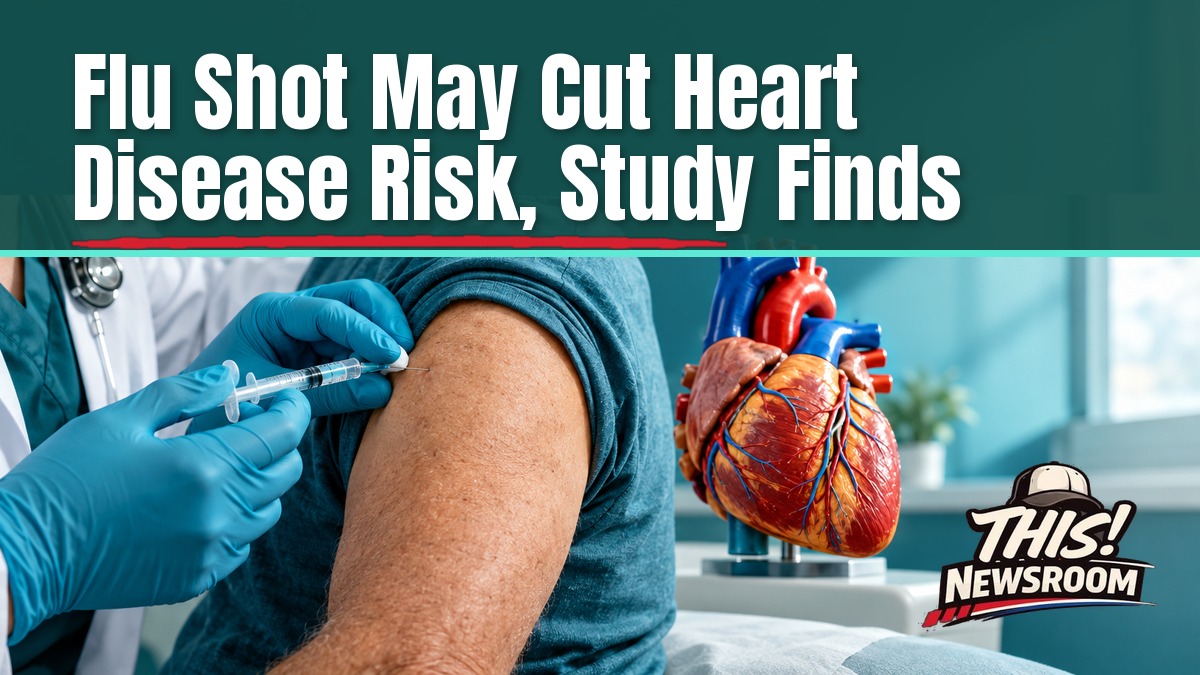
Vaccines protect your heart, and the numbers are getting hard to ignore. A study linked the COVID vaccine to a nearly 40 percent lower risk of COVID-associated cardiovascular events, including heart attack and stroke. A Washington Post health explainer says shots for flu, COVID and other viral infections could lower the risk of cardiovascular complications. The effect shows up most in people who already have heart disease.
In plain terms: the shot you have been putting off may also be a heart-health step.
How vaccines protect your heart: what the research says
Start with shingles. The Post points to an August Nature Medicine study of adults 60 and older. Researchers compared people who got the newer shingles vaccine with people who got the older version. Over the seven years after vaccination, the newer shot was linked to lower rates of ischemic heart disease and heart failure.
The article is careful here, and so should we. The study cannot prove cause and effect. Still, the two groups were essentially the same apart from the vaccine they received. Earlier research also found that people who got the older shingles shot had fewer cardiovascular problems than unvaccinated people.
A separate analysis backs up the pattern. The American College of Cardiology announced it in March. Researchers compared 123,411 people aged 50 and older with atherosclerotic disease who got at least one dose of a shingles vaccine. They matched them against the same number of unvaccinated people from 2018 to 2025.
Flu and COVID shots: more proof that vaccines help your heart
Shingles is not the only shot in the conversation. The Washington Post’s June coverage described that COVID study in detail. Newer vaccine technology is also moving fast, as our look at the first mRNA flu shot approval shows.
Flu has its own evidence. A Eurosurveillance study, reported by CIDRAP, tied flu vaccination to a halved risk of heart attack or stroke. That held even when an infection still occurred.
That is the part worth noticing: the shot may help even when it does not stop the virus.
Here’s the thing: what cardiologists recommend
If you or someone you love lives with heart disease, this is not just an interesting study. It is a practical question to bring to the next appointment. The ACC’s August 2025 guidance, published in JACC, recommends flu, COVID-19 and RSV vaccination for people with cardiovascular disease. In other words, cardiologists now treat shots as part of heart care.
A summary of the cardiology guidance for heart patients lays out the schedule:
- An annual flu vaccine from age 6 months.
- A one-time pneumococcal vaccine for adults 19 and older.
- A one-time RSV dose for patients 50 and older.
- A two-dose shingles vaccine for patients 50 and older.
The Post adds that two major groups have weighed in recently. The European Society of Cardiology and the American College of Cardiology have both published statements. They stress adult immunizations, shingles included, for cardiovascular health.
Vaccines and heart health: what it means for you
You do not need a heart condition to benefit, but the proof is strongest if you have one. The Post quotes Heidenreich, a co-author of the ACC guidance. He sees “potential benefit even to those who don’t yet have heart problems.” Most of this evidence is observational. The strongest randomized-trial support is for the flu shot after a heart attack, and for the other vaccines the proof is thinner.
Vaccines aren’t a replacement for heart medication. Think of them as one more layer of protection. Policy is shifting around vaccines too, as our report on the childhood vaccine executive order shows.
What to do now: ask how shots protect the heart
Ask your doctor or pharmacist which shots you are due for. That matters most if you are 50 or older or have a heart condition. Your age, history and current CDC recommendations decide what is right for you. Check them before you roll up a sleeve.
The next question researchers will chase is whether randomized trials can prove what these big studies suggest. Until then, your heart has one more reason to book that appointment.