
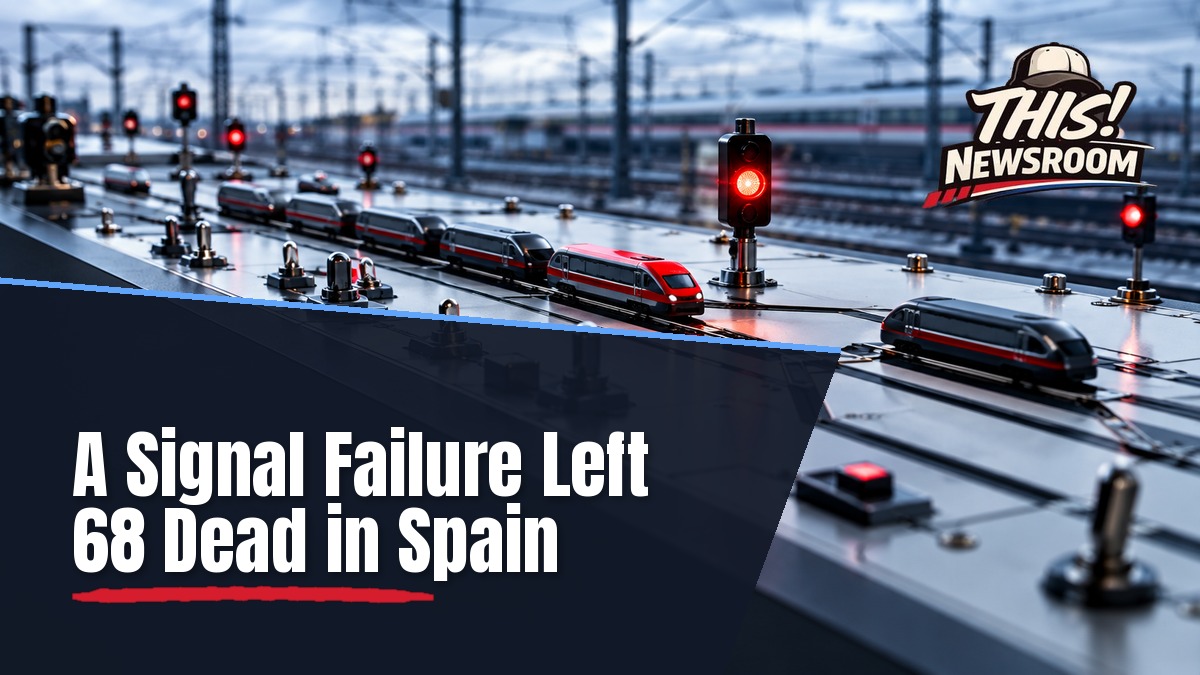
Two trains were heading from Madrid to Seville on Wednesday morning, and a Spain train crash on the high-speed line has now killed at least 68 people. Officials say the number is expected to climb.
A Renfe train and an Iryo train collided in Toledo province, according to CNN’s live coverage. It is the third major rail disaster in Spain this year.
What we know about the Spain train crash
The collision happened near Urda, Mora and Orgaz, around kilometer marker 118 of the line. ABC News reports that both trains were traveling from Madrid to Seville, according to Spain’s Transport Ministry.
The Renfe train carried 397 passengers. The Iryo train carried 146, including one baby. Regional president Emiliano García-Page said 24 of the dead were on the Renfe train and the rest were on the Iryo train, CNBC reports.
Preliminary findings suggest the Renfe train probably struck the Iryo train from behind. Two coaches then derailed and fell down an embankment. Officials stress that the cause is still under investigation.
How a signal failure led to the Madrid-Seville train accident
The Transport Minister, Óscar Puente, laid out the early explanation. A computer failure in the main LZB signalling system triggered an automatic stop for all trains in the area. After that failure, he said, an erroneous order from a train controller led to the Spanish rail disaster.
Puente said six trains had stopped near Urda. A controller let one of them restart. It traveled about 25 kilometers before hitting a stopped train at high speed.
Puente called the decision to let a train continue despite a red signal “inexplicable.” Adif, the rail infrastructure manager, is now investigating the full sequence of events.
Why this one hits so hard
The human toll is already severe. One injured passenger named Ana told Reuters, “Suddenly, I only heard screams.” Rescue operations were still under way as of the latest reports.
Here is the part that stands out. Safety systems stopped every train in the area, exactly as designed. The failure that followed appears to have come from a human order, not from the machinery. For anyone who boards a train trusting the system to protect them, that is the question that matters most.
ABC calls this the deadliest high-speed train collision in Spain since 2013. That year, 80 people died when a Madrid–Ferrol train derailed in Galicia.
This is also Spain’s third rail disaster of 2026. In January, two high-speed trains collided near Adamuz in Córdoba province, and CNBC puts the death toll there at 45. A commuter train near Barcelona derailed just days later.
What we don’t know yet about the Spain train crash
Several details remain unsettled. Reports differ on the number of injured, with figures ranging from 50 to 58, and an earlier estimate of about 100. The exact time of the collision also varies by source, from about 8:30 a.m. to shortly after 9 a.m. local time.
The death toll has also kept moving. CNN’s live blog went from 32 to 64 to 68 during the day. We will update as official numbers settle. If you need a break from the grim news, you can read about Harry Kane’s Ballon d’Or win.
What happens next after the Spanish rail disaster
The Madrid–Andalusia high-speed line remains suspended. Adif’s investigation into the signalling failure and the controller’s order is ongoing. We did not identify any American casualties in the sources we reviewed. Transport safety is making headlines elsewhere too, as our report on the Toyota Land Cruiser recall over fuel leak and fire risk shows.
The question Spain will be asking next is simple: after three disasters in one year, what has to change before the next train leaves the station?