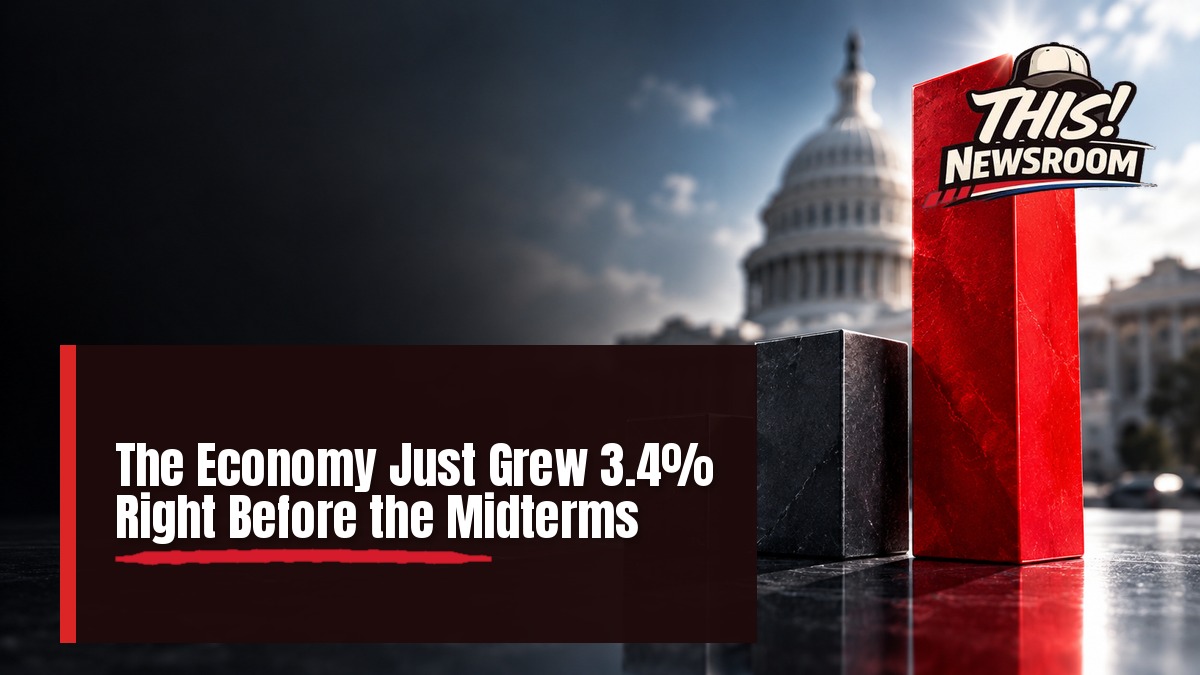
The US economy grew at a 3.4% annual rate from July through September, according to the Bureau of Economic Analysis. That beat Wall Street’s 3.1% forecast, and the US GDP growth number lands about a week before the midterms.
US GDP growth: what the report actually says
The advance estimate puts third-quarter GDP at 3.4%, up from 2.2% in the second quarter. BEA credits more investment, more consumer spending and more government spending. A drop in exports took a bite out of the total, and higher imports did too.

The details are where it gets interesting. Yahoo Finance reports that business investment jumped 12.7%, with the AI build-out as the main engine. It also reports that consumer spending grew 3.8%, the strongest pace since the end of 2024. The AI angle matters, too, since the recent AI-driven selloff on the Nasdaq shows how jittery that trade has become.
Keep in mind that this is an advance estimate built on incomplete data, so BEA will revise it.
The White House is taking a victory lap on economic growth
It didn’t take long. Yahoo reports the White House called the result a “MAJOR BOOST FOR THE ECONOMY.” Before a campaign rally, President Trump told reporters, “We had a great morning from the standpoint of GDP.”
But a strong quarter is not the same thing as a strong feeling at the checkout line. That gap in the US economy is exactly what opponents will target.
Here’s the thing: your wallet may not agree
Growth is up, yet consumers are glum. Reuters notes that the report clashes with households’ downbeat view, which showed up in a sharp drop in consumer sentiment. Higher oil prices tied to the conflict in the Middle East haven’t helped, and anyone filling a tank or paying for groceries feels it first. NPR adds that higher-income Americans drove part of the spending, while affordability still squeezes many families. For them, a 3.4% headline means little next to the rent bill and the grocery receipt.
Part of the boom also comes from a stack of imported chips and servers. Schwab’s Liz Ann Sonders says the AI build-out “is very import-driven.” A big chunk of that spending shows up on the other side of the ledger.
The inflation picture is mixed, and the measures disagree with each other. BEA’s PCE price index rose 2.1% annualized in the quarter, and core PCE rose 2.5%. Separate Commerce data the same day showed the core PCE price index up 3.1% from a year earlier in September. The savings rate also fell to 3.8%, the lowest in nearly four years. The economy is “growing faster than expected but is still generating too much inflation for the Federal Reserve’s comfort,” said Fifth Third’s Chris Osmond.
What it means for the Fed and the ballot box
The Fed held rates on Wednesday. Chair Kevin Warsh said “economic activity is expanding at a strong pace,” while noting that uncertainty remains. Some analysts now think a December rate hike is back on the table, a worry that Wall Street’s December nerves already reflect. Strong GDP growth makes that outcome harder to dismiss.
The next BEA update on Q3 growth comes Nov. 25, and voters get theirs much sooner. For a wider view of the strain on public finances, see our look at the $2 trillion budget deficit.
A 3.4% headline is nice, but will it be the last word on how people feel about their bills?