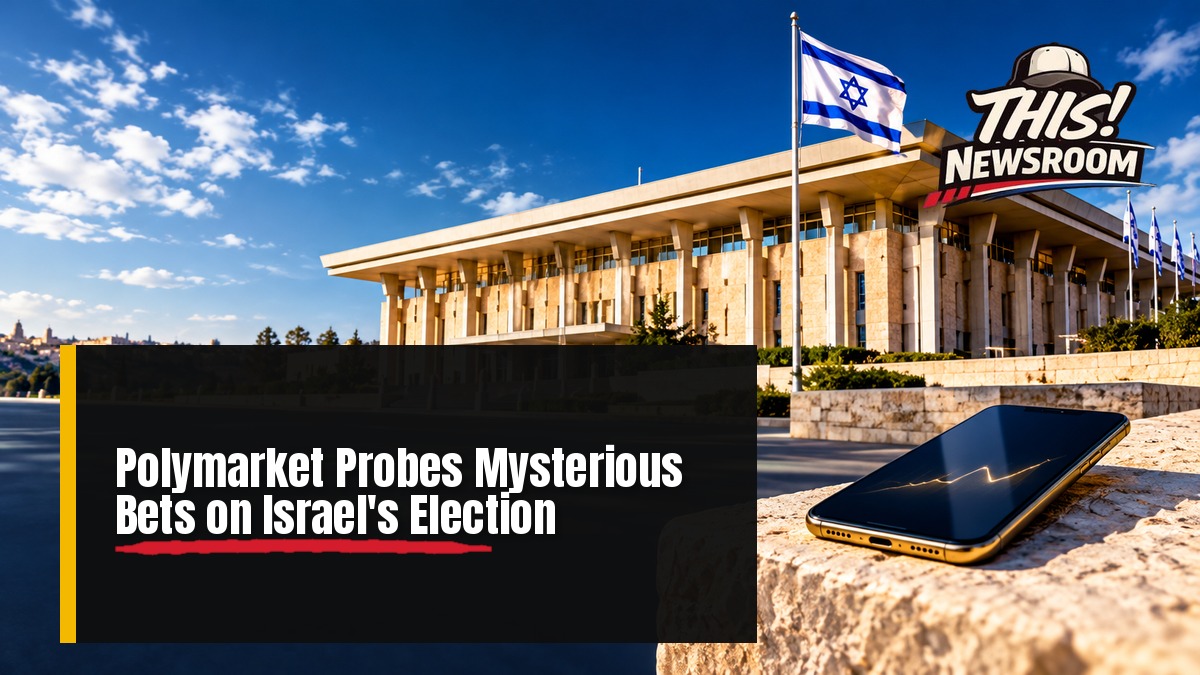
Somebody’s timing on Israel’s election was very, very good, and Polymarket wants to know why. Polymarket is investigating a string of well-timed, profitable bets on the vote. The Polymarket Israel election probe is the latest test of whether prediction markets can police themselves. According to Reuters’ relay of a Bloomberg News report, the platform’s internal investigators are reviewing dozens of newly created wallets.
Let’s be clear up front: no one has found anybody guilty of anything. Bloomberg says the findings are not conclusive. Telling insider trading from sharp research or plain luck is hard, and that is exactly the problem.
What Polymarket says it found in the Israel election bets
Shortly before polls closed on Tuesday, Oct. 27, hundreds of freshly created accounts bet on two outcomes. They wagered that Benjamin Netanyahu would stay prime minister and that Likud would win the most seats. Then some exit polls showed Likud doing better than early reports suggested, and the bets turned profitable.
Some accounts have already cashed out more than $100,000 combined. Many other wallets are sitting on gains they haven’t taken yet. The two markets under review ask whether Netanyahu is the next premier. They also ask whether Likud wins more seats than any other party, Quartz reports.
The numbers in the Polymarket Israeli vote probe don’t line up yet
Here is where it gets messy. Quartz, summarizing Bloomberg’s ledger review, puts the figure at upward of 600 wallets. Those wallets opened on a single day and had never traded before. Polymarket itself says it is reviewing “dozens.” Bubblemaps, the on-chain analytics firm, told Reuters that 101 accounts first received funding on election day, before polls closed.
Dozens, 101, 600-plus. That’s less a headcount than a guessing game.
These are different ways of counting, and we couldn’t reconcile them. Treat any single number with care until Polymarket explains its own.
Bubblemaps and Polysights, the firms behind earlier insider-trading exposés, have also flagged the trades. A Bubblemaps representative told Reuters, “A few have already sold out for a profit after the exit polls.”
Why Polymarket suspicious trades matter to your wallet
Here’s the thing: every Polymarket trade sits on a public ledger. Anyone can inspect it, which is why outside analysts can spot a cluster of brand-new wallets in hours. That transparency is a feature. But it also means a flood of suspicious bets is visible to everyone, including regulators.
Prediction markets are no longer a niche hobby. Reuters reported in May that Polymarket had seen a significant uptick in trades flagged as suspicious this year. Rivals such as Kalshi report a surge in suspicious activity as volumes climb, according to the Jerusalem Post. If you trade there, you are relying on prices that someone may have nudged. The same goes if you just watch the odds as a read on elections. Our look at why prediction market odds can mislead explains the risk in more detail.
This isn’t the first time Israeli politics has raised that question on the platform. Earlier this year, Haaretz, as relayed by Times of Israel, reported that an account called “25xp” bet about $40,000 on Netanyahu. That account controlled roughly a quarter of the market on that topic. Haaretz suggested the bets could be an attempt to manipulate the odds. That is an allegation, not a finding. In March, prosecutors charged an Air Force major with using classified information to bet on the 2025 Iran war, the same report notes.
One more wrinkle for the skeptics: before the vote, betting markets strongly favored Gadi Eisenkot over Netanyahu. Polls, meanwhile, showed a deadlock. Markets get things wrong, and a late rush of money doesn’t prove anyone knew anything.
What happens next in the Polymarket Israel election review
Polymarket’s review is ongoing, and no outlet reported a deadline. Its market-integrity policy lets it ban wallets, take legal action or refer matters to law enforcement “when warranted,” The Defiant reports. Those are options, not conclusions about these traders.
There is a catch. Polymarket’s terms say it cannot access users’ private keys or reverse transactions users start. So it can’t claw back money already withdrawn.
A ban would stop the next bet, not undo the last one.
The platform’s growth adds pressure.
We found no action from U.S. regulators tied to this probe. Polymarket hadn’t responded to requests for comment when the Jerusalem Post reported. We also haven’t independently verified the final results or Likud’s seat count.
So the question everyone will be asking next isn’t whether somebody got lucky. It’s whether a market that anyone can watch can actually stop the people who got there first.