
Ask what the Chicago Bears stadium deal will cost the public and you get a date instead of a number: after the Nov. 3 election. Gov. JB Pritzker says he expects a deal to keep the team in Illinois.
Nobody has said how much public money it will take. That gap is why so many people are searching this story right now.
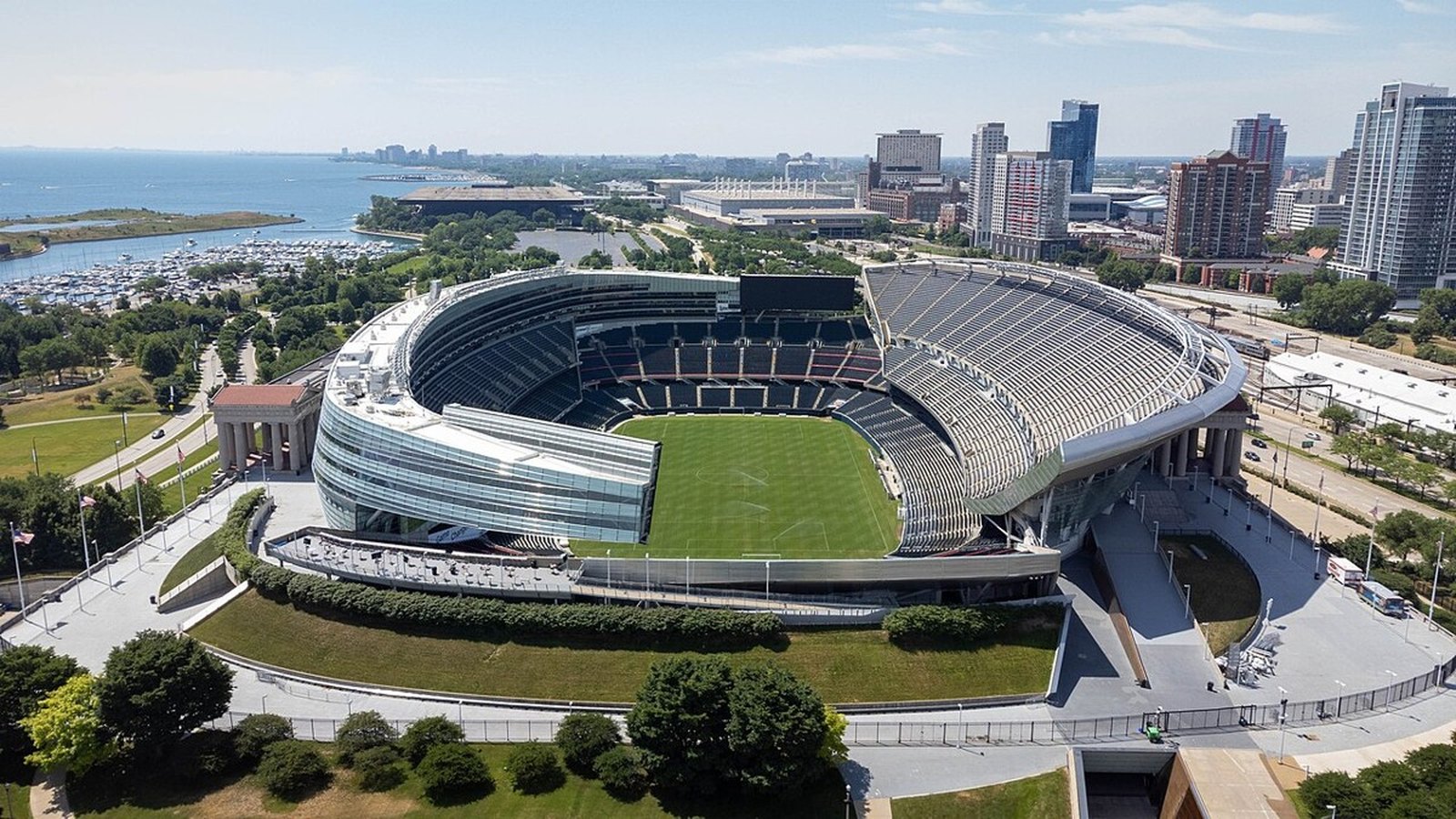
One correction before we go further: the “$4.7 billion Soldier Field relocation” framing floating around is wrong. Here is what is real.
What Pritzker actually said about the Bears stadium deal
Pritzker told reporters he believes a deal can get done in November, according to the Chicago Sun-Times. The Sun-Times notes that Chicago itself could even be back in play. For a year, the city had been all but eliminated from the conversation in favor of Arlington Heights.
The legislation under discussion gives the Bears two options: a stadium in the city or one in Arlington Heights. Pritzker said the team chooses because it is a private company. “I don’t get to pick the site,” he said, per a Capitol Fax excerpt of his Q&A.
Even so, nothing is signed. The Bears have also kept their distance from the city’s lakefront ideas.
Where the $4.7 billion Bears stadium plan number comes from
That figure is old news. It comes from the team’s April 2024 plan for a domed stadium next to Soldier Field, with about $3.22 billion for the stadium and the rest for infrastructure, per the Sun-Times.
It is not the live deal. The live options are the former Arlington Park site in Arlington Heights, the Chicago lakefront and Hammond, Indiana. So far, we could not verify a final cost for any of them.
What the Chicago Bears stadium could cost Illinois taxpayers
Here’s the thing: “privately funded” is the team’s description, and it deserves a closer look. The Bears say they will pay for construction and have committed $2 billion of their own money.
But the structure being discussed has a stadium authority owning the building and leasing it to the team. Under that model, the Bears would not pay property tax on the stadium itself, according to StadiumDB. Nobody has put a dollar figure on what that exemption costs local taxing bodies.
There is also a separate public ask. Bears officials have estimated about $855 million for sewers, roads and other investments in Arlington Heights, the Sun-Times reported. Pritzker has stressed that Arlington Heights would receive much of that infrastructure money whether or not the Bears were involved.
Meanwhile, one critic, the Field of Schemes blog, claims the package could reach $1.5 billion in tax money. We could not confirm how the blog built that number. Treat it as one critic’s estimate, not a fact. Illinois is no stranger to big tax fights either, as the state’s crypto transaction tax showed.
Why the Bears have leverage in the stadium talks
Indiana is the pressure point. Lawmakers there authorized a financing authority in February that would put $1 billion in taxpayer dollars into a stadium, with the Bears keeping all revenue. The Bears’ board voted June 4 to advance a Hammond, Indiana stadium, and ESPN reported a league source saying Illinois can still get back in the race.
Pritzker has opposed subsidizing a privately owned stadium for a franchise valued at $8.9 billion. So expect the fight to be over what to call a subsidy, and whether it counts.
Is the Bears stadium agreement politics or momentum?
Reporters asked Pritzker whether this was a pre-election promise. He said no. His Republican opponent, Darren Bailey, has been blunt: “I’m just glad I’m not going to be known as the governor that lost the Bears.”
A stadium deal is great politics and a very expensive piece of paper. Voters will learn which one this turns out to be after Nov. 3. Football fans, for their part, have plenty to chew on in the meantime, from the 2026 NFL schedule release to Sunday’s games.
What happens next
The fall veto session has six session days, and a column in Shaw Local says lawmakers seem likely to force the Bears to choose a site. A stadium authority bill is the likely vehicle.
Three things to watch:
- The total public-dollar number in the bill.
- Where the infrastructure money comes from. Sen. Bill Cunningham has said it needs a dedicated revenue stream.
- Whether the Bears choose Arlington Heights, Chicago or Hammond.
Until those answers show up in writing, every headline number is a guess. That includes the one you clicked on.