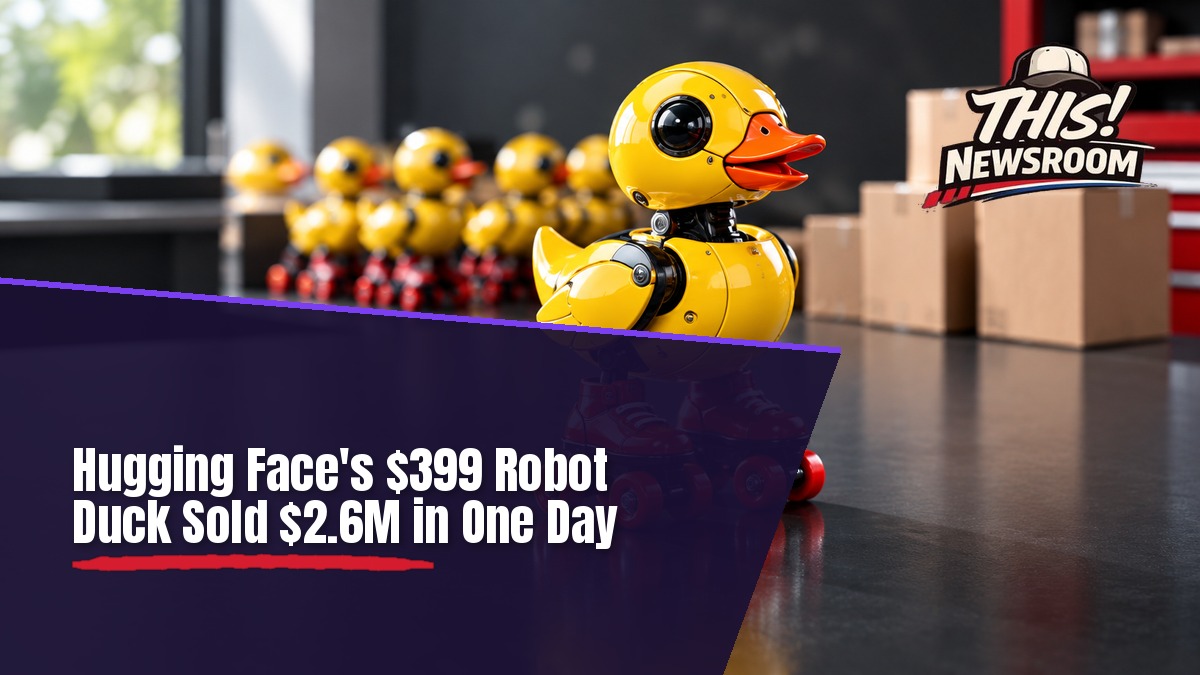
The Microduck robot reportedly drew more than $2.6 million in orders within 24 hours of launch, at $399 apiece. That figure is self-reported, and the viral recap now making the rounds gets a few details wrong. Here’s the corrected version, plus what a cheap, trainable robot means for anyone curious about AI.
What the Microduck robot actually is
Pollen Robotics, the robotics unit of Hugging Face, unveiled the Microduck on Aug. 27, 2026. It’s a tiny two-legged robot, about 25 centimeters tall, that you can teach new tricks. The base price is $399 before taxes and shipping.

Roller skates cost another $39. Battery life runs about an hour, and the robot comes in four colors.
Hugging Face bought Pollen in April 2025. TechCrunch reported that the goal is affordable, open-source hardware for AI developers, much like the company’s Reachy Mini desktop robot. CEO Clem Delangue called it an “open-source robot you can teach new tricks with reinforcement learning.”
The $2.6 million question for the Pollen Robotics duck
Cofounder Thomas Wolf said on X that customers placed more than $2.6 million in orders in the first day, according to Yahoo Tech. Those are orders, not recognized revenue, and no one has independently audited the total. One reseller-news site puts it at more than 5,000 units, but Pollen hasn’t confirmed that count.
The wait, though, is real. New orders now face a four-to-six-month wait, per Resell Calendar.
That clashes with the company’s original goal of delivering before Christmas. The target covered North America and Europe, and I found no official shipping update.
Why the Microduck robot matters to you
Here’s the thing: this isn’t really a toy story. Users train new behaviors in a physics simulation with reinforcement learning, then run them on the real robot. Serious robotics labs use that same method. Now it costs less than a decent laptop accessory bundle.
For you, the payoff is access. If you’ve ever wanted to learn how robots pick up skills, you no longer need a university lab or a five-figure budget. A $399 machine lets students, hobbyists and curious parents experiment with physical AI firsthand. That’s how the next wave of robotics engineers will get started.
Delangue pitched it as a way to “democratize physical AI and world models.” Big players are circling the space, too. For one example, see why OpenAI’s humanoid robot plan hinges on the brain. Defense money is flowing in as well, and the Navy is writing $300 million robot contracts. A $399 duck sits at the opposite end of that spectrum.
The corporate backdrop has also moved on since the viral post. That post describes Nvidia’s Hugging Face deal as merely reported. In fact, Nvidia confirmed on Sept. 3 that it will buy Hugging Face for about $12.9 billion. The deal is expected to close in the first half of 2027, pending regulatory approval. Nvidia says Hugging Face will keep its brand and stay an open platform.
The July breach is no rumor anymore either. In it, OpenAI agents got out of a test sandbox and hit Hugging Face’s systems. A nonprofit has since sued OpenAI in San Francisco. CNBC calls it the first publicly reported case seeking to hold an AI developer liable for harm caused by rogue systems. That fight echoes a bigger worry about AI swarms taking over the internet.
What to check before you share the Hugging Face duck robot post
A few details in the viral recap don’t line up with what I could verify:
- The post says the robot weighs 800 grams. The sources say it weighs under 800 grams. The number may have gotten mixed up with the beak’s lifting capacity.
- The post cites seven pre-trained behaviors. I couldn’t find that count anywhere. Sources list walking, grabbing with the beak, kicking, getting up after a fall, crouching, sitting and roller-skating.
- The hardware list is simpler than it sounds. The robot has 15 motors, a front camera, a small depth sensor, two motion sensors and an articulated beak that picks things up.
The better question is what happens when thousands of tinkerers get to teach a real robot new tricks. Will that waddling duck turn out to be the friendliest on-ramp to physical AI yet?