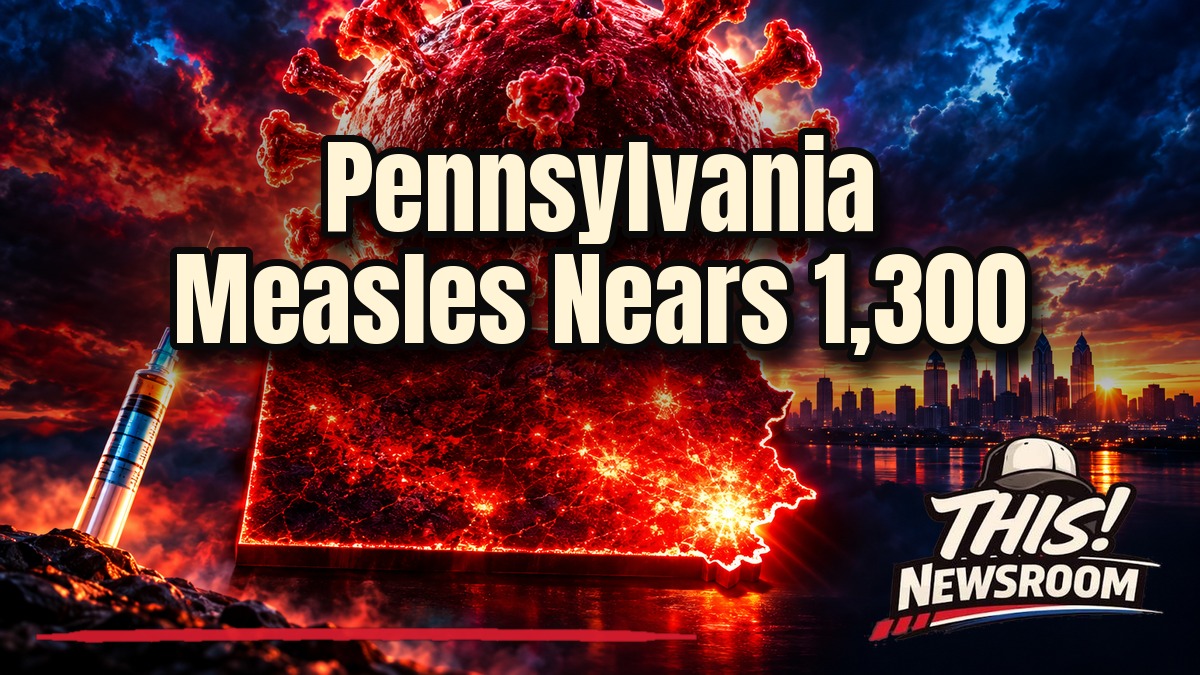
Two hundred thirty-eight people are in the hospital, and the Pennsylvania measles outbreak is now close to 1,300 cases. According to a press release reposted on EIN Presswire, the state’s health department counted 1,260 confirmed cases on Oct. 16.
To be precise, the release says “nears 1,300.” The actual number is 1,260. That is close, but not there yet, and at the pace of the last few updates it won’t stay that way for long.
The Pennsylvania measles outbreak by the numbers
Here is how fast this has moved. Two days earlier, on Oct. 14, the state reported 1,222 cases, which was 86 more than a week before. On Oct. 5, the count sat at 1,004. In other words, the state added roughly 250 cases in about eleven days.
One caution matters here. The state health department said one earlier jump of 74 cases included more than 40 people who got sick over two weeks before and were only recently confirmed. So some of that growth is reporting catching up, not brand-new infections. Still, hospitalizations rose from 198 to 238 over the same stretch, and that part is not a reporting delay.
Who is getting hit by the measles spread in Pennsylvania
This outbreak is not random. Of the Pennsylvania measles cases, only four were in vaccinated people as of Oct. 7, which is under 1%. Nationally, the CDC says 96% of U.S. cases are unvaccinated or have unknown vaccination status.
Children are carrying a heavy load. Nearly a third of Pennsylvania cases were in kids as of early October, and 18% of the pediatric cases needed a hospital stay, according to NBC News. The state has confirmed five deaths, all in unvaccinated people, including a teenager, a 40-year-old woman and two babies.
There may be a sixth. Reporting from The Hill points to a coroner’s finding in Franklin County of a death possibly tied to measles complications. The state said it was investigating, and it has not been confirmed as of this writing.
Why the PA measles outbreak matters beyond Pennsylvania
This is no longer a local story. The CDC reported 4,410 U.S. measles cases as of Oct. 15, up 330 in a single week, with 451 hospitalizations nationwide. Pennsylvania alone accounts for roughly 29% of that total.
The outbreak began in late April around Lebanon County. It passed South Carolina’s earlier 2026 outbreak of 997 cases earlier this month, and it is the biggest in the country in three decades. For a look at that earlier outbreak, see our explainer on the South Carolina measles outbreak.
Measles is among the most contagious viruses we know. It lingers in the air for hours after an infected person leaves a room. That is why vaccination rates in a community matter so much: when enough people are protected, the virus runs out of places to go. When they aren’t, it finds every gap.
The politics are getting loud too. Gov. Josh Shapiro has blamed HHS Secretary Robert F. Kennedy Jr. for falling vaccination rates and distrust in vaccines, and he turned down Kennedy’s offer of help in August. Since then, officials have asked for CDC assistance, and the agency said it is sending more support. The fight also lands amid a wider national argument, including Florida’s push to end vaccine mandates.
What happens next as measles spreads in Pennsylvania
Expect the count to pass 1,300 in the next state update. The health department has been posting updates about twice a week. State health center staff had given more than 5,700 MMR shots at 198 pop-up clinics as of early October, and more clinics are planned in the coming weeks.
Is that enough? One UPMC infectious disease specialist, Dr. John Goldman, told NBC News the Pennsylvania measles outbreak could run another three to six months. He added that vaccinations are up but not up enough to stop it.
Here’s the thing for families: this is one risk you can do something about. If you have kids, or you’re not sure about your own shots, the fix is simple and cheap. Check your records and talk to your doctor. If you want to know what the federal guidance says, our piece on the new CDC vaccine guidelines for children breaks it down.
The press release says “nears 1,300.” Behind every one of those numbers is a person and a family, and the next update will show how many more.