
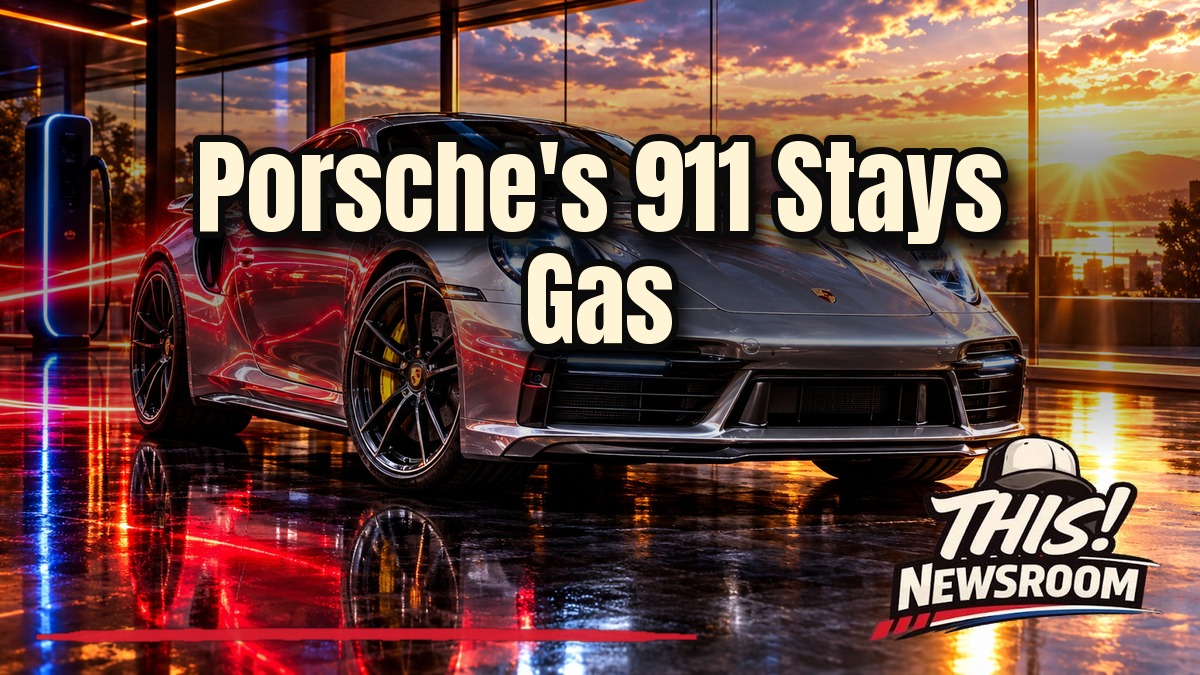
Some things at Porsche are sacred, and the 911 tops the list. The Porsche turnaround plan has a clear message for anyone who loves the icon: it will not go fully electric. The rest of the company is the part that has to change. (For more on the 911 stance, see our piece on why the 911 isn’t going fully electric.)
CEO Michael Leiters laid out the strategy for investors on Oct. 7 at a capital markets day in Weissach, according to a Reuters factbox. Top Gear’s recent coverage framed it with a blunt line: the 911 will never be electric. That stance isn’t brand new, as we’ll get to. Still, the plan around it is.
Why the Porsche turnaround plan was needed
Start with the number that explains everything. Porsche’s operating margin fell to 1.1% in 2025. That is a long way from the Ferrari-style double-digit targets set when the company listed in 2022, as BusinessDay reported.
Sales have slipped too. Deliveries are down almost 10% globally since the listing, with weak demand in China and US tariffs both cited, according to CNBC. So the new boss isn’t chasing growth. He’s chasing health.
“At the moment, the main focus is on reducing costs and making the company more financially robust,” Leiters said.
Value over volume in the Porsche strategy
The plan is simple to say and hard to do: sell fewer cars, and make more money on each one. Porsche will push its higher-value offering and cut model variants by about 20%. As a result, Reuters says, sales volume per model should rise by 30% in the medium term.
Here are the targets Porsche set:
- A long-term group operating margin of 15%, with 10% to 15% in about five years.
- An automotive net cash flow margin of 9% to 12%.
- A break-even point of around 200,000 cars a year. Porsche delivered 279,449 in 2025.
That break-even number matters. It means this Porsche reset plans for a smaller company that still turns a healthy profit. Reuters wording on it varies slightly, from “200,000” to “fewer than 200,000,” but the direction is the same.
The 911 stays gas and hybrid
Now for the headline-grabber. Leiters first said in June, at an auto motor und sport event, that there will be no fully electric 911. “A 911 is such an iconic product that progress there must be ensured with combustion and hybrid technology,” he said, as Rennlist reported.
So the stance is months old. What’s new is where it sits: inside the full Porsche turnaround plan, not a one-off comment. Autoblog notes a full-hybrid 911 may be possible down the road. A battery-only one is off the table.
That doesn’t make Porsche anti-EV, and Leiters has pushed back on that label. “I think that’s unfair,” he told the Financial Times, per Motor1.
Here’s the thing: the Porsche recovery plan is a three-way bet
Porsche is keeping combustion, plug-in hybrid and battery-electric all on the menu. Reuters says that formally ends an EV-first strategy that had been paused under former CEO Oliver Blume. The U-turn cost Porsche and Volkswagen nearly 7 billion euros.
Translation: after going all-in on electric, then backing off, Porsche is now hedging on purpose. That’s less thrilling than a bold bet. It’s also less likely to wreck the balance sheet.
Here’s what buyers and fans can expect:
- A gasoline Macan returns in 2028 and will sell alongside the electric Macan.
- The all-electric 718 Boxster and Cayman are expected to add to sales from their first full production year in 2028.
- A new compact SUV will be unveiled next year, with sales and profit impact from 2029.
- Porsche is weighing a luxury SUV above the Cayenne, and wants at least one brand-defining new product every year by 2030.
What to watch as the Porsche restructuring plays out
The big question isn’t whether the 911 survives. It will. Rather, the question is whether fewer variants and pricier cars can lift that 1.1% margin before buyers get picky. A US customer facing tariffs and a squeezed budget may not love “value over volume.” Meanwhile, the brand still knows how to make a splash, as the Singer and Louis Vuitton 911s showed.
Porsche is betting the people who want a Porsche will pay up for one. For a brand built on the idea that you can’t quite have one, that might be the most Porsche plan of all.